ELTA Lixouri Closure – A heartless decision
Overnight, Lixouri learned that its post office was closing. The Hellenic Post branch, which had served Paliki for decades, is now on the list of 204 branches nationwide that are being abolished as part of ELTA's new "restructuring." For large cities, this may not cause disruption. But for an island region like Lixouri, where every public service is vital, the post office's closure is another blow to daily life and the residents' sense of equal treatment.
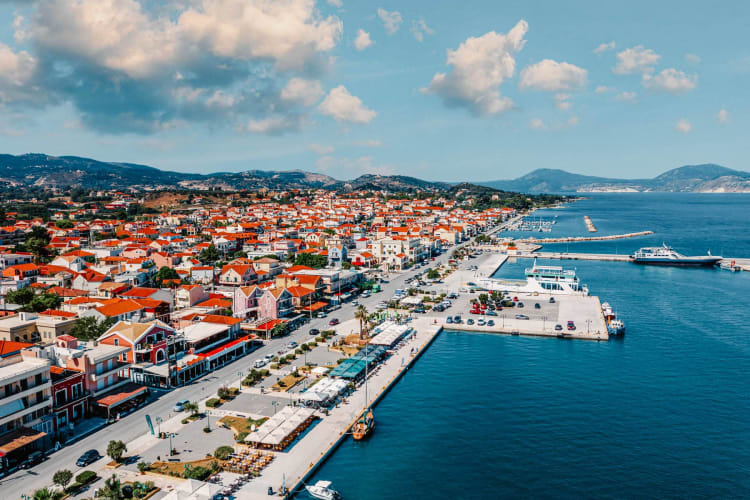
The news came suddenly. Employees were informed just before the decision was announced, while citizens learned about it from posts and publications. No information, no plan for the "transition" or replacement of services. For those without a car, the only option will now be to take the ferry to use services in Argostoli — a process that requires time, effort, and additional cost. The result is that a daily necessity is transformed into an entire campaign.
As residents of the area point out, the post office did not only serve letters and parcels. It was the place where bills were paid, simple banking transactions were made, and medicines or benefits were received. For many elderly people, it was the easiest and safest way to interact with the public sector. Local professionals used it for shipments and payments. And now, suddenly, all of this needs to be redefined, without a clear alternative.
Speaking to local media, Dimitris Mantzouratos stressed that "Lixouri is degrading day by day – the people must organize and react." Kostas Valsamos spoke of a "cry of agony" against a policy that forgets islanders. For his part, Spyrogiannis Perdikis asked the Mayor of Lixouri, George Katsivelis, to inform whether interventions had been made to the ELTA administration or at government level. At the same time, citizens are asking the Municipal Council to coordinate actions to find a solution or at least maintain some service point.
The decision is part of a broader "rationalization" program for the ELTA network, which provides for the merger or abolition of 204 branches nationwide. Officially, the goal is to reduce operating costs and shift towards digital services. In practice, however, this policy leaves behind areas that do not have the same capabilities as large urban centers. The digital transition is progressing, but it is not equally easy for everyone: many elderly people struggle with online transactions, while in several Paliki villages, access to a stable network remains problematic. Thus, a "modernizing" policy that seems rational on paper, in practice widens inequalities.
The issue is not only practical but also symbolic. Lixouri has seen several public services withdraw or shrink in recent years. Just a few days ago, the National Bank branch also closed, further limiting residents' options for basic transactions. Each such step reinforces the feeling that Paliki is being degraded, that its residents have to "make a trip" to access what should be obvious. And the decision regarding the post office seems to be another chapter in this gradual withdrawal of the state from the daily life of the area.
In a recent intervention, Dimitris Messaris emphasized that "Lixouri is not a city of darkness, it is a city of light that they want to extinguish." A phrase that summarizes the mood of many residents: disappointment, but also stubbornness not to passively accept this development. Discussions have already begun for mobilizations and joint interventions by bodies to ELTA and the Ministry of Digital Governance. Because the issue of ELTA is not merely administrative – it is a matter of equality, access, and respect for the citizens of small towns.
The problem, of course, is not limited to Kefalonia. Similar reactions have been observed in many regions of Greece. In Andros, residents complain that they will have to travel to another island for services. In Siatista, the municipal council described the post office's closure as an "attack on the periphery." In Ierapetra, citizens gathered outside the branch holding banners with the message: "You don't close our needs with a decision." Across the country, the common element is one: the feeling that the periphery is gradually being weakened, as public services are withdrawn in favor of "efficiency."
In the case of Lixouri, the loss also has an emotional dimension. The post office was not just a public service but part of the city's collective memory. For decades, letters, parcels, wishes, and memories passed through it. It was one of the few places where all generations met – from the elderly retiree to the student waiting for their parcel. With its closure, a small piece of this social continuity is also extinguished.
The next day remains unclear. There has been no official announcement about alternatives or whether any service point will be maintained. If there is no intervention, it is most likely that the residents of Paliki will now be forced to be served exclusively in Argostoli. And this, at a time when transportation costs are already high and infrastructure is inadequate, creates additional obstacles for the most vulnerable.
However, the issue has stirred public discussion on the island. Municipal factions, professional bodies, and citizens seem to agree that this decision cannot pass quietly. The local community has proven many times that it knows how to claim its rights. And Lixouri has historically shown that every time something is taken away, it reacts collectively, calmly but also decisively.
Because this downward spiral cannot continue. Every service that leaves behind a larger void, and every void becomes an alibi for the next closure. Lixouri cannot be treated as an "annex" of Argostoli or as a number on an expense sheet. It is a city with history, with life, and with people who deserve the same care and presence of the state as every other citizen.
The closure of ELTA is not just an economic decision; it is a warning about where indifference can lead. And if this city has proven anything, it is that it will not accept its degradation without protest. Lixouri has gone through earthquakes, crises, and injustices – and each time it rose again. It will do so now.
Related Articles
Η οικονομία των 100 ημερών: Πώς η εποχικότητα αλλάζει τα νησιά
Τι σημαίνει πραγματικά να ζει ένα νησί από λίγους μήνες τουρισμού — και γιατί η «οικονομία των 100 ημερών» καθορίζει την εργασία, την κατοικία και τις υποδομές όλο τον χρόνο.
Πόσο κοστίζει πλέον ένα καλοκαίρι
Η μετακίνηση, η διαμονή και η καθημερινή κατανάλωση ανεβάζουν τον λογαριασμό των διακοπών στην Κεφαλονιά, ενώ οι ίδιες αυξήσεις μεταφέρονται στη ζωή των μόνιμων κατοίκων.
Το Ίδρυμα Γεωργίου & Μάρης Βεργωτή τιμήθηκε με το Βραβείο Ευκράντη για την Κοινωνική Προσφορά
Το Ίδρυμα Γεωργίου & Μάρης Βεργωτή τιμήθηκε με το Βραβείο Ευκράντη για την Κοινωνική Προσφορά, σε μια χρονιά-ορόσημο κατά την οποία συμπληρώνει 50 χρόνια αδιάλειπτης παρουσίας και προσφοράς.