The forests are burning, and so are we
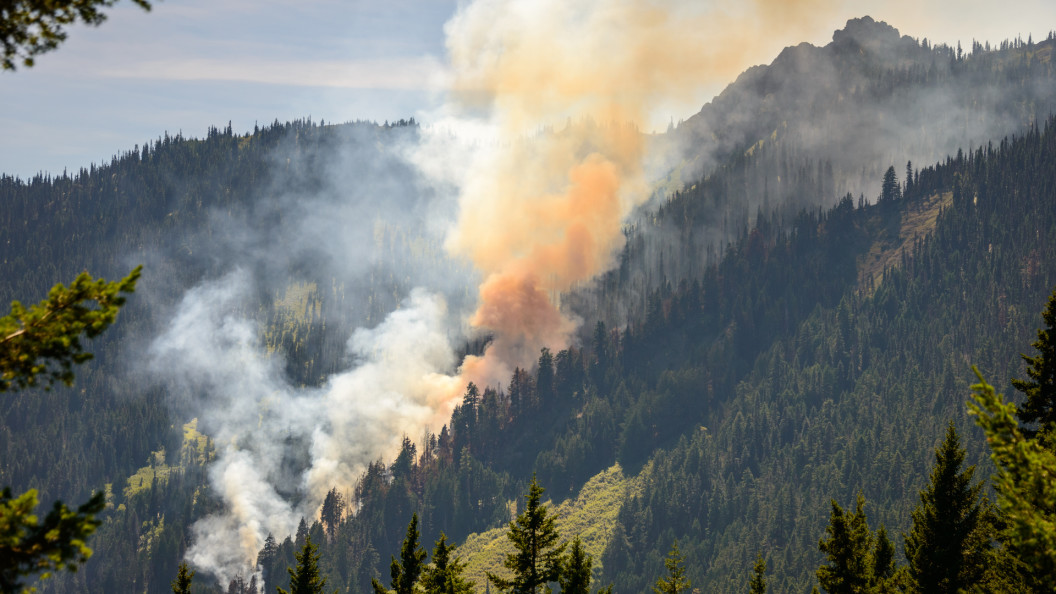
Fires started earlier this summer than last year. A few days ago, a large fire had broken out in the small village of Divarata in Kefalonia, which, thanks to the ground and air forces that rushed to extinguish the blaze, was brought under control. For the first time, changes are being made to the Fire Department's operational plan and everyone hopes they will yield results.
The two firefighting aircraft, permanently based at Kefalonia Airport, are now immediately mobilized throughout the fire season, according to the Argostoli Fire Department. Within 20 minutes, they are thrown into battle with the flames, even having fire retardant liquid at their disposal. At the same time, within the framework of the Fire Brigade's new operational regulation, emphasis is placed on cooperation between the Fire Brigade and the Forest Service. Forest Service teams are obligatorily in the field and operate in support of the Fire Brigade forces. In addition, the forest commando units are reinforced, as 10 new units have been formed, bringing their total number to 16 throughout the country. This is a body that is basically air-mobile, in constant motion and operates all year round, not just during the summer.
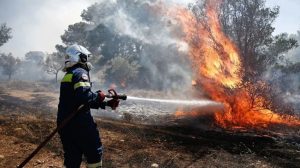
The protection of the forest and its importance is self-evident. It is the main regulator of the planet's climate. It produces oxygen and contributes to addressing climate change. It has a rich ecosystem. It hosts a significant variety of flora and fauna. Forest fires are the greatest enemy of forest preservation and productivity. No other factor causes such rapid and extensive destruction to the forest ecosystem as forest fires. They create radical changes. People who have been thrown into battle with the flames or have been trapped are also at risk from fires, but not only them.
“I would like to forget the 3-4 sheep that we didn't manage to get out of the pen and we heard them screaming as the fire approached us. And that little dog that remained silent and tied until the moment it realized there was no salvation... I would like to forget the birds that didn't manage to escape from the pine trees as they were consumed by fire and I saw them in the air flapping their wings and then falling like autumn leaves.” The description by volunteer firefighter Nikos Filippopoulos, from the large fire in Penteli, is shocking. But this is the sad reality and the grim picture one sees on the fire fronts.
A fire is a war. A survey by the National School of Public Health on residents of fire-affected areas showed that “many had strong signs of fire in their souls, six months after the disaster, showing symptoms of depression, post-traumatic stress disorder and anxious behaviors.” A. Rousou, president of the company for Children and Adolescent Mental Health, has stated that “there are cases of children who, even ten years later, have all the symptoms of post-traumatic stress disorder. A child experiencing a fire feels trapped, feels that they are in danger. The fire is faster than themselves and their loved ones.” And she wonders: “What can be hidden in the soul of a person who saw their home burn, powerless to prevent it? Even if the houses are rebuilt, who will go inside and in what condition...”
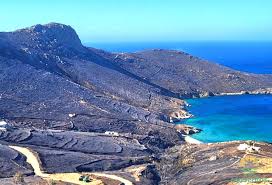
In 2023 alone, the total area burned reached 1,740,000 acres, a number much larger than the annual average of burned areas for the period 2006–2023, according to the European Forest Fire Information System. The average burned area per large forest fire in Greece, from the beginning of the year until August 2023, increased by +517% compared to the corresponding average for the period 2002 – 2022. Greece came first among 20 Mediterranean countries, with a huge difference. Spain was second with 824,640 acres and Italy third with 595,330 acres.
The future looks grim. The estimates of Kostas Synolakis, professor of natural disasters, regarding fires in Greece are particularly worrying. He recently pointed out that there is an increase in fires that do not subside even during the night. “There is a change in fire behavior, globally. It is the phenomenon of overnight burning events, i.e., fires that do not stop, do not subside at night but continue. In the past, the percentage of fires that did not subside at night was 2% to 3%. In recent years, we see that the percentage is 10% to 15%. And the worrying thing is that the number is constantly increasing.” Regarding the global phenomenon of mega fires, Mr. Synolakis estimates that “mega fires have occurred in Evros and Rhodes. In Dadia, it was the largest historically recorded fire in Europe. The question is not whether we will see them in the future, we are already seeing them in Greece. They are here to stay.”
Professor of Risk Assessment at the European University Cyprus and Director of CERIDES, Dr. George Boustras, emphasizes that fires, when not caused by human hand, are a consequence of climate change. “Climate change brings hotter summers almost every year. We will have to get used to living in the temperatures we live in today and even worse. The cycle we knew as spring, summer, autumn, winter no longer exists. We are moving into a two-season phase, summer and winter.”
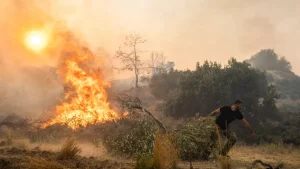
It is clear that no one can predict or stop the start of a fire. Therefore, prevention is the only way. As we read on firestudy.gr, according to the new regulation, all property owners within or near forest areas are obliged to prepare a technical report for the fire protection of their properties, which will be undertaken by a competent technician, who will indicate the appropriate protective measures.
Properties at risk are those located within a radius of 300 meters from the boundaries of forest areas. However, since it is practically impossible for the citizen to know with absolute certainty whether their property falls under the regulation, a visit by a competent technical scientist has been established as a first step.
According to the Ministry of Environment and Energy, fire protection measures are necessary. Such as creating a firebreak around the house, clearing dry grass and leaves, pine needles, and branches within a radius of at least 10 meters. It is advisable to prune trees up to a height of 3 meters and 5 meters from the house. Window and balcony door frames should not be made of flammable materials, nor should flammable objects be stored near the house. Also, the supply of fire extinguishers and large watering hoses is considered life-saving. And if the fire finally approaches the house, calm and an immediate call to the Fire Department, at 199, are recommended.
Related Articles
Κεφαλονιά: Το Ξι, η κόκκινη άμμος και οι άργιλοι της Παλικής
Το Ξι στη νότια Παλική ξεχωρίζει για την κόκκινη άμμο και τους αργιλικούς σχηματισμούς του. Γεώτοπος του Γεωπάρκου Κεφαλονιάς Ιθάκης, η παραλία αποτυπώνει τη γεωλογική ιστορία και την ποικιλία του νησιού.