What could fill the winter nights in Kefalonia
Winter in Kefalonia does not have to feel like waiting for summer. Five ideas that could give meaning to everyday life on the island, starting from what already exists.
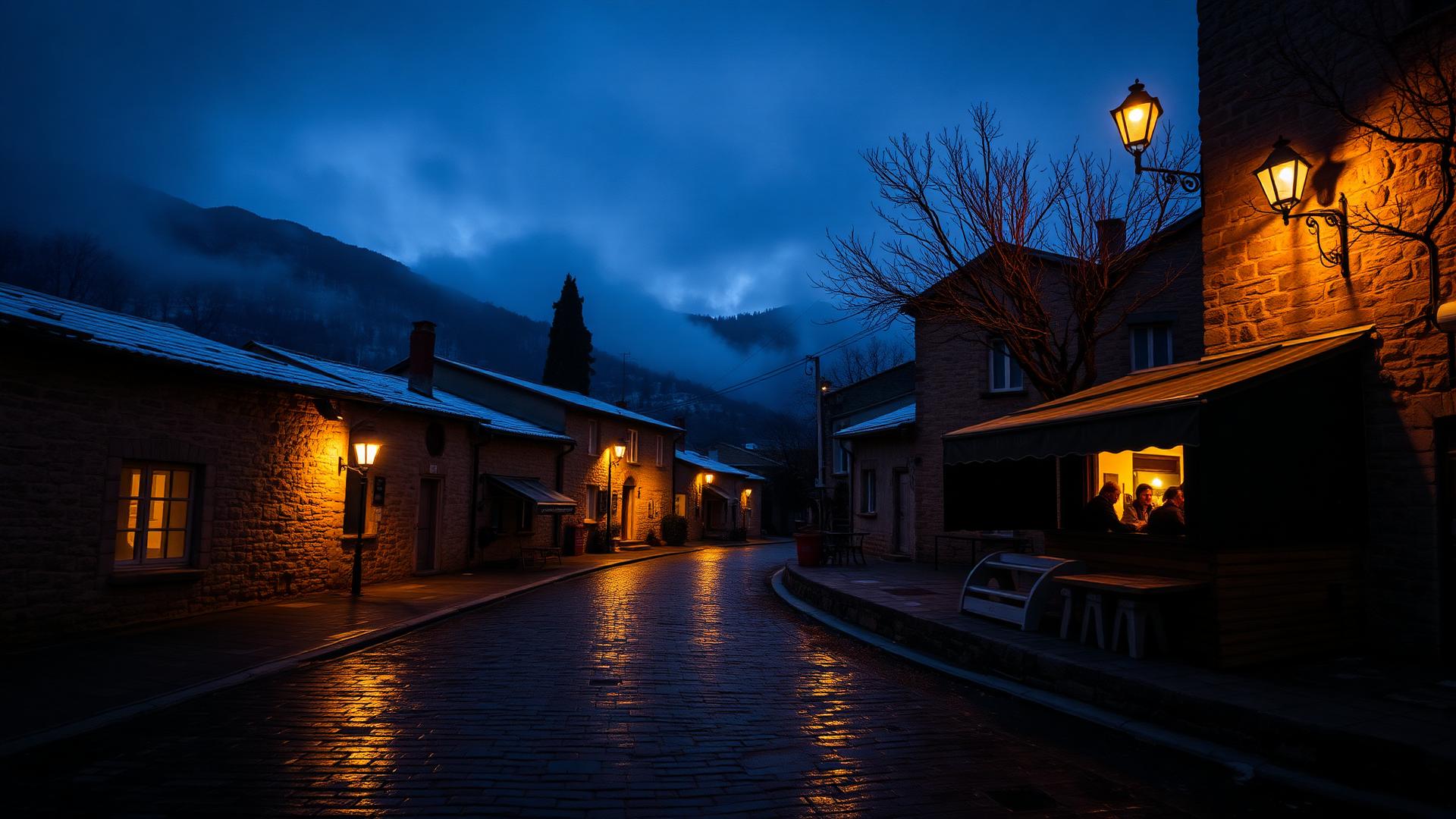
There is an image that has been repeated so many times it has almost hardened into truth: Kefalonia goes dark in winter. Shops pull down their shutters, the streets empty, and those who stay are, more or less, waiting for summer to return. It is a convenient narrative, because it explains a lot — but it is also a narrative that, the more it is repeated, the more it becomes a self-fulfilling prophecy. If the only story we tell about winter is one of absence, then we leave little room to see what could, in reality, exist.
So the question is not "why does the island empty" — that has been said. The interesting question is different: what would it take for winter daily life to have its own meaning, independent of waiting for summer? And who could build it, starting from what already exists?
The cores already exist — they only need strengthening
Kefalonia does not start from zero. Cultural associations like ANAKARA in Lixouri prove, year after year, that a theatre group, a film screening or a concert can gather people even in the months when there is not a single tourist on the island. The goal is not to invent something new from nothing, but to multiply these cores: more theatre groups in more villages, choirs, music workshops, reading groups that meet in a café once a month. None of this needs a big budget — it only needs a handful of people who decide to start it, and a space (a school, a cultural centre, even a courtyard) to host them.
The island as a destination for its own residents
Organised excursions and hikes are usually designed with the visitor in mind — but Ainos, the caves, the trails and the castles of the island do not cease to exist when the tourists leave. On the contrary, in winter they take on a completely different, quieter beauty. A regular, even monthly, organised hike or excursion for locals —no ticket, no tourist showcase, simply an excuse to leave the house and meet others— could turn something taken for granted (the landscape itself) into a shared experience. The same applies to tasting gatherings around local wine or olive oil: not as a tourist display, but as a pretext for people who live in the same place yet rarely find a reason to sit at the same table.
Mutual aid networks: the invisible infrastructure
An island that empties demographically in winter inevitably has more elderly than young people in its everyday picture. That is exactly where something substantial could be built: an informal network of volunteering and skill exchange, where one person helps with a ride, another with a repair, a third teaches what they know to those who want to learn. Such initiatives do not need institutional approval to begin — they only need a first group of people willing to commit, and a simple way to communicate (a messaging app group is enough to start). The result is not only practical help; it is also a bond that makes "I stay here in winter" feel less like isolation and more like a choice.
A reason for younger people to stay
For someone who could work remotely, the question "why not Kefalonia in winter" usually has one practical answer: there is no space to work, nor people to share the day with. A small coworking space —even a room with stable internet and a few desks, in Argostoli or Lixouri— could change that equation for those thinking of staying or returning, but who hesitate because they imagine winter as isolation rather than a life choice.
The first step: making visible what already happens
Perhaps the simplest, most immediately feasible step is not creating something new at all, but giving visibility to what already exists. A simple, centralised calendar of winter events — screenings, concerts, association gatherings, school celebrations — would show something that currently goes unnoticed: that winter in Kefalonia is not as empty as we think, it is simply fragmented, scattered across posters and announcements that do not reach everyone.
It is not a matter of scale, it is a matter of intention
None of these ideas needs a municipality, a ministry or a million-euro investment to begin. It needs something simpler and, at the same time, harder: people who decide to invest a little of their time in something shared, without first waiting to see whether it will "catch on". Kefalonian winter does not need to resemble waiting for summer. It could be the season when the island belongs, once again, to those who live in it all year round — as long as someone makes a start.