For Maria Lada: Accessibility in Greece cannot remain a promise
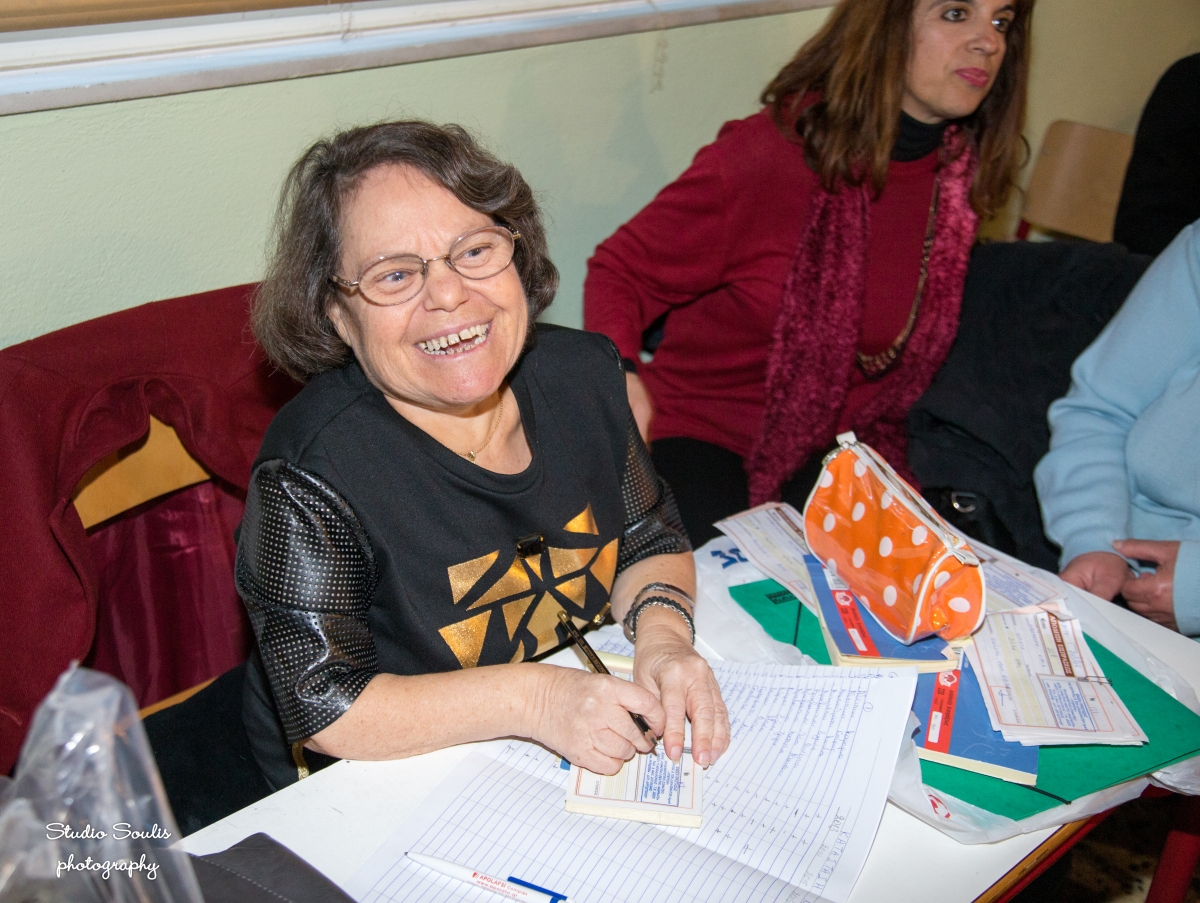
The loss of Maria Lada, a compatriot who was connected with the active community of people with disabilities in Kefalonia, and a founding member of the HYPERION association, has brought to the surface again a topic that in Greece is often discussed intensely and, almost always, ends up fading in everyday life. Accessibility. The word sounds like a technical term, like something that concerns plans, specifications, projects. In reality, it is something much simpler and harsher. It is whether a person can live their life without asking permission from the pavement, without making dangerous maneuvers on the road, without depending on the goodwill of others to enter a service, travel, work, participate. This is also why, when news touches someone from the community, it never remains just emotional. It becomes a mirror, it becomes a question, it becomes a demand for things to be said that we, as a society, avoid.
In Kefalonia, disability is not an abstract concept, nor a statistic that remains in a table. It has names, faces, families, daily battles. It also has structures that did not appear on their own. They were built by people who persevered. The most characteristic example is HYPERION, the Association for the Protection of Equality and Rights of Persons with Disabilities based in Lixouri, founded in 2013 as a non-profit association by parents, guardians and people with disabilities, with the aim not just to claim rights, but to translate them into real care, services and equal participation in social life. The existence of HYPERION on the island is important for another reason. It shows what happens when a community does not expect everything from the state, but organizes, pushes, plans and ultimately creates. It also shows how easily the discussion about accessibility becomes rhetoric when it is not connected with specific structures, people, services and daily operation.
HYPERION is not just an association that appears on anniversaries. It is an organization that has developed structures and actions in Kefalonia, in an area where geography and distances make support even more critical. In its public traces, it is clear that its operation is not limited to representation. There is a Day Care and Daily Care Center, the KDIF, with facilities that have been mentioned in Longo, and around it, daily care, a program, support, a stable rhythm for people who would otherwise remain marginalized, are organized. There is also the Supported Living Home, the SYD, a model that in Greece is still struggling to acquire the scale it needs, but where it is applied correctly, it provides what is most lacking. A life with autonomy, in a real home, not in isolation. The fact that HYPERION's SYD was included as an action in a European program in the Ionian Islands Region is not a detail. It is an indication that the island has experience in claiming resources and converting them into services. Finally, there is a public presence in events and collaborations, such as thematic actions for access to employment and dialogue with bodies, not as a communicative wrapper, but as an attempt to introduce disability into the discussion of real life.
Exactly here lies the great contradiction that haunts Greece. There are islands of progress, there are bodies like HYPERION that keep people upright, there are people who claim and create. But there is also a general environment that constantly makes disability seem like a race on a route full of obstacles. This is not an exaggeration. It is the experience of thousands of citizens and families. And it is also something that appears in the larger European picture, when disability is reflected as a long-term restriction on usual activities. According to the most recent aggregated Eurostat data for 2024, 23.9% of the European Union population aged 16 and over reported some or severe long-term activity limitation, with 6.7% reporting severe limitation. In other words, this is a population size that reaches a quarter of adults. It is not a small special category that concerns a few. It is a large social segment, which in every country grows as the age composition of the population also grows.
So why is it so difficult in Greece? The answer is not one. It is a combination of institutional, technical and deeply cultural factors that work together and produce the same result. A country with rules, but with limited application. A country with projects, but often without continuity. A country with good intentions, but with public space treated as a field of services and not as a right for all.
The first level is what is seen everywhere and what everyone recognizes, but few seriously touch upon. Public space, and especially the pavement. That is where accessibility is judged in its most everyday form. And there Greece systematically fails, because the pavement is treated as a space that can be occupied, cut, narrowed, interrupted, transformed into an extension of parking, commercial use or arbitrary arrangement. Even the institutional discussion itself about who is responsible for maintenance and what is allowed, shows how complex and often vague reality becomes, with the result that the citizen loses the outcome in bureaucracy. Accessibility does not always collapse at a large, spectacular point. It collapses in small, everyday breaks in the chain. At the point where the ramp ends in a broken tile. At the point where the crossing leads to a pavement without continuity. At the point where a public building door is technically open, but practically closed for anyone who does not climb stairs.
The second level is transportation. Here the discussion often takes place with the illusion that, since European rules exist, the issue has been resolved. In reality, the rules set obligations, but do not guarantee the experience. In air transport, for example, the framework of rights for people with disabilities and reduced mobility has existed for years at the European Union level, with obligations to provide assistance from airports and airlines. However, this does not mean that every airport, every procedure and every infrastructure operates with the same consistency, nor that the travel experience is free from risks or inconvenience. The very news that prompted this article shows how critical this field is. HYPERION's announcement states that Maria Lada was injured at Athens airport, before her sudden death, under circumstances that are being investigated. The investigation belongs to the competent authorities, but the conclusion for policy does not change. Transportation for people with disabilities cannot operate with an approximate logic. They need infrastructure without gaps, staff training, clear procedures, real control and accountability, because here a failure is not only translated into difficulty. It can be translated into a serious incident.
The third level is digital accessibility, which could be a great equalizer, but often develops into a new filter of exclusion. The European Union has enacted a special directive on the accessibility of public sector websites and applications, Directive 2016/2102, and the requirements are not theoretical. At the same time, the European Accessibility Act, Directive 2019/882, opens a new chapter, because it extends accessibility obligations to market products and services, with an implementation date that has already passed, on June 28, 2025, and with incorporation in Greece through Law 4994/2022, as has been pointed out by ESAmeA. This means that accessibility is no longer just a matter of public buildings or a municipal technical service. It is a matter of daily transactions, services, technology. And yet, anyone who lives the reality of digital bureaucracy knows that the lack of accessible documents, forms that are not completed with assistive technologies, services that were designed without testing by real users, continue to produce exclusion, simply in another form.
But there is also a fourth level that is rarely stated clearly, although it is the most decisive. Disability in Greece is not just a matter of infrastructure. It is also a matter of social status. When society and the labor market treat disability as a disadvantage that needs to be hidden, then even the most correct pavement is not enough. Eurostat consistently records large employment gaps between people with and without disabilities, and at the Greek level, ESAmeA has highlighted, based on Eurostat data for 2024, that the employment gap in Greece was estimated at 28.5 percentage points, one of the worst performances in the EU. This is not just an economic problem. It is a problem of equality, dignity, independence. And it is directly related to accessibility, because when movement, access to buildings, access to information and services are difficult, work becomes even more difficult. Exclusion feeds exclusion.
This vicious circle is also evident in the data on poverty and social exclusion. The Observatory of Disability Issues of ESAmeA has highlighted with bulletins and analyses that people with disabilities and their families experience the pressures of poverty and exclusion more intensely, in a country that went through a prolonged crisis and continues to have high inequalities. So when society talks about accessibility as if it were a luxury of projects, it ignores that in reality it is talking about access to work, health, education, social life, and therefore about life chances.
In this context, the role of local structures acquires double importance. HYPERION is not just a reference point for people with disabilities in Paliki. It is an example of what it means for a community to organize itself. It is a structure that offers services, hosts daily life, creates visibility. It is also a kind of institutional witness. It shows what is needed for a support system to function, how difficult it is to keep such structures alive, how much administrative work, funding, staff and consistency are required, how easily society takes for granted what is in reality the result of a struggle. Even the existence of public calls for staffing for supported living structures, within the framework of funded actions, shows that support is not theory. It is daily operation, with responsibility, people and needs.
Accessibility, when described only in terms of technical specifications, loses its basic content. It is the time, effort and dependence that are added to daily life. It is the constant need to design life around obstacles that for most people do not exist. It is the wear and tear that is not visible in project photos, but is captured in every route that is not made simply and safely. Behind the terms and guidelines lies the experience of the person who gets tired, not because they have a disability, but because they live in an environment that multiplies it. There is the family member who organizes the day around routes and procedures that for others are taken for granted. There is the young person who wants to work, move around, go out, live, and finds before them a system that shows them, without saying it, that they are not a priority. There is also the person who dedicates time to claiming, to collective work, to organizing a community, as Maria Lada did, and their loss becomes a collective shock precisely because the community knows how difficult it is to build every step of progress.
The critical question, then, is not whether Greece has laws. It does. It is not whether it has strategies. It does, with national action plans and digital portals that show that the state recognizes the issue as policy. The critical question is whether the state, local government and society treat accessibility as a result that must be produced consistently, with control and maintenance, or as an announcement that closes an obligation. In Greece, the great difficulty is that projects are often carried out in fragments, without a unified route design, without testing real operation, without a culture of maintenance. A pavement can be made correctly at one point and be canceled five meters later. A ramp can be installed, but lead to an obstacle. A public building can have a provision, but remain practically inaccessible. The chain breaks at small points and the system behaves as if nothing happened, because no one is obliged to account for the result of the chain, only for their part.
This is precisely where the cultural dimension, which is decisive in Greece, also comes in. The dominance of the car, the tolerance for the occupation of public space, the belief that the road and the pavement are a field of personal arrangement, are not just annoying habits. They are mechanisms of exclusion. As long as a country considers it normal for pedestrian traffic to be practically abolished, accessibility will remain impossible. And as long as the issue is treated as a matter of sensitivity, not as a matter of rules that are applied, good people will replace infrastructure with services. This is the most insidious form of failure. When society gets used to admiring solidarity, instead of demanding functionality.
A country changes when the way it rewards and the way it controls changes. In accessibility, change will not come from a big project that will be presented as a breakthrough. It will come from something more humble and more demanding. From building and adhering to the concept of the route. From measuring success not by whether a project was done, but by whether a person can make their journey safely. From having accountability not only for construction, but also for maintenance. From systematically listening to people with disabilities themselves and their organizations, not as decorative participation, but as institutional evaluators of real operation. Structures like HYPERION know this well, because they have learned to operate in the field, not in theory.
Kefalonia has one more reason to take this seriously. In the islands, exclusion is not just social. It is also geographical. Movement is already more difficult, services are fewer, choices are more limited. This means that accessibility is not one of many issues. It is a basic prerequisite for disability not to become doubly and triply burdensome. When there is an organization on the island like HYPERION, which connects advocacy, care, supported living, public presence, this should not be treated as a good story of local interest. It should be treated as a model for how a local society can keep the way open where the state often leaves gaps.
This article is written on the occasion of a loss and must respect it. But it can do something substantial. To transform emotion into clear thinking and clear demand. Accessibility in Greece is not difficult because it is technically impossible. It is difficult because the country carries a mixture of fragmented planning, loose control, lack of maintenance and social tolerance for practices that cancel the result. The data show that disability concerns a huge part of society, the data show large employment gaps and an increased risk of poverty and exclusion, European tools are pushing for compliance in the market, not only in the public sector. What remains is to prove that Greece can transform obligations into daily operation and that communities can stand by their people not with wishes, but with space, road, service, dignity.
Maria Lada was one of those presences who do not let disability become invisible. Kefalonia has HYPERION, it has people who know how to build structures, it has experience in collective advocacy. The question is not whether there is a way. There is. The question is whether society will make it everyone's business, so that accessibility ceases to be news and becomes normality. This is also the only kind of honor that has real weight, when a community says goodbye to one of its own.
The Kefalonian Globe expresses its sincere condolences to the family and friends of Maria Lada, as well as to the HYPERION community that knew and stood by her. Her memory remains tied to a struggle that brooks no delays, the struggle for equal access, safety and dignity for people with disabilities.
Related Articles
Η δημογραφική συρρίκνωση της Κεφαλονιάς: πού χάνεται ο πληθυσμός και γιατί
Η απογραφή του 2021 δείχνει ότι η Κεφαλονιά δεν αδειάζει ομοιόμορφα. Το Αργοστόλι χάνει πληθυσμό, η Σάμη κερδίζει, και το ερώτημα είναι τι σημαίνει αυτό για το μέλλον του νησιού.
Πυρκαγιά, Ετοιμότητα, Προστασία: Τι Χρειάζεται η Κεφαλονιά Πριν το Επόμενο Καλοκαίρι
Η φετινή πυρκαγιά στην Πάστρα απείλησε χωριά της νότιας Κεφαλονιάς και έθεσε εκ νέου το ζήτημα της πυρασφάλειας. Τι χρειάζεται να αλλάξει —από τις αντιπυρικές ζώνες έως τα σχέδια εκκένωσης και τη στήριξη των εθελοντών— πριν το επόμενο καλοκαίρι;
Ποιανού είναι πια το χωριό; Η σιωπηλή αναδιάταξη που επιφέρει η βραχυχρόνια μίσθωση
Από το Ελειό-Πρόννοι έως το Ληξούρι και το Αργοστόλι, η Κεφαλονιά διανύει μια μεταμόρφωση που δεν γίνεται πάντοτε αντιληπτή με την πρώτη ματιά.