A Cephalonia that empties out on days it should be filling up
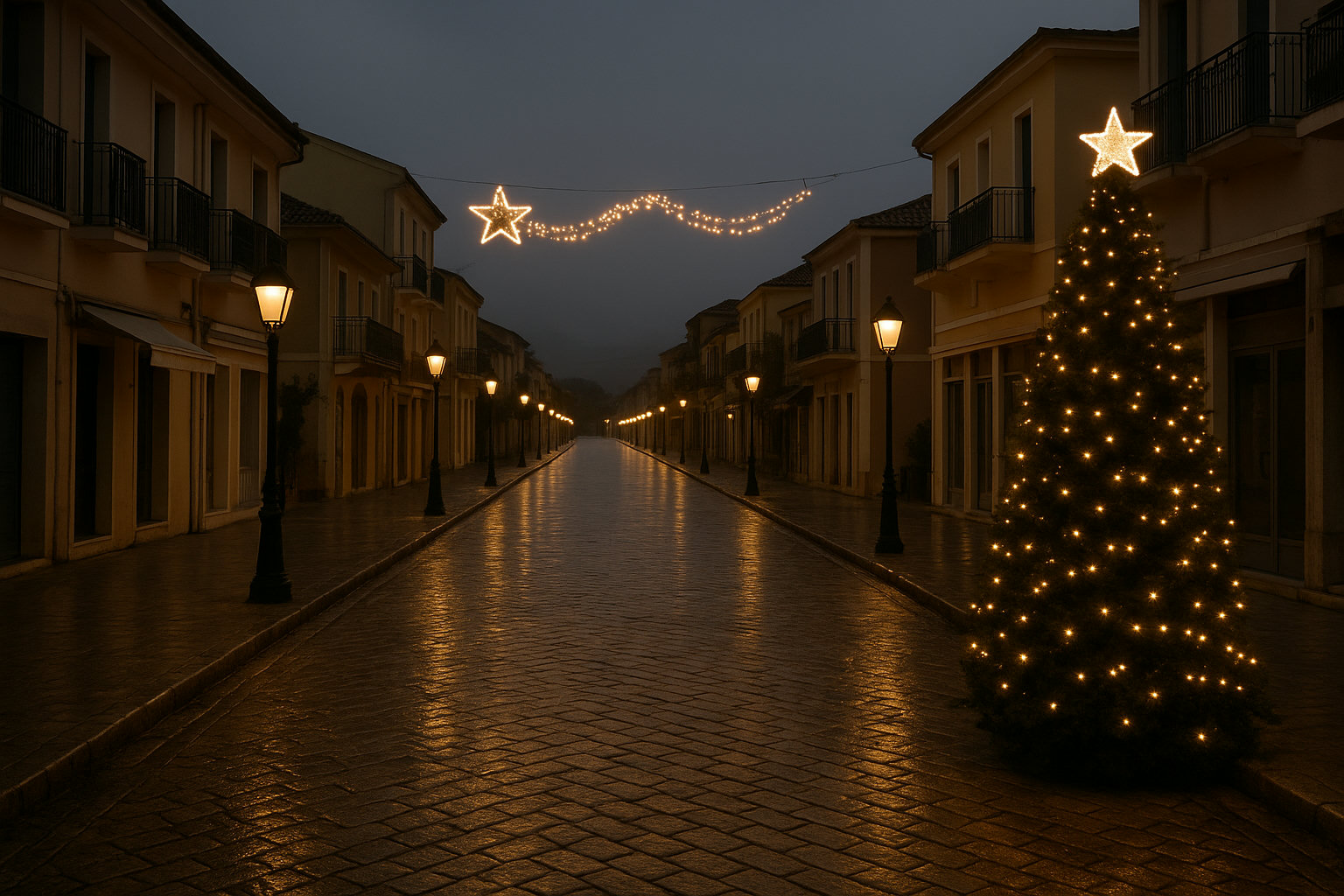
As the Christmas period slowly approaches, December appears on the calendar as a time that traditionally brings mobility, a change of pace, and a different mood to every small or large community. For children especially, this month plays a unique role. It symbolizes holidays, school breaks, events, small plays, crafts, activities that fill the day and create anticipation. In many parts of Greece, the festive weeks leading up to the holidays are full of life, small events, preparations, and activities that add color to daily life. In Cephalonia, however, the picture remains consistently different. The island appears to treat December like any other winter month, without any particular adaptation and without utilizing the period that could offer it social vibrancy and mobility.
The absence of organized preparation is clearly visible in public spaces, in the atmosphere of the towns, but mainly in school communities. Schools are a natural core of the festive days, because the rhythm of the holidays starts from them. Classrooms are decorated, small plays are promoted, celebrations, meetings, and initiatives are organized which, combined with the children's interest, create the feeling that the place is entering a brighter phase. However, when there is no or almost no such activity, children have no reference point for the days they are waiting for. Daily life continues without much differentiation, and families do not find a reason to participate in anything that reflects the festive period. Children, who usually set the tone for Christmas, are left without the framework that traditionally excites them.
The impact of this absence is much greater than it appears at first glance. In small communities like Cephalonia, winter social life depends almost entirely on families and children's needs. When these do not encounter anything in the public space, when there are no events, activities, or organized festive reference points, then the natural tendency of residents is to seek alternatives elsewhere. It is not that people "leave" at the end of November. However, the picture is gradually forming. When the holiday days arrive and there is nothing to keep their interest within the island, families who have the means choose to travel to cities where there is activity. This choice does not stem from criticism of the island, but from a need for experiences that are lacking here.
The result is that Cephalonia empties out precisely on the days it could be filling up. Instead of utilizing the holiday period, which is one of the few opportunities for winter mobility, the island remains with an image of stagnation. The roads have less traffic, public spaces do not differ from any other time of winter, and families who could be out or participating in common activities end up staying home or planning a trip. This reality has a direct consequence on the local market as well. Shops and professionals miss out on the opportunity of a period that could boost, even temporarily, their activity. Without events, without activities, without a reason for gathering, the market remains "neutral" in December, when it could acquire a more vibrant character.
The most worrying thing, however, is how this image shapes children's expectations. At an age when the Christmas period functions almost as an entire event, children in Cephalonia experience a December that offers them little. When there are no activities, when there are no school events, when there is no common feeling "that something is happening," children lose the experience that is taken for granted in other areas. This is not just a matter of entertainment. It is a matter of collective experience and social cohesion. Children who grow up in a society where the community acts, participates, creates and offers, form a different relationship with their place. When this is missing, the island loses a significant part of its identity.
This situation is not inevitable. Cephalonia has all the ingredients to create a different image in December. The island has schools, associations, cultural organizations, volunteer groups, and municipal structures that could collaborate to formulate a program of events adapted to its capabilities. No large organizations or spectacular events are needed. However, organization is needed. A program that will be announced in advance, that will include small but steady activities for children, that will provide opportunities for participation and that will activate public spaces. Small workshops, creative activities, musical ensembles from associations, meetings for children, decorations in key points, even a central activity point in each municipal unit. All these are realistic and feasible.
The cooperation of the municipalities is crucial. The five municipal units of Cephalonia can operate with a common strategy and not with isolated actions, as often happens. A unified program, with coordination, division of responsibilities and a clear timetable, could radically change the image of the island. The success of such initiatives is not judged on whether a large central event will be organized, but on whether there will be a steady, visible effort that gives residents a sense of participation and visitors the impression that the island has an identity even in winter.
The essence is not to make Cephalonia a "Christmas destination." The essence lies in strengthening the local community. When there are activities, when families see that the island is trying to create a basic festive image, they stay. They stay in the squares, they move around the streets, they participate in events, they support the local market. Their presence changes the tone of the island. Their absence, however, reinforces the image of a place that "closes" instead of opening.
That is why the holiday period should not be treated as a mere stop on the calendar. It is a period with real potential for Cephalonia. It can strengthen society, people's relationships with each other, the local economy, but above all, children's relationship with their place. Children are the ones who carry the memory of the celebration into the future. If this memory is not formed, the island loses a significant opportunity to keep its identity alive.
A Cephalonia that empties out on days it should be filling up is not an inevitable reality. It is a consequence of a lack of coordination, incentives, and organized effort. With a few targeted steps, the island can change the image of December and offer residents, especially children, what they expect from the holidays. A feeling that the place participates, moves, comes alive. A feeling that the island is in a festive period that has content. An island that fills up instead of emptying out.
Related Articles
Βαλλιάνειο ΓΕΛ Κεραμειών: Πρόσκληση στην εκδήλωση αποφοίτησης 2025-2026
Η τελετή αποφοίτησης του Βαλλιανείου ΓΕΛ Κεραμειών θα πραγματοποιηθεί την Πέμπτη 25 Ιουνίου 2026, στις 20:00, στο Λυκιαρδοπούλειο Θέατρο Κεραμειών.
Ο Εμίρης, το Φάντασμα και η Μαργαρίτα: Η Θεατρική Ομάδα του ΓΕΛ Κεραμειών στο Λυκιαρδοπούλειο
Σάββατο 20 Ιουνίου 2026, 20:30, στο Λυκιαρδοπούλειο Θέατρο Κεραμειών. Τρία κωμικά μονόπρακτα από τη Θεατρική Ομάδα του Βαλλιανείου Γενικού Λυκείου Κεραμειών. Είσοδος ελεύθερη.
Κεφαλονιά: Το Ξι, η κόκκινη άμμος και οι άργιλοι της Παλικής
Το Ξι στη νότια Παλική ξεχωρίζει για την κόκκινη άμμο και τους αργιλικούς σχηματισμούς του. Γεώτοπος του Γεωπάρκου Κεφαλονιάς Ιθάκης, η παραλία αποτυπώνει τη γεωλογική ιστορία και την ποικιλία του νησιού.