Kefalonia: Xi, the red sand and the clays of Paliki
Xi beach in southern Paliki is famed for its red sand and clay cliffs. A geosite of the Kefalonia–Ithaca Geopark, it reveals the geological history and diversity of the island.
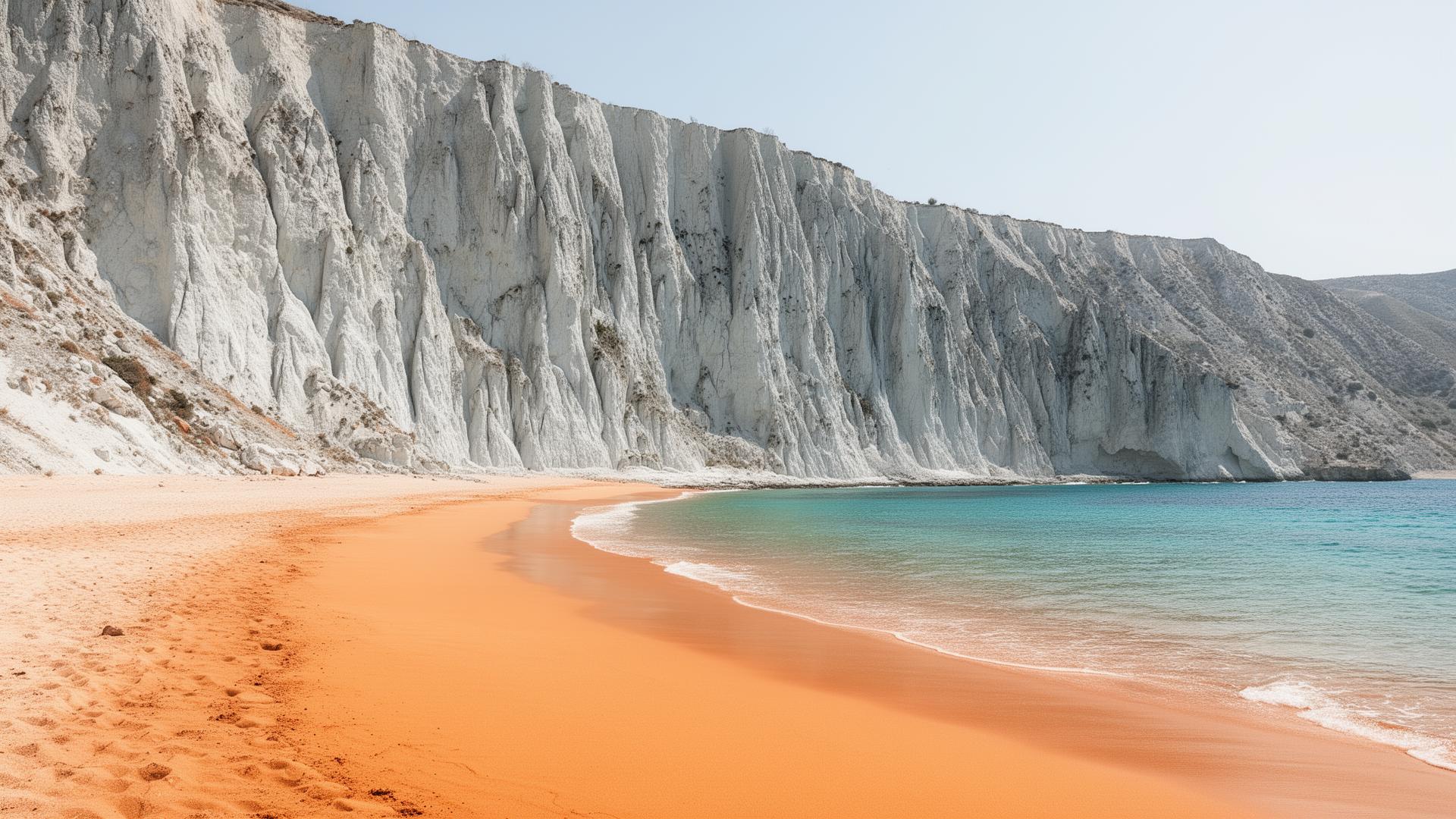
Xi, in southern Paliki, is one of the most recognisable beaches in Kefalonia thanks to its red sand and the clay formations rising behind the shore. It lies close to Mantzavinata, a short distance from Lixouri, in a part of the island whose morphology differs from other well-known Kefalonian beaches. Its appearance is directly tied to the composition of the soil, the erosion of the clay formations and the transport of sediments to the shoreline. The red sand, the pale slopes, the low coast and the gentle entry into the sea create a landscape that stands out immediately, not only as a summer image but also as natural evidence of Kefalonia's geological diversity.
The area is registered as a geosite of the Kefalonia–Ithaca Geopark, a designation that gives Xi particular significance beyond its everyday use as a beach. According to the Geopark, the area is dominated by blue clays dating from the Upper Pliocene to the Lower Pleistocene. These are formations referring to geological periods hundreds of thousands to millions of years before present, linked to older marine environments, sedimentary deposits and tectonic processes. The beach's present form is the result of these materials, of natural weathering, of erosion and of the sea's action on the Paliki coastline.
Where Xi sits within Paliki
Paliki has a distinct geographic and geological character within Kefalonia. This western part of the island, centred on Lixouri, includes coastlines and landscapes that differ noticeably from the steep, mountainous and often limestone scenery that prevails elsewhere. In southern Paliki, where Xi is located, the coast is lower, the slopes gentler and the sedimentary materials more visible. These features explain why the beach looks so different from beaches such as Myrtos or Antisamos, where the picture is shaped by other geological formations, sharper relief and a different relationship between the shore and the depth of the sea.
Xi's proximity to Lixouri and the villages of southern Paliki has made it familiar for years to both residents and visitors. For the area it is not simply a high-profile beach, but part of the local geography and of summer daily life. Access from Lixouri, its position close to Mantzavinata and the distinctive look of the shore have firmly placed it on the map of Paliki. Its fame, however, has often been narrowed to two things only: the red sand and the clay that many bathers apply to their bodies. The real particularity of the area is broader and is tied to geology, erosion and the evolution of the coastal landscape.
Paliki has many points that show Kefalonia does not have a uniform natural image. This peninsula includes coasts with different orientations, different materials and different exposure to winds and sea. At Xi, the difference becomes immediately visible through the colour of the sand and the form of the cliffs. The beach works as an easy example of how the composition of the soil itself can determine the appearance of a coast. Its interest lies not only in its looks but in the way the geological base of the area produces a landscape unlike the more common images of Kefalonia.
The red sand and the composition of the materials
The red sand is what makes Xi instantly recognisable. Its colour is linked to the composition of the area's materials and, more specifically, to the presence of iron in the sediments. The breakdown of clay minerals and the release of iron contribute to the reddish tones that characterise the beach. Over time, the weathering of the clay formations, together with rain, wind and the action of the sea, carries material toward the shoreline and feeds the sand. The result is a coast with a colour and texture different from beaches dominated by white pebbles, limestone cliffs or harder rocks.
Xi becomes easier to understand when compared with other Kefalonian beaches. Myrtos, for example, is defined by steep slopes, pale pebbles and great depth a short distance from the shore. Antisamos sits inside a closed bay, with pebbles and dense greenery around the beach. Xi has a lower coastline, a sandy surface, a shallower entry into the sea and softer clay materials behind it. These differences come from the geological background of each area and show how varied the coasts of the same island can be.
The sand at Xi should not be treated as an isolated feature. It is connected with the formations behind the shore and with the continuous process of erosion. The materials detached from the clay slopes affect the coast and contribute to shaping the beach. The shade of the sand, the fineness of the sediments and the gentle form of the shore all belong to the same natural system. For the reader who knows Xi only as "the beach with the red sand", this connection matters, because it explains that the colour is not a mere curiosity but part of a broader geological process.
The clays and the erosion of the coast
The clay formations behind the beach are the key geological feature of Xi. To the visitor they appear as pale slopes, with a soft texture and visible signs of erosion. In reality, they are sedimentary formations with a high proportion of clay and silt. According to the data published for the geosite, the area's sediments contain a very small fraction of sand, while most of their volume is silt and clay. This composition explains why the slopes are sensitive to natural wear and why they take shape differently from harder rocky fronts.
Erosion is decisive for the picture of the beach. Rainwater carves the clay formations, creates channels and washes away fine material. Wind and sea take part in the transport and redistribution of the sediments, while seasonal changes affect the form of the shore. The slopes behind Xi are not unchanging. Their current appearance is a snapshot of an ongoing process. This observation matters, because it shows that the geosite is not only a place of interest but also an area in constant natural evolution.
The soft composition of the clays also raises protection concerns. The beach is accessible and heavily used during the summer months, but the slopes behind the shore are not a mere backdrop. They are part of a geological formation with scientific and educational value. Carving the surfaces, detaching material or using the clays in an uncontrolled way speeds up wear in an environment that is already eroding naturally. Awareness of these characteristics does not restrict access to the beach. It helps make clear that Xi calls for careful use, because its natural particularity rests on materials that are vulnerable to erosion.
Xi as a geosite
Registering Xi as a geosite of the Kefalonia–Ithaca Geopark gives the beach a particular place in the island's natural heritage. A geosite is an area with geological features of scientific, educational or aesthetic significance. In the case of Xi, that significance is linked to the presence of blue clays, the age of the formations, the red sand, the erosion processes and the position of the beach in southern Paliki. The beach offers a direct example of how sediments and geological processes shape a coastal landscape.
The Kefalonia–Ithaca Geopark places Xi within a wider network of geosites that highlight the geological history of the two islands. Kefalonia features karst phenomena, caves, coastal formations, tectonic elements, wetlands and areas of palaeontological interest. Within this set, Xi has a distinctive role because it shows in a simple and immediately visible way the relationship between geology and the everyday experience of a place. The reader does not need specialised knowledge to notice the difference. The red sand, the clays and the low coastline act as visible indicators of a deeper geological reality.
The educational value of Xi lies precisely in this immediacy. In just a few metres of coast one can see how sediments differ from area to area, how erosion affects the slopes, how the composition of the materials changes the colour of the sand and how geological history leaves visible traces in today's landscape. That makes Xi a useful subject not only for those interested in nature but also for anyone who wants to understand Kefalonia better. The island is not explained only through the history of its settlements and monuments. It is also explained through the soil, the rocks, the coasts and their changes.
The use of clay by bathers
One of the best-known things associated with Xi is the use of clay by bathers on their bodies and faces. The practice has been observed for years and has contributed to the beach's popularity. Many people take material from the clay slopes, mix it with water and spread it on the skin, treating it as a natural mask. This image has become part of the public representation of Xi and often appears in simple descriptions of the beach, mostly in tourist-oriented texts.
Such use needs to be presented carefully. The existence of clay in the area is a geological fact. Its use by bathers is a widespread habit. Claims about therapeutic or cosmetic properties of this specific material should not be presented as proven without a specific scientific basis. In a journalistic article, this distinction is essential. Recording a custom is one thing; repeating unverified claims is another. The interest of Xi remains strong even without such exaggerations, because its geological composition already offers substantial, documented content.
There is also a question of protecting the formations. Removing material from the slopes, especially on a large scale, adds human pressure to an environment already subject to natural erosion. The clays are soft, sensitive and a core element of the geosite. Protecting them is not a secondary issue. It is tied to preserving the very natural image that made Xi known. The beach can be used by residents and visitors, but its use must take into account that the landscape is not an inexhaustible material to be consumed.
What Xi shows about Kefalonia
Xi is a fitting example for understanding the natural variety of Kefalonia. On an island often associated with spectacular beaches, mountainous relief and sharp contrasts between mountain and sea, Paliki presents a different geological picture. The red sand, the clay formations and the lower coastline show that Kefalonia's shores have been formed by different materials and different natural processes. This explains why, on the same island, one can encounter such different beaches over relatively short distances.
The significance of Xi lies precisely in this clear readability of the landscape. The visitor sees at once that they are on a coast of a different composition. The resident who knows the beach from daily use can see it within a fuller frame. The red sand is not just a feature that makes the beach stand out in photographs. It is an indication of the composition of the area's materials. The clays are not just the backdrop of the beach. They are formations with a specific age, composition and behaviour against erosion. Paliki is not simply the area where Xi happens to be. It is the geographical context that explains why the beach looks the way it does.
That is why Xi can stand as a topic of knowledge about Kefalonia. It is well-known, so it concerns many people. It is summery, so it has a seasonal occasion. But it is also geologically documented, so it offers real information. Its presence in the Kefalonia–Ithaca Geopark, the age of the clays, the composition of the sediments and the relationship of the red sand with iron give the subject depth without the need for overstated language. Xi is one of the places where the natural history of Kefalonia appears clearly on the surface. And that is enough reason to look at it with greater attention.
Related Articles
Ιθάκη: Δράσεις για τη θάλασσα και ειδική προβολή του ντοκιμαντέρ «Ocean with David Attenborough»
Διήμερο δράσεων για τη θαλάσσια προστασία στην Ιθάκη, 27–28 Αυγούστου 2026, με ειδική προβολή του ντοκιμαντέρ «Ocean with David Attenborough» και εκπαιδευτική δράση snorkeling για παιδιά.
Βαλλιάνειο ΓΕΛ Κεραμειών: Πρόσκληση στην εκδήλωση αποφοίτησης 2025-2026
Η τελετή αποφοίτησης του Βαλλιανείου ΓΕΛ Κεραμειών θα πραγματοποιηθεί την Πέμπτη 25 Ιουνίου 2026, στις 20:00, στο Λυκιαρδοπούλειο Θέατρο Κεραμειών.
Ο Εμίρης, το Φάντασμα και η Μαργαρίτα: Η Θεατρική Ομάδα του ΓΕΛ Κεραμειών στο Λυκιαρδοπούλειο
Σάββατο 20 Ιουνίου 2026, 20:30, στο Λυκιαρδοπούλειο Θέατρο Κεραμειών. Τρία κωμικά μονόπρακτα από τη Θεατρική Ομάδα του Βαλλιανείου Γενικού Λυκείου Κεραμειών. Είσοδος ελεύθερη.