On the island of -atos: the surnames that speak Cephalonian
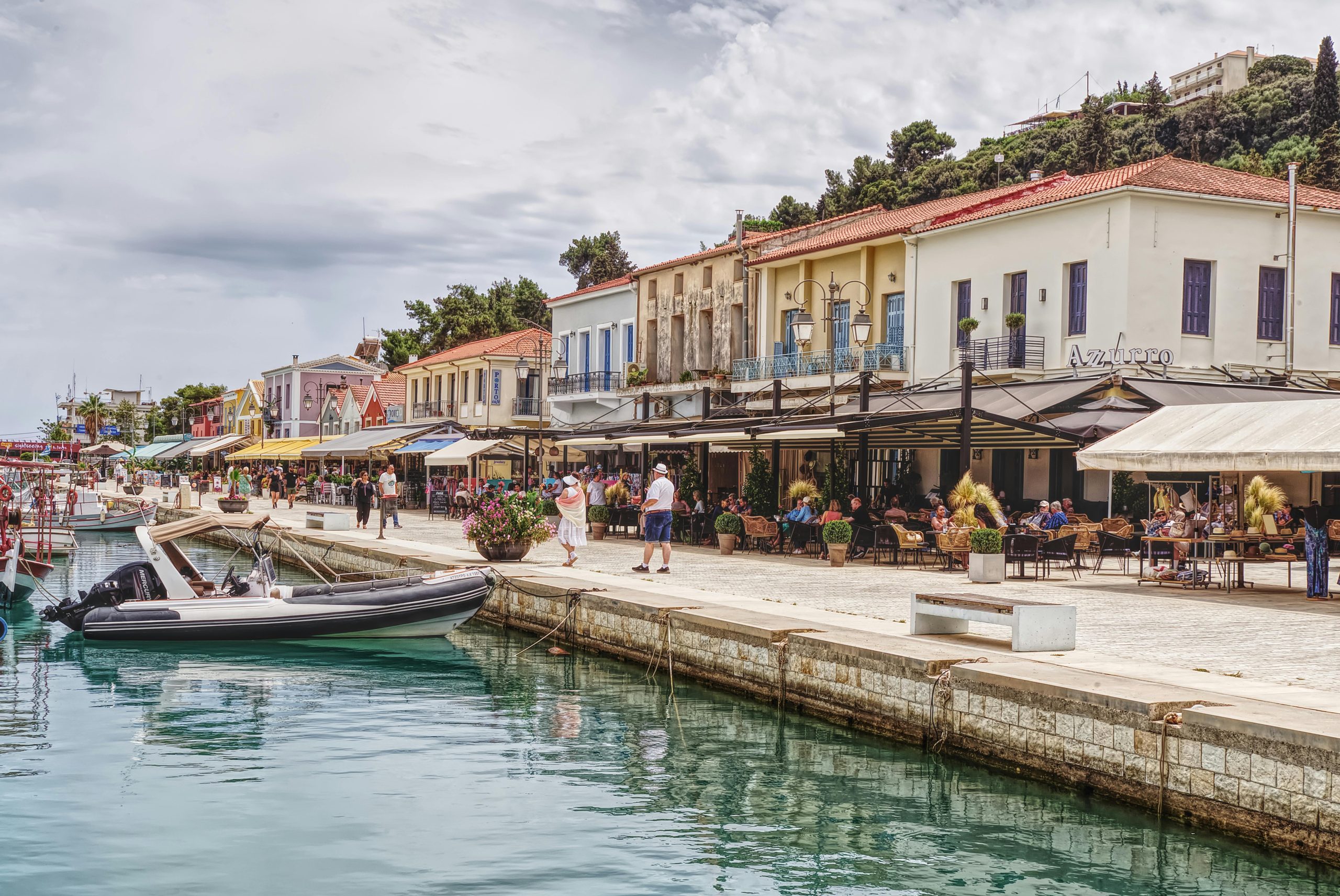
If there is one thing that distinguishes Kefalonia as much as its landscapes, it is its names. Cephalonian surnames have their own rhythm, a characteristic, almost musical sound. They are not merely family words; they are seals of origin, pieces of history and identity. Anyone who has spent some time on the island easily understands that the "-atos" at the end of a name is not accidental, it is a point of reference. It carries centuries of laughter, stubbornness and the unique humor of the Cephalonians.
Kefalonia, which successively knew Venetians, French and English, did not only keep their mansions and words. It also kept something more subtle, more personal: the way the names speak. And this way remained alive, passing from generation to generation, like a sound that reminds you of the island before you even see it.
From Venetian rule to the surname that remainsThe history of Cephalonian surnames essentially begins in the era of Venetian rule. Until then, most residents were identified simply by their patronymic: "Antonis' son", "Giorgis' son", "Nikolaos' son". Each generation changed its name, and thus families did not have a stable identity.
The Venetian administration, however, brought with it something that changed the course of things: bureaucracy. In order to organize taxation and recruitment, the Venetians asked the residents to declare a stable surname. What until then was a temporary designation became a family name. Thus, "Antonis' son" became Antonatos, "Nikolaos' son" Nikolatos, "Spyridon's son" Spyrratos, and gradually the patronymics took root over time.
The ending -atos resulted from the meeting of Greek and Italian phonetic patterns. The Venetian language influenced the pronunciation, the Greek kept the root, and from this mixture a new form of speech was born, simple, euphonious and thoroughly Cephalonian. It was not a product of planning; it was the result of daily habit, a need to declare one's identity without superfluous words.
What the names sayCephalonian surnames are not random. Behind each one lies a small story: profession, place, characteristic, or old nickname. Their categories are well-known, but on the island they take on a special color.
Patronymic surnames: denote the descendant of an ancestor. Antonatos, Nikolatos, Spyrratos, Georgatos, clear, simple and timeless. These names express continuity; a family that keeps the father's name as a sign of continuity.
Occupational surnames: were born from work. Kappatos comes from the word "kappa" (Italian: cappa), probably indicating the manufacturer or seller of overcoats. Others like Sideratos or Rizatos refer to professions or technical skills. Names that show how an art could become an identity.
Toponymic surnames: keep the memory of a village or area. An Anninos is connected to Anninata, a Valsamakis to an area rich in balsam, a Kourkoumelis to fields where the turmeric plant grew. Thus, the place lives in the name, even if the family has moved elsewhere.
Descriptive surnames: start from a physical or psychological characteristic. Names like Kontos (short), Psilos (tall), Fragias (Frenchman), Glykatzis (sweet-maker) show how a nickname, once said jokingly, could become a family seal. In Kefalonia, after all, language and humor go together.
In the Venetian years, the surname was not only a way of identification, but also an indication of social status. Families with Venetian or educated backgrounds preferred Italianized versions, while most residents of the island kept the common, Greek names with the ending -atos.
The former were considered signs of nobility and education; the latter, an indication of land, labor and stability. Over time, however, these differences began to lose their meaning. The island acquired its own social balance, where a person's worth was not measured by their name, but by their actions.
Thus, the "-atos" became a symbol of equality, not discrimination. A name that unites, not divides. In Kefalonia, where humor and cheerfulness often act as a shield against pomposity, surnames ceased to be titles and became part of everyday, oral life.
The other endingsAlthough -atos is the most known and beloved ending, it is not the only one found on the island. Kefalonia has always been a crossroads of people and cultures — and this is reflected in its names.
There are surnames in -aris or -anos, which have Greek roots and often denote a profession or origin. Others, like names in -eas or -ias, retain forms of ancient and medieval Greek, showing the continuity of the language over time. Surnames with the ending -opoulos are also found, originating from families from the Peloponnese or Central Greece, who settled in Kefalonia and were fully assimilated.
The linguistic variety of endings is like an imprint of the island's history: each form carries influences from Venetians, Byzantines, Greeks and foreign travelers. And yet, -atos prevailed, perhaps because it combines simplicity, euphony and stability, characteristics that are reminiscent of the Cephalonian temperament itself.
Surnames as a geographical “map”In Kefalonia, the surname indicates not only the family, but also the place. From the moment you say your name, the other person can almost always understand which side of the island you come from. You find different endings in Lixouri, others in the villages of Argostoli, others in the mountains or in Sami. The name is, in short, a small geographical map that you carry everywhere with you.
This phenomenon often gives rise to smiles. It is not uncommon to hear someone ask with surprise "but what is this person with a Lixourian surname doing in Faraklata?" or "how did a Kappatos end up in Keramies?". The Cephalonians themselves deal with such "anomalies" with humor, as if they were small violations of an unwritten rule that dictates each name to have its place.
Behind these small funny moments lies something very simple: in Kefalonia, the name still matters. Not because it shows class or origin, but because it carries local memory. A surname can "betray" you in seconds – to show that you are from Lixouri, Sami or Omala, before you even say it yourself.
And this is part of the island's charm: identity passes through language, and names remain a living way to recognize your place and its people — always with a little humor and a lot of familiarity.
In Kefalonia, then, surnames are not just a family matter; they are a way of recognition, conversation and teasing. They may have started from tax rolls and patronymics, but they ended up becoming part of the local psyche. And although times change, an "-atos" at the end is still enough to understand where the other person comes from — and that, for the Cephalonians, says almost everything.
Related Articles
Άσσος: ο οικισμός, το φρούριο και η εικόνα που άντεξε στον χρόνο
Πώς η μικρή Άσσος της βόρειας Κεφαλονιάς συγκεντρώνει σε έναν τόπο γεωγραφία, ενετική στρατηγική, μετασεισμική ανασυγκρότηση και σημερινή τουριστική απήχηση.
Η ναυτική ιστορία του νησιού πέρα από τα λιμάνια
Από το παράκτιο εμπόριο του Ιονίου έως τη Μαύρη Θάλασσα, τον Δούναβη και το Λονδίνο: πλοιοκτήτες, καπετάνιοι, ναυτικοί και οικογένειες που έδωσαν στο νησί διεθνή ναυτική παρουσία.
Κεφαλονιά: Μικρές ιστορίες πίσω από γνωστά σημεία του νησιού
Από τη Γέφυρα Δεβοσέτου και τις Καταβόθρες μέχρι τη Μελισσάνη, την Άσσο και το Φισκάρδο: μικρές ιστορίες που εξηγούν την Κεφαλονιά πίσω από τις γνωστές της εικόνες.