Kefalonia: The island that gave birth to legends of history, arts, and shipping
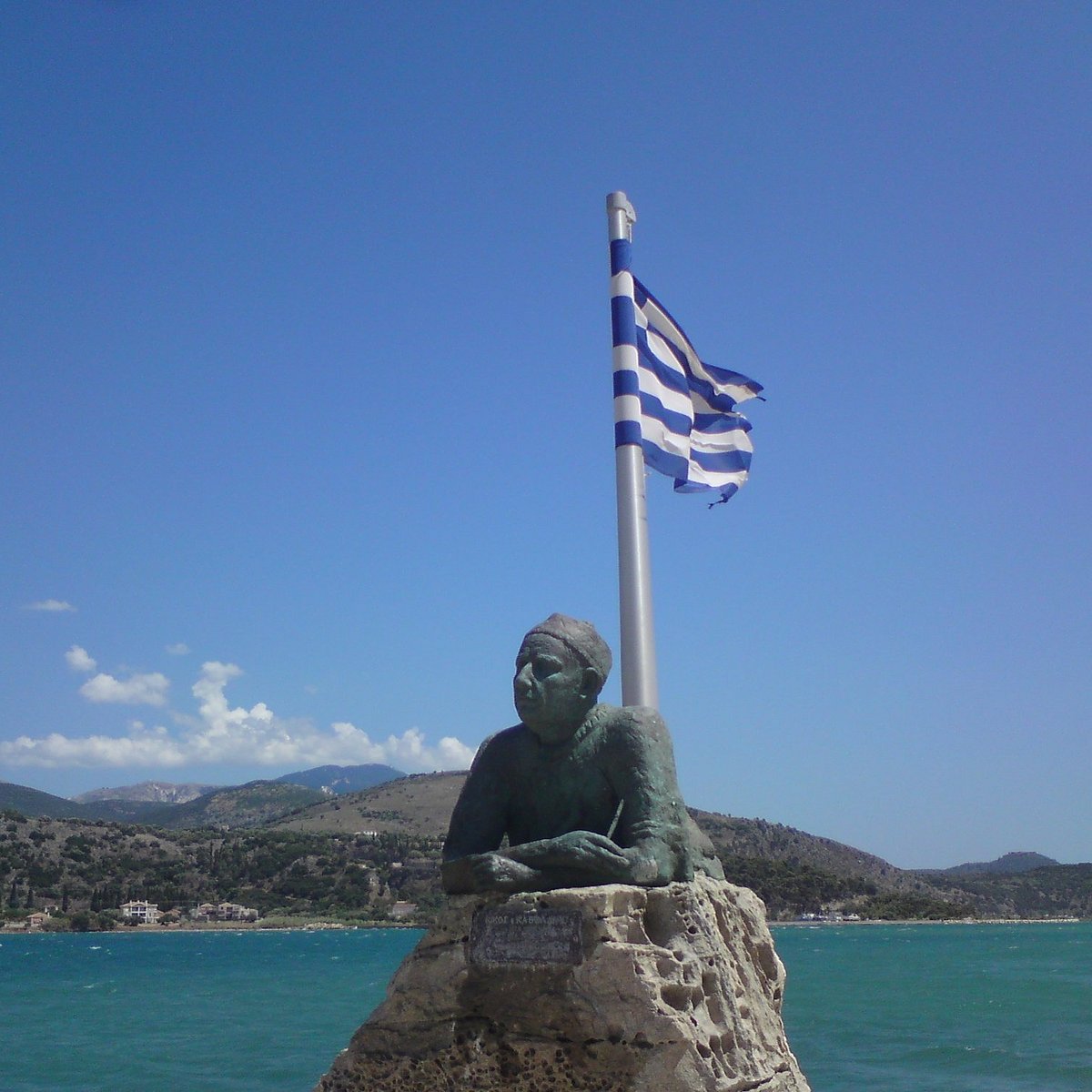
“I will always remain an ideal and unworthy lover of distant journeys and blue seas” - Nikos Kavvadias
From the satirical pen of Andreas Laskaratos to the cosmopolitan poetic prowess of Nikos Kavvadias, Kefalonia has produced personalities who left an indelible mark on history and culture.
The Kefalonians, inhabitants of Kefalonia or Kephallenia, as it was called in antiquity, are connected to a rich historical and cultural background. The island is even mentioned in the New Testament as “Melita.” In the Iliad, Homer refers to the “magnanimous Cephalenians,” whom some believe originated from Homeric Ithaca. Inhabited since the Paleolithic era, the island successively passed through the hands of the Leleges, Taphians, Cephalenians, and Cephallanes, descendants of the mythical Cephalus. Over the centuries, cultures such as the Romans, Byzantines, Normans, Venetians, Ottomans, French, and British left their mark. Significant intermingling also occurred with Cretans and Arvanites, with the characteristic surnames ending in -atos and -ata highlighting the island's historical trajectory and cultural diversity.
Historical Personalities
Kefalonia, with its rich history and cultural heritage, has been the homeland of great people who excelled in various fields. From the sea and politics to literature and the arts, Kefalonians left an indelible mark. Let's explore the lives and works of these prominent personalities.
Ioannis Fokas (Juan de Fuca, 1536-1602)
Born in Kefalonia, Ioannis Fokas, or Juan de Fuca, served as a seafarer for the Spanish Empire. He is known for discovering the Strait of Juan de Fuca, which connects Vancouver Island to the United States. His discovery played a crucial role in the development of navigation in the Pacific.
Ilias Miniatis (1669-1714)
Ilias Miniatis was a distinguished priest and theologian. Born in Lixouri, he pursued significant educational and spiritual activities. Through his written works and public speeches, he contributed to the elevation of religious education and the support of Greek identity during the Ottoman rule. Miniatis's main work was preaching, and indeed in simple language, as had been established during the Ottoman period, so that his teachings would be understandable to the people. He served as Bishop of Kernitsa and Kalavryta for the last three years of his life.
Konstantinos Gerakis (1647-1688)
From Lixouri, Kefalonia, Konstantinos Gerakis, also known as Constantis Gerakis (Costantin Gerachi) or Constance Falcon, was that incredible 17th-century adventurer who rose to become prime minister of distant Siam (present-day Thailand). The story of his life was a modern Odyssey. With exceptional diplomatic acumen, he contributed to improving trade relations between Europe and Asia. His story remains a unique example of Greek presence in Asia.
Panagis Vallianos (1814-1902)
Panagis Vallianos, a wealthy merchant, shipowner, and banker based in England, born in Keramies, was one of the greatest Greek benefactors. He funded the establishment of the Vallianian Library and helped in the construction of schools and other educational institutions. His philanthropic work shaped modern education in Kefalonia. Furthermore, he is considered the “patriarch” of Greek shipping or “the father of the Greek maritime world” as he was the first Greek shipowner with such a large fleet.
Andreas Laskaratos (1811-1901)
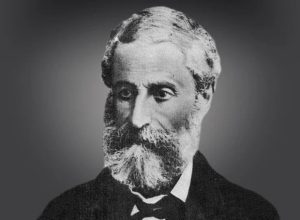
Andreas Laskaratos from Lixouri was a satirical writer, known for his harsh criticism of social injustices, political incompetence, and religious superstitions. Through his works, such as “Mysteries of Kefalonia,” he exercised sharp criticism, causing strong reactions, even excommunication by the Church. However, his excommunication by the Metropolitan of Kefalonia in 1856 did not deter him; on the contrary, with his well-known caustic humor, he thanked the bishop and asked for the soles of his children's shoes to also be “excommunicated” so they wouldn't wear out!
Marinos Antypas (1872-1907)
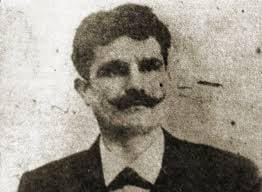
Marinos Antypas, born in Kefalonia, was a pioneer of the social struggle for labor rights. He demanded schools for poor children, roads and doctors for everyone. In fact, he openly expressed the demand for land to be given to landless laborers, land that would be taken from the landlords. With his actions, he contributed to the improvement of the living conditions of the lower classes. His assassination in 1907 made him a martyr for social justice and contributed to the great uprising in Kileler and ultimately to the legislative regulation that gave land and rights to poor farmers.
Ioannis Metaxas (1871-1941)
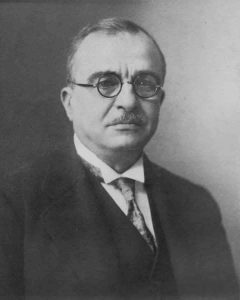
Ioannis Metaxas, a native of Kefalonia, played a pivotal role in the Greek political scene. As Prime Minister of Greece, he uttered the historic “No” to Italian demands in 1940. Although his dictatorship remains controversial, his role in establishing national defense and delaying the Nazi advance is recognized as decisive. Metaxas died in January 1941, shortly before Germany's invasion of Greece.
Contemporary Personalities
Nikos Kavvadias (1910-1975)
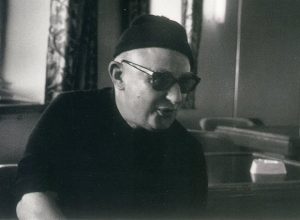
The poet of “distant journeys and blue seas,” Nikos Kavvadias, son of Charilaos Kavvadias and Dorothea Angelatou of the famous shipowning family of Kefalonia, celebrated the lives of sailors through works such as Marabou and Poussi. During his travels, he captured on paper images from the places he visited, maritime life, sailors and their relationships with their homeland, the sea, and women. His poetry was set to music by artists such as Thanos Mikroutsikos, Yiannis Spanos, and the Katsimihas brothers, contributing to the timeless appeal of his work.
Nikos Fokas (1927-2021)
Nikos Fokas, a leading contemporary Greek poet, was distinguished for his deep philosophical style. His work encompasses diverse themes, from human nature to social concerns, and constitutes an important part of modern Greek literature.
Current MEPs originating from Kefalonia
Eleonora Meleti
Eleonora Meleti, MEP, journalist, and presenter, with roots in Kefalonia, expresses her love for her homeland at every opportunity.
Nikolas Faradouris
Nikolas Faradouris, a distinguished lawyer and MEP, has made significant contributions to energy and environmental issues. His participation in the European Parliament and his initiatives for sustainability demonstrate his commitment to issues of global importance.
The Maritime Tradition of Kefalonia
Kefalonia has been an important shipping hub, with families who pioneered the shipping industry.
Vallianou Family
The Vallianoi, from Keramies, developed one of the first large merchant fleets in the Mediterranean region. Their influence on global shipping remains significant.
Vergotis Family
The Vergotides, from Kourkoumelata, were among the most powerful shipping families. With significant businesses in the 20th century, they enhanced Kefalonia's reputation as a center of maritime activity. In fact, in 1953, Kourkoumelata was completely destroyed. However, the shipowner George Vergotis decided to financially support the reconstruction of the entire village.
Giannoulatou Family
Originating from Asos, the Giannoulatou family emerged as one of the most powerful shipowning families of the 20th century. With activities ranging from the Mediterranean to the Far East, they made a decisive contribution to maritime development. Their company, “Ionian Steamship,” dominated international routes and introduced ferries on the Greece-Italy line.
Fokas Family
The Fokades, from Fokata of Livathou, were shipmasters and shipowners with extensive activity in the Mediterranean and the Black Sea from the 18th century. Members of the family invested in shipping, creating impressive fleets and contributing to the development of ocean-going shipping.
Undoubtedly, this island has produced very important personalities, making it clear that Kefalonia is not only an island of rich natural beauty but a place that cultivates spirits and leaves a legacy of our ancestors' thirst for freedom and justice and the innovative vision of seafarers, spotlighting the largest island of the Ionian Islands as a living beacon of culture, creativity, and progress.