Farmers, sailors, and merchants: The world of old professions in Kefalonia
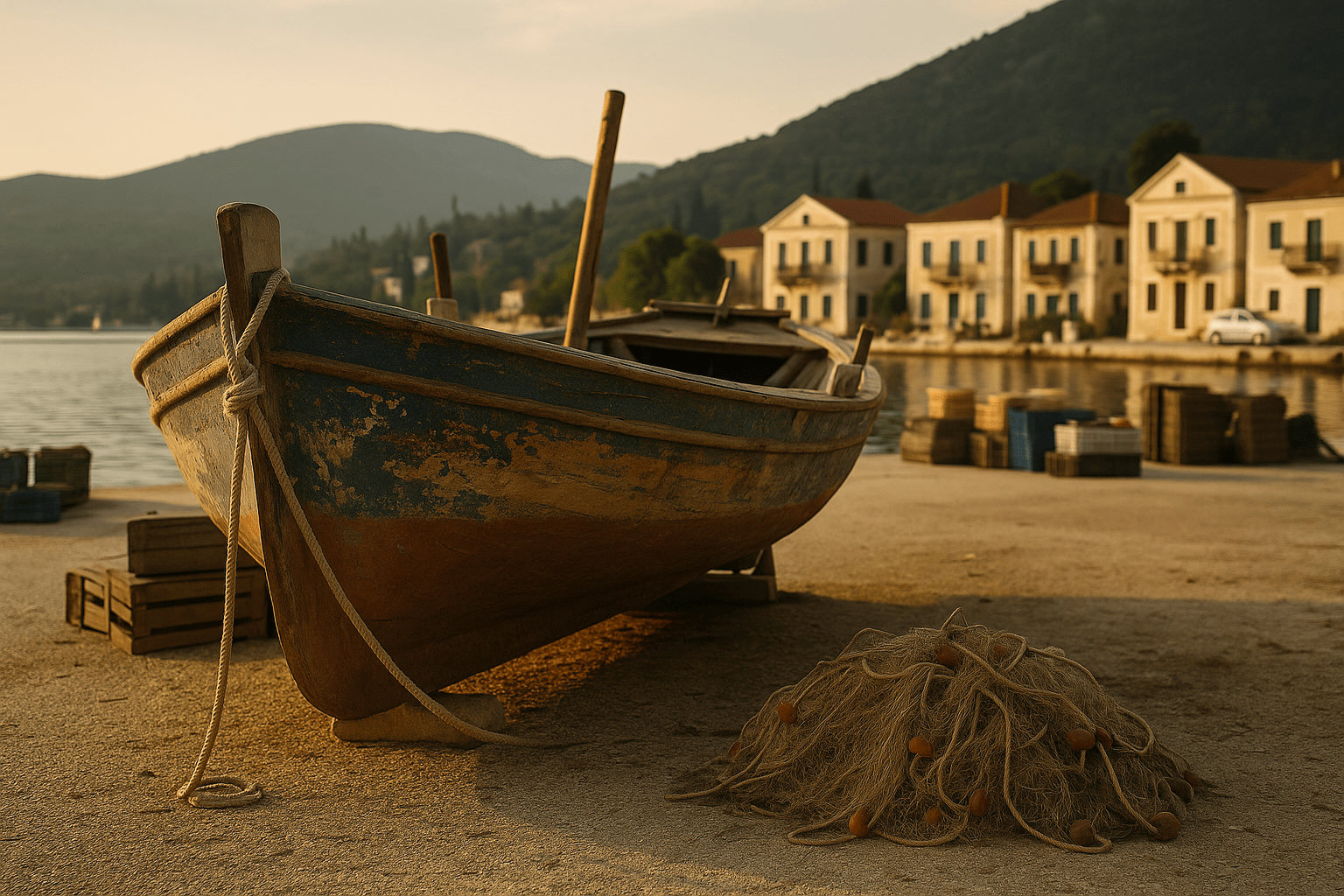
There is a whole world that stretches behind the current images of Kefalonia, a world that has faded from everyday life but remains alive in the memory of the old and in the scattered stories you hear in cafes. It was the world of professions that kept the island standing for centuries, back when villages were full, roads were dirt, families were large, and needs were few. Before tourism appeared, before houses had manicured yards, and before life adopted rhythms defined by seasons and not by nature, Kefalonia relied on three basic categories of people: farmers, sailors, and merchants. Around and with them, a multitude of small professions operated, from craftsmen to fishermen, completing the fabric of everyday life.
Pre-tourism Kefalonia was a self-sufficient place. Most people lived on what the land produced or what the boat brought to the harbor. Money circulated little, houses were simple, warehouses full of tools and products made with effort. There wasn't the current logic of "what do I want to work," but rather the logic of "what can sustain the family." The profession was an inheritance. You were born into it, you learned it without school, you continued it because that's how the world worked.
The farmer was the pillar of this society. He was a man of the land, but in reality, he was a craftsman, a master, an agronomist, a laborer, and a guardian of the harvest all at once. He knew when to prune, when to water, when to fear the weather, when to expect rain. Robola, the crop that still characterizes the island, was perhaps the most demanding. The vineyards saw the sun from steep slopes, the soil was white and hard, and the art of grape harvesting passed from hand to hand. Olives complemented the farmer's life, along with a few vegetables, grains, and the necessary animals for the home. Daily life had no fixed hours. Anyone who worked the land had a schedule determined exclusively by the seasons.
A common mistake when talking about old professions is that we forget women. In Kefalonia, they were never simple assistants. They worked alongside men in the fields, washed, gathered greens, fed animals, kept the house in perfect order, and raised children with a daily routine that included no rest. They were the axis around which family life revolved, and often they kept the house standing when men were away on their travels.
Because if the land provided food, the sea provided money. The Kefalonian sailor was an almost mythical figure in his time. From the late 19th century and especially during the Interwar period and beyond, seafaring became the main profession for thousands of families. Children who today we would call teenagers boarded ships and learned about the world from the decks. Ports like New York, Buenos Aires, Rotterdam, and Cairo were almost parts of the island. There you would hear a Kefalonian accent, there friendships were forged, there stories arrived that would later become family anecdotes.
The sailor was away for months, perhaps even years. The home waited for him with anxiety, pride, fear, but also a sense that his absence was part of the normalcy. He returned with photos from distant lands, with gifts, with stories of storms and ports that no one in the village would ever see. This cosmopolitan aspect of Kefalonia was not built from leisure travel, but from journeys out of necessity. Seafaring became a culture, a way of thinking, and a source of income that changed society.
Between the land and the sea lay the third major pillar of the Kefalonian economy: trade. The old merchant was not just a shopkeeper. He was the person who bought products from the producer, transported them where there was a need, brought necessities to the village, acted as an informal mediator and lender. The grocery store was the center of the community. Discussions took place there, news spread there, there you could get a little sugar on credit until you sold oil or grapes. Large merchants had connections with other islands, with Patras, with Italy. Through them, Kefalonia began to connect commercially with the rest of the world.
Around these three large professional groups, there was a whole society of craftsmen and artisans who are now considered almost legendary figures. The blacksmith was the person who shaped metal, from tools to doors and doorknobs. The carpenter made hulls for boats, furniture, windows, things that lasted for decades. The cartwright created the carts that transported all the village's produce. The shoemaker was the craftsman who repaired shoes in an era when nothing was thrown away. Millers ground grain, shepherds kept the mountain villages alive, fishermen brought daily fish to the table with an effort that is not easily described.
This world began to change from the 1970s onwards. Tourism brought new jobs, new needs, and a different economic model. Fields began to lie fallow, old workshops closed, young people preferred to stay on the island instead of leaving on ships. What was once taken for granted began to seem distant. Some professions disappeared, others transformed, others simply became stories told in large gatherings.
And yet, Kefalonia still carries this old DNA. The pride of work, the stubbornness, the self-sufficiency, the feeling that things get better when you make them with your hands, the self-confidence of the islander who has seen the world through the stories of old sailors, the social solidarity that developed in times when everyone needed everyone – all these are legacies of the old professions.
The land still carries the stones from the dry stone walls, the old vineyards, the olive trees that you see and understand have endured generations. The harbors have changed, but if you sit on the pier for a while, you will hear someone telling an old seafaring story as if it happened yesterday. The shops have changed form, but people's need to gather somewhere and talk remains the same. What was lost as practice, remains as character.
The world of old professions is not just a romantic reference to the past. It is the foundation on which modern Kefalonia was built, a way to remember where we started before the island became a destination. A reminder that behind the beaches and hotel signs, there are stories of people who worked hard, traveled far, built with their own hands a place that managed to stay alive. And as long as these stories continue to be heard, even in whispers, that world is never truly lost.
Related Articles
Η δημογραφική συρρίκνωση της Κεφαλονιάς: πού χάνεται ο πληθυσμός και γιατί
Η απογραφή του 2021 δείχνει ότι η Κεφαλονιά δεν αδειάζει ομοιόμορφα. Το Αργοστόλι χάνει πληθυσμό, η Σάμη κερδίζει, και το ερώτημα είναι τι σημαίνει αυτό για το μέλλον του νησιού.
Ποιανού είναι πια το χωριό; Η σιωπηλή αναδιάταξη που επιφέρει η βραχυχρόνια μίσθωση
Από το Ελειό-Πρόννοι έως το Ληξούρι και το Αργοστόλι, η Κεφαλονιά διανύει μια μεταμόρφωση που δεν γίνεται πάντοτε αντιληπτή με την πρώτη ματιά.
Η οικονομία των 100 ημερών: Πώς η εποχικότητα αλλάζει τα νησιά
Τι σημαίνει πραγματικά να ζει ένα νησί από λίγους μήνες τουρισμού — και γιατί η «οικονομία των 100 ημερών» καθορίζει την εργασία, την κατοικία και τις υποδομές όλο τον χρόνο.