War, oil, inflation: the international crisis as experienced in Greek daily life
Daily life in Greece during this period cannot be explained solely in terms of economics or international politics, because in reality it is the result of the convergence of these two. Developments beyond borders no longer remain at the level of news or analyses, but directly enter the lives of citizens, affecting costs, choices, and the sense of stability. War, geopolitical tensions, and instability in energy markets are not abstract concepts, but factors that translate into daily pressure, rising prices, and persistent uncertainty.
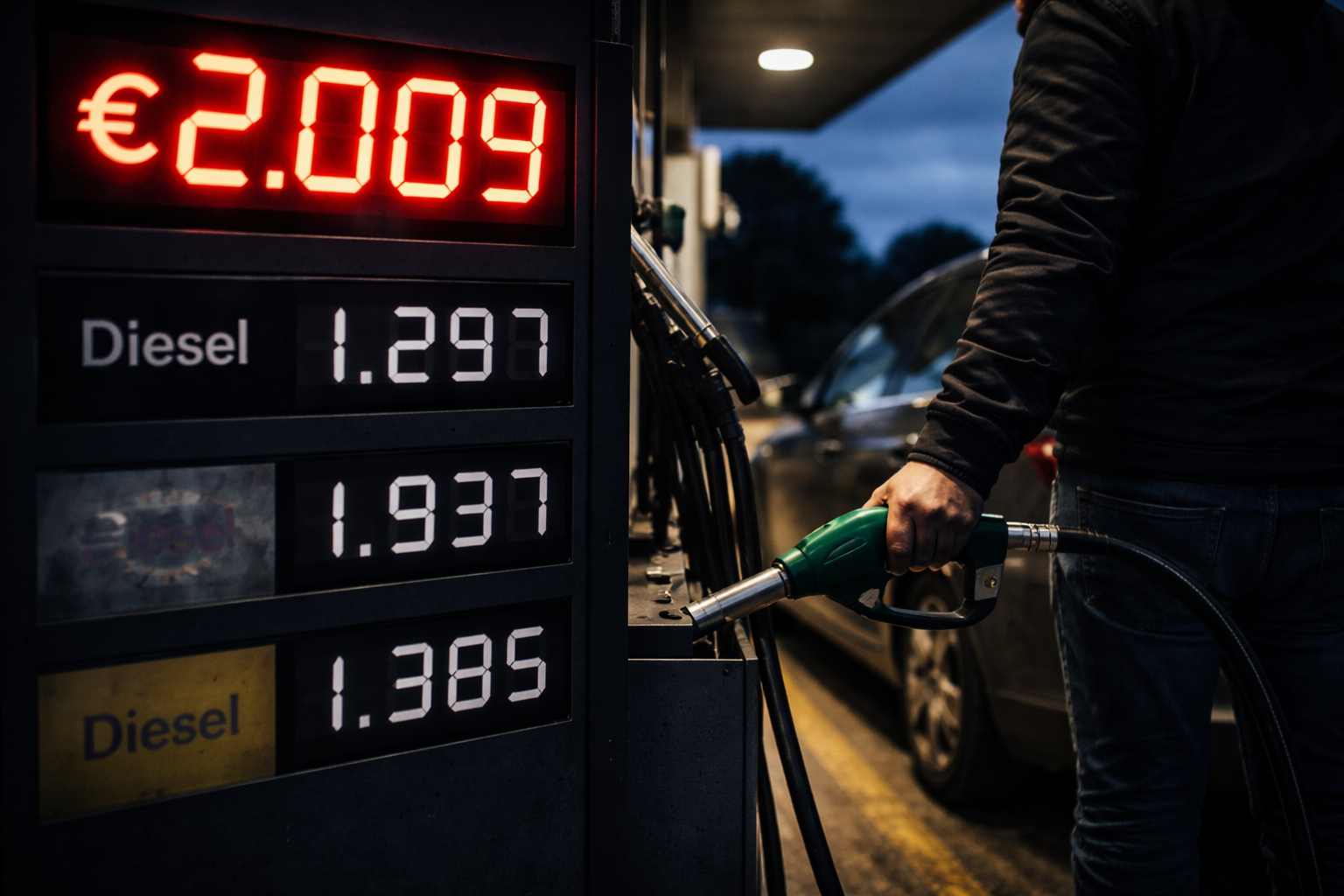
The first point of contact of this international crisis with Greek daily life is energy, and primarily oil. When its price reaches or exceeds 2 euros per liter, the impact is not limited to an increase at the pump. Transportation becomes more expensive, heating more difficult, and the overall operating cost of the economy increases. Transport is directly affected, which is passed on to products and services, creating a chain reaction that ends up with the final consumer. What appears to be an international development turns into a daily reality, and daily life adapts not because there is a choice, but because there is no alternative.
This impact becomes more intense in a country like Greece, where income does not leave much room for absorbing increases. Unlike other economies, where price changes can be absorbed more easily, in the Greek case every increase is immediately felt. The difference is not only in the level of prices, but in their relationship with disposable income. This means that the same international development has a heavier impact because it directly affects the daily management of expenses.
At the same time, inflation returns as a key pressure factor, not as a temporary phenomenon that appears and recedes, but as a persistent situation. Prices of basic goods do not substantially decrease, while previous increases remain, creating a new cost level that is now taken for granted. This leads to a gradual but steady change in daily life, as citizens are called upon to adapt to a reality that does not seem to change. Consumption does not disappear, but is limited, and choices become more careful, not out of habit, but out of necessity.
However, the pressure does not come only from economic data. The broader climate of uncertainty created by international developments equally affects daily life, even if it cannot be measured in numbers. Ongoing conflicts, tensions between states, and general instability create an environment in which there is no clear picture of the future. This does not necessarily translate into immediate fear, but into a constant caution, a feeling that things can change quickly and in an unknown direction.
Daily life, within this framework, is not interrupted, but transformed. Citizens continue to work, move, and function, but they do so in an environment that does not offer the same sense of stability. The difference is not that life becomes impossible, but that it becomes more demanding without offering corresponding rewards. Adaptation becomes a key element of daily life, as circumstances do not allow for a different approach.
One of the most characteristic elements of the period is the feeling that citizens are watching developments without being able to influence them. Information is continuous, news is abundant, but the ability to intervene is limited. This creates a peculiar situation, where daily life unfolds in an environment shaped elsewhere. Decisions are made at the level of international markets and political developments, but the consequences are experienced at the local level.
This impact becomes even more apparent when combined with the continuous flow of news. Information about conflicts, energy developments, and economic pressures does not operate in isolation, but cumulatively, creating an environment in which tension does not peak, but never subsides. Citizens are not in a state of panic, but they do not feel secure either. Daily life moves between these two states, without stabilizing.
In areas such as the islands, the situation acquires additional dimensions, as the increased cost of transport and dependence on specific infrastructures reinforce the pressure. The cost of living becomes heavier, not only due to prices, but also due to the structure of daily life, which requires more resources for basic functions. This makes adaptation more difficult and reinforces the feeling that developments affect different regions unevenly.
The main characteristic of the period is not the existence of a crisis with clear boundaries, but the coexistence of many factors acting simultaneously. War, oil, and inflation are not separate issues, but parts of a single reality that affects daily life on multiple levels. And what makes the situation more difficult is that there is no clear indication of when and how it might change.
In the final analysis, Greek daily life during this period is shaped not only by the domestic environment, but by a broader international reality that increasingly determines living conditions. The economy, energy, and overall stability do not depend exclusively on internal factors, but on developments beyond control. This creates a daily life that is more complex, more demanding, and less predictable, in which adaptation is not an option, but a necessity.
And perhaps this is the most characteristic element of the period: that life goes on, but on terms not determined locally, and this changes not only the conditions, but also the way one perceives daily life itself.