What a summer costs now
Transport, accommodation and everyday spending are pushing up the holiday bill in Kefalonia, while the same increases pass into the daily life of permanent residents.
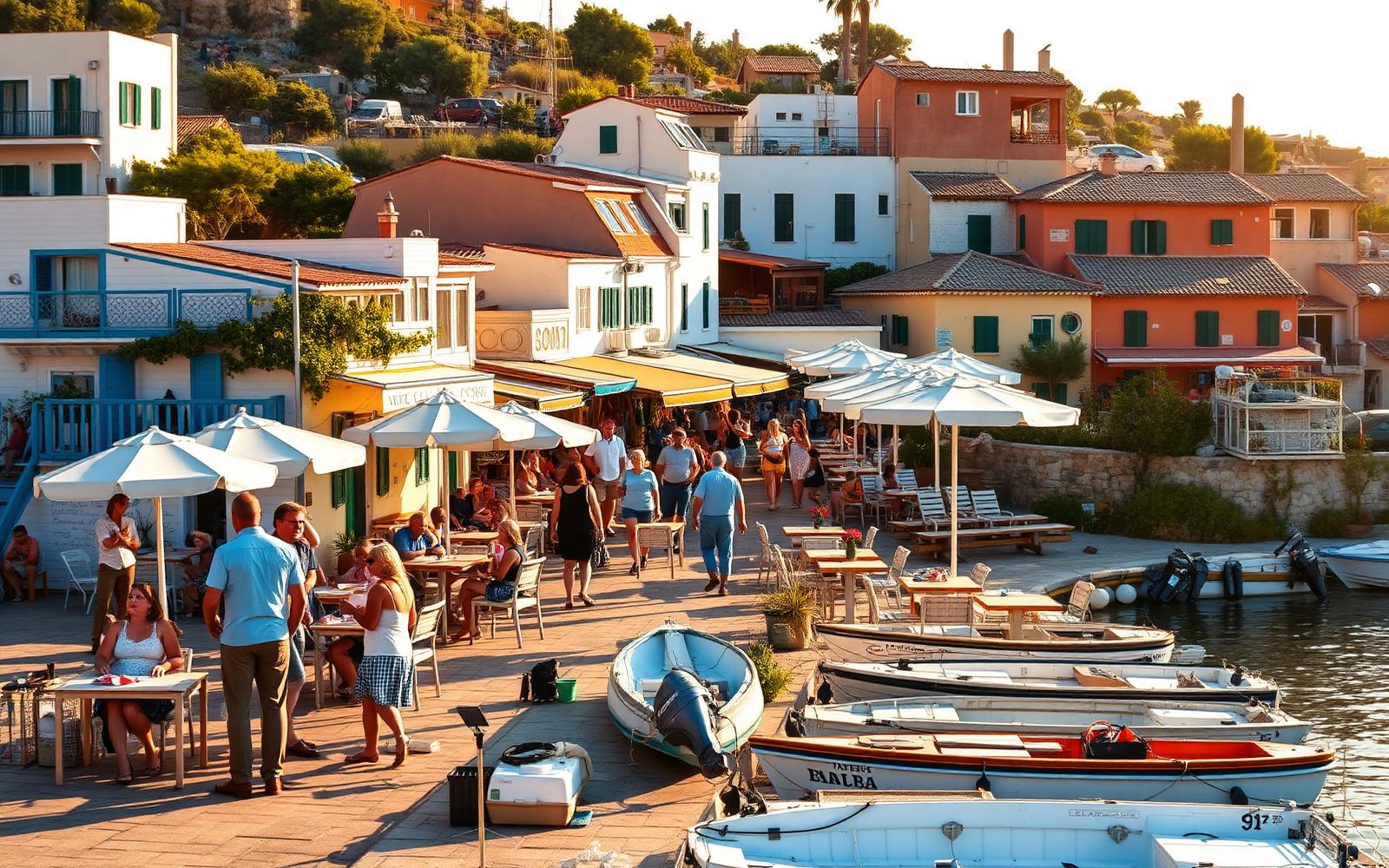
Transport, accommodation and everyday spending are pushing up the holiday bill, while the same increases pass into the daily life of permanent residents.
Every July, the debate over the cost of a holiday returns with the same seemingly simple question: how much money do you need for a few days on a Greek island? The answer depends on the season, the type of accommodation, the way you travel, the number of people and everyday choices. Behind these differences a clear trend is now taking shape. Access to summer holidays is becoming more expensive, trips are getting shorter, and the distance between those who own a family home and those who pay the full cost of their stay is growing.
Kefalonia sits at the centre of this shift. Direct flights from many European cities, a wider supply of accommodation and strong international recognition have expanded the island''s tourism market. At the same time, its geography usually requires a car, distances between areas are long, and choosing a different place to stay can significantly change the final bill. The price of a summer is shaped even before the first day of the holiday begins.
The bill starts with getting there
For travellers coming from mainland Greece by car, the ferry crossing is the first fixed expense. On the Kyllini–Poros route, a single ticket currently costs €14.50 per adult, €8 for children aged 5 to 10 and €45 for the car. A couple with a car therefore pays €74 per crossing and €148 in total for the return trip. A family of four with two children aged 5 to 10 pays €180. Add to this the fuel and tolls to reach Kyllini, plus driving on the island. The ferry company''s return discount does not apply between 25 March and 15 September — the entire core summer season.
The Patras–Sami route offers a different starting point, with a higher fare for the vehicle. Two adults and a car cost €83.70 one way, so €167.40 for a return trip. The option may cut the road distance for some travellers, but the financial difference remains limited. Bringing your own car has practical value in Kefalonia — it allows access to different beaches, villages and areas without renting a vehicle every day. At the same time, it turns the ferry ticket into a mandatory upfront cost for a large part of domestic tourism.
For air travel, the price depends heavily on booking date, luggage and availability. Data from the Hellenic Statistical Authority show that air fares rose by 5.9% in a single month, from May to June 2026. On an annual basis, the entire transport category recorded a 7.2% increase, driven among other things by air tickets, fuel and private-car related services.
Accommodation decides who can stay and for how long
Accommodation remains the biggest variable in the summer budget. A room or apartment that in May targets budget travellers can move to a completely different price bracket in July and August. Distance from the sea, the presence of a pool, family capacity and the specific area all shape the rate. The same week shows wide swings between Argostoli, Lixouri, Poros, Skala, Agia Efimia, Assos and Fiskardo.
The rise affects Greek tourism more broadly. In June 2026, the restaurant and accommodation services category was 7.7% more expensive than in June 2025. That increase followed a 7.1% rise the previous year, meaning the new price level was added to a market that had already seen significant hikes. Headline inflation stood at 4.4% in June — almost half the pace of the rise in dining and lodging.
For a visitor paying commercial accommodation rates, the length of the holiday becomes the main tool for containing cost. Savings come from fewer days, off-peak periods, or staying outside the most expensive zones. For those with a family home, the equation changes radically. The largest part of the bill disappears and the trip is reduced to transport, food and daily spending. As a result, two families with similar incomes can experience the same island with completely different financial weight.
The rise moves to the table
Food is the second major daily expense. A family can limit eating out, cook at their accommodation or organise shopping differently. Even so, this option is affected by rising food prices. In June 2026, the food and non-alcoholic drinks category showed a 2.7% annual increase. Beef was significantly more expensive, up 15.6%, lamb and goat rose 16.2%, poultry 4.7%, coffee 4.3% and juices 6.5%. Olive oil, on the other hand, fell 12.8% after a long period of unusually high prices.
In restaurants, the price on the menu contains far more than the raw ingredient. It includes wages, energy, rent, deliveries, equipment, taxes and the cost of running a business that often has to earn most of its annual income in just a few months. The 7.7% increase in dining and lodging services shows that eating out is rising far faster than average inflation. For a couple, even a single daily meal out quickly multiplies the total for a week. For a family, the difference between eating out every day and only two or three times during the holiday can run to several hundred euros.
The debate about "expensive food" often stops at the final receipt. The full picture requires comparing quality, quantity, location and level of service. There are businesses that invest in staff, local ingredients and better operations — and there are cases where the high price rests mainly on the location or on summer demand. This distinction matters for a destination that seeks higher-spending visitors. A high price can be accepted when it comes with matching value; otherwise it becomes a negative experience and hurts the overall image of the place.
More revenue, shorter stays
National data for 2025 show a real shift in traveller behaviour. Greece''s travel receipts rose by 9.4%, reaching €23.6 billion. The number of incoming travellers grew 6.4%, but total overnight stays edged up only 1.6%. Average length of stay fell 4.5%, from 5.9 to 5.6 nights, while average spending per night rose 7.7% to €96.60 per traveller.
The picture is one of a market with more visitors, higher daily cost and shorter trips. These figures cover the whole country and do not isolate Kefalonia, but they describe the wider environment in which the island operates. The rise in tourism income is increasingly tied to daily spending and less to longer stays. Part of the audience is still travelling, adjusting the number of days to their available budget.
The same trend can change the character of a holiday. A four- or five-day trip leaves less room to explore a large island. Consumption concentrates in a few places, movement is organised under greater time pressure, and visitors choose the most recognisable areas. For local businesses, higher daily spending is a positive development. For the destination as a whole, shorter stays raise questions about how income is distributed geographically and whether less prominent areas actually benefit.
Demand remains strong
Kefalonia continues to receive large numbers of visitors during peak season. In July 2025, the airport recorded 208,226 passengers, up 2.4% on the same month of 2024. Of these, 184,370 were international and 23,856 domestic flights. The numbers cover arrivals and departures and only air traffic — not travellers arriving by ferry.
The first available data for 2026 show a more measured overall picture. By the end of May, airport traffic was almost flat compared with 2025, with 110,378 passengers and growth of just 0.1%. Domestic traffic had risen 10.1%, while international traffic was down 2.9%. In May alone, however, total traffic strengthened by 2.2%. The data point to a mature tourism market where economic performance will depend largely on spending per visitor and less on a dramatic increase in the number of arrivals.
Strong demand allows accommodation and businesses to raise prices, especially on the most popular dates. That capacity has limits. When the overall experience consistently exceeds the financial means of the average European or Greek family, the make-up of the audience changes. Lower- and middle-income visitors move to fewer days, off-peak periods or other destinations. The shift can raise average spending per person, but at the same time it restricts the social accessibility of holidays.
Summer for the permanent residents
For permanent residents, summer inflation takes a different form. The cost of accommodation is replaced by the cost of housing, energy, everyday shopping and transport. In June 2026, the housing, water, electricity and fuel category showed an annual increase of 10.6%. Rents were up 7.1%, home repair and maintenance 5.3% and related services 5.8%. These figures cover Greece as a whole, but they describe the pressure every household faces before the specific conditions of an island are added on top.
The summer season also raises fuel consumption, air-conditioning use and travel. Everyday life takes longer because of traffic, while many services and businesses adapt to the needs of visitors. The tourism economy provides jobs and income, but rising prices apply equally to seasonal workers, pensioners, families and salaried employees. Extra tourism income is spread unevenly, while the increase in cost reaches almost everyone.
Housing is the most critical point. An owner can put a property on the tourist market for higher summer returns, while a worker needs affordable accommodation close to their job. The clash between these two needs is sharper in areas with limited housing stock. The 7.1% national rise in rents adds to a problem that is now directly linked to whether businesses can find staff and whether young people stay on the island.
Who can afford the bill in the end?
A couple arriving via Kyllini by car starts with €148 in ferry costs. Then come the drive to the port, fuel on the island, seven nights of accommodation, food, coffee, beaches and any activities. For a family with two children, the ferry alone costs €180, before anything else is counted. Based on the average national tourism spending of €96.60 per person per night in 2025, a seven-day trip corresponds on average to about €676 per traveller. This is a statistical average for the whole country, covering different destinations and types of travel, but it gives a clear sense of the scale.
Holidays remain affordable for those who share the cost, have a family home, travel off-peak or organise their stay months in advance. For those who need last-minute flights, a rental car and accommodation in a popular area, the total quickly moves to a level that requires significant disposable income. The market is gradually shifting toward the visitor who accepts higher daily spending, even for a shorter time.
This change has economic benefits, as it raises revenue without a matching rise in the number of visitors. It also has consequences for the character of the destination. For decades Kefalonia has been linked with family holidays, returning visitors and longer stays. Keeping that relationship requires a range of options, reliable services and prices that match the quality. A high-value destination needs to offer an experience worthy of the amount it asks.
The real price of summer
A more expensive summer is the result of many simultaneous shifts: higher transport costs, higher rents, more expensive dining, price rises in raw materials and strong demand concentrated in a short window. Businesses try to cover their own rising expenses, visitors cut their days short, and residents absorb the same increases in daily life. The final amount is distributed unequally, depending on who owns a home, a car, has family connections or a higher income.
The debate about prices therefore needs to move beyond individual receipts and menu comparisons. The core question is what kind of destination is taking shape. An economy based on higher daily spending can be sustainable, provided it delivers quality, decent wages, adequate infrastructure and real value. When higher cost is limited to the price, without a matching improvement in experience and everyday life, growth becomes fragile.
Summer in Kefalonia remains sought after. The question for the coming years is who will be able to live it, how long it will last, and how much of its added value will finally remain in the place itself.
Related Articles
Η ακρίβεια στην Κεφαλονιά: γιατί τα νοικοκυριά των Ιονίων ξοδεύουν περισσότερο
Οι δαπάνες των νοικοκυριών στα Ιόνια αυξήθηκαν κατά 12% το 2025. Τι σημαίνουν η νησιωτικότητα, τα καύσιμα και ο τουρισμός για τους κατοίκους της Κεφαλονιάς;
Η δημογραφική συρρίκνωση της Κεφαλονιάς: πού χάνεται ο πληθυσμός και γιατί
Η απογραφή του 2021 δείχνει ότι η Κεφαλονιά δεν αδειάζει ομοιόμορφα. Το Αργοστόλι χάνει πληθυσμό, η Σάμη κερδίζει, και το ερώτημα είναι τι σημαίνει αυτό για το μέλλον του νησιού.
Ποιανού είναι πια το χωριό; Η σιωπηλή αναδιάταξη που επιφέρει η βραχυχρόνια μίσθωση
Από το Ελειό-Πρόννοι έως το Ληξούρι και το Αργοστόλι, η Κεφαλονιά διανύει μια μεταμόρφωση που δεν γίνεται πάντοτε αντιληπτή με την πρώτη ματιά.