Recycling and waste management in Kefalonia: Step-by-step process, challenges, and prospects for the cleanest island in the Ionian Sea
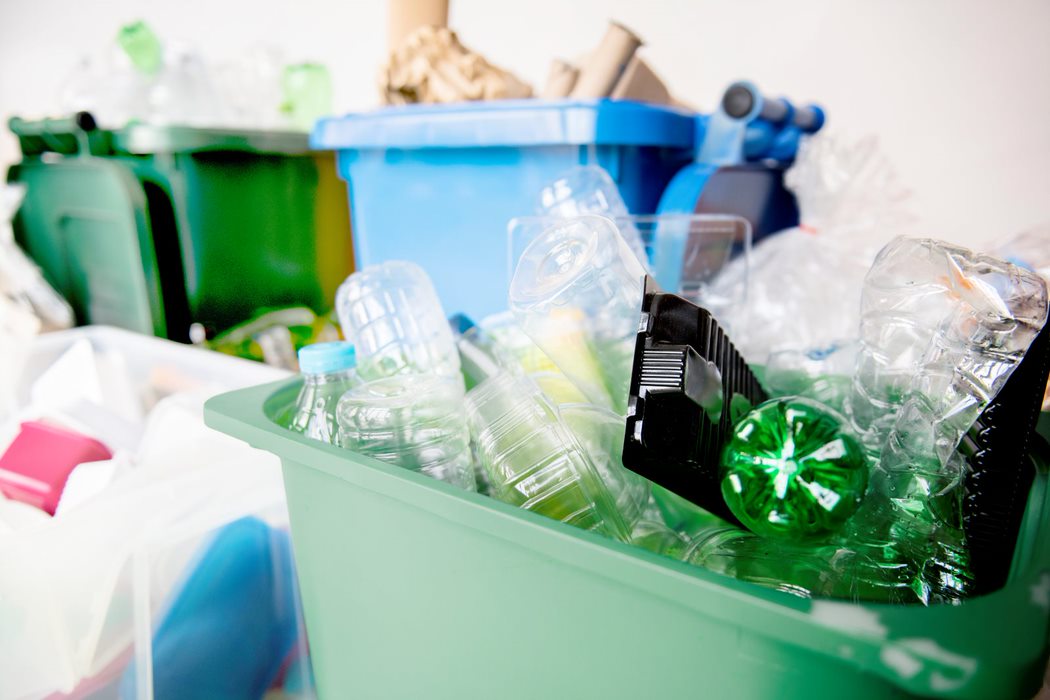
Waste management in Kefalonia has been a complex and widely discussed issue in recent years. From the establishment of the Intermunicipal Enterprise for Cleanliness and Environmental Protection of Kefalonia in 1984 to recent changes with the introduction of the new Solid Waste Management Body (FODSA), the issue of waste collection and management has seen many developments and challenges.
Historical Review and Achievements of the Intermunicipal EnterpriseThe Intermunicipal Enterprise was established in 1984 by the then Mayor of Argostoli, Alekos Kalafatis, in collaboration with the Mayor of Lixouri, Makis Theotokatos, and 33 other communities on the island. This endeavor was characterized by pioneering actions for Greece, which included beach cleaning, recycling, and habitat restoration programs. Indicatively, Kefalonia was the first Greek island to implement a beach cleaning program in 1996, and from 2008, it began recycling packaging materials in cooperation with the Hellenic Recovery and Recycling Corporation S.A.
The Intermunicipal Enterprise was recognized and honored for its actions, as evidenced by the KEDKE conference in 1996 in Argostoli, with the presence of ministers and European Union officials.
Waste Management and the Role of EDAKIEDAKI (Waste Management Company of Kefalonia and Ithaca SA OTA) is responsible for the collection and transport of waste (green bins) and for recycling (blue bins), as well as for purple bins in most areas of the island.
From 1.1.2021, relevant legislation was introduced that removed part of EDAKI OTA's responsibilities, specifically those concerning solid waste management. Since then, its responsibilities have been limited to the collection and transport of municipal solid waste (residual mixed waste and other recyclable material streams). More specifically, EDAKI OTA's responsibilities are outlined within the framework of Law 4555/2018 as follows:
- Local self-government organizations (OTA)
of the first degree have the following responsibilities:a. the development and implementation of a Local Waste Management Plan (TSDA) of para. c' of article 2 of the joint ministerial decision 51373/4684/2015 (B'2706) within the administrative boundaries of the respective municipality, which forms the basis of the contracts concluded by the municipality with Alternative Management Systems and other waste management bodies. The TSDA must be consistent with the relevant PESDA,
b. the development of prevention programs for waste reduction and preparation for reuse,
c. the organization and implementation of source separation of municipal waste within their administrative boundaries in accordance with the relevant TSDA and PESDA,
d. the organization and implementation of separate collection for at least four (4) distinct streams of recyclable waste materials, namely glass, paper, plastics, and metals from municipal waste, either by themselves or in cooperation with Alternative Management Systems, in application of the provisions of Law 2939/2001,
e. the organization and implementation of separate collection of bio-waste originating especially from catering establishments, households, large producers, and green waste from parks and gardens,
f. the collection and transport of residual mixed municipal waste and pre-separated waste after Source Separation to appropriate recycling, recovery, or disposal infrastructures and without prejudice to the provisions of the relevant PESDA,
g. the elimination of uncontrolled disposal of MSW and the restoration of existing landfills (CHADA),
h. the information and awareness-raising of residents and businesses operating within their administrative boundaries,
i. the design and implementation of waste reduction prevention programs and general measures to promote the hierarchy of waste management operations and actions aiming at minimizing the final disposal of MSW,
j. without prejudice to Article 3, the preparation of TSDA projects and actions for the treatment of MSW produced within their administrative boundaries, and their submission for funding from operational programs or European programs as the final beneficiary,
k. the promotion of actions and the implementation of projects contributing to the circular economy,
l. the registration in an information system called "Integrated Waste Management Information System" developed in the General Secretariat for Coordination and Waste Management of the Ministry of Interior, of all types of data required for monitoring the progress of waste management projects and the qualitative and quantitative targets of the PESDA. Details of this may be defined by a joint decision of the Minister of Interior and any other competent Minister.
- Local self-government organizations (OTA) of the first degree may proceed with:
a. the construction and operation of Green Points under Article 21 of Law 4447/2016 and without prejudice to the provisions of the relevant PESDA,
b. the implementation and operation of Material Recovery Facilities (KDAY) up to Category B of the 4th group "Environmental Infrastructure Systems" of the decision no. 37674/2016 of the Minister of Environment and Energy and without prejudice to the provisions of the relevant PESDA,
c. the implementation and operation of Waste Transfer Stations (SMA) up to Category B of the 4th group "Environmental Infrastructure Systems" of the decision no. 37674/2016 of the Minister of Environment and Energy and without prejudice to the provisions of the relevant PESDA,
d. the construction and operation of Bio-waste Treatment Units up to Category B of the 4th group "Environmental Infrastructure Systems" of the decision no. 37674/2016 of the Minister of Environment and Energy and without prejudice to the provisions of the relevant PESDA.
Garbage trucks carry out programs for collecting mixed waste across Kefalonia (excluding Ithaca) and programs for collecting recyclable materials throughout the island (including Ithaca) every day of the year. Specifically, Kefalonia has been divided into two periods based on tourist traffic, as explained by Gerasimos Fragkiskatos, a geology graduate with a master's degree in water resources and environmental management and special advisor to EDAKI. One period is winter (when waste collection needs are low) and the other period approaches the summer months, i.e., the period with high tourist demand, which translates into a high frequency of collection routes.
Every day, garbage trucks depart from the depot in the Industrial Area of Argostoli. During months with low tourist traffic, vehicles go out once a day early in the morning and complete six to seven routes. "We have divided the island into various areas - sub-sectors as each garbage truck has a specific capacity, and taking into account the needs of the areas, the schedule is created," adds Mr. Fragkiskatos. Each collection program involves one driver and two collection workers. During this time of year (late May - early June), routes can reach 10-11 daily, while in August, they may approach 15 or even 16 daily routes.
It is clarified and explained that the contents of the green bins (mixed waste) are collected separately and transported separately to the Palosti Landfill in Kefalonia, where the process of sanitary landfilling of waste is carried out. In the past, there was a factory that also separated waste, with the last time this happened being in 2020. Today, although it does not exist, it is currently being upgraded by the Ionian Islands Region so that it can operate again in a more modern way.
In fact, the fact that Kefalonia has its own landfill significantly upgrades and facilitates the waste collection process, an element that is also evident in the island's good cleanliness image, as explained by Mr. Marketos Dimitrios, Deputy Mayor of Cleanliness of the Municipality of Lixouri. "In Kefalonia, we have our own landfill, and it is the only island in the Ionian Sea that has it, with the result that the other islands spend a lot of money on waste removal. We have this advantage, and thus the island is indeed very clean," he specifically comments, speaking to kefalonianglobe.com.
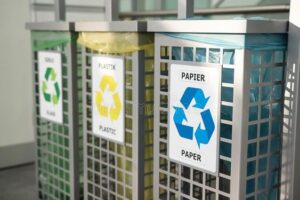
Recycling - Its present and futureRecyclable materials are collected separately with special recycling trucks for blue bins (two streams with red and yellow lids) and transported for transshipment to the specially designed area, the Recycling Material Transfer Station within the landfill. There, they are loaded into special containers and transported by road to the recycling sorting center in Agrinio.
It is worth noting that in Greece, recycling (blue bin) has been organized by the Collective Alternative Management System and is operated by the Hellenic Recovery and Recycling Corporation. The company undertakes to enter into contracts (type 'a' or 'b') with OTAs or EDAKI OTAs. "With us, it entered into a type 'a' contract, which includes the concession of equipment, i.e., the concession of bins and vehicles, and we subsequently undertake the cost of personnel, the cost of collection and transport (routing), and the cost of maintenance - repair of vehicles. Furthermore, it is clarified that the cost of transport from Pallosti to the Agrinio recycling center is covered by the Hellenic Recovery and Recycling Corporation, not by EDAKI, which at this stage only has supervision. At the same time, EDAKI has no benefit from the sale of materials after the recycling process," notes Mr. Fragkiskatos.
Europe mandates that municipalities nationwide recycle in four distinct streams (plastic, paper, glass, metal), with Kefalonia having two of these already for 10 years. These materials must be collected and reach the sorting centers separately, where they will also be put separately on the sorting lines. This process requires a huge investment cost, which means, as EDAKI's special advisor explains, that many municipalities nationwide are unable to cover it. In fact, according to him, within the next few months (at the latest by next autumn), a third distinct recycling stream will be developed in Kefalonia (blue bell for glass packaging). These bins will be placed mainly in places where there is a large production of glass, such as in catering establishments.
At this point, it is worth mentioning some illuminating numerical data and statistics provided by EDAKI. Specifically, "in all the municipalities of Kefalonia (Argostoli, Sami, Lixouri), we collected 20,567 tons of mixed waste (green bins) and 3,020 tons of recyclable materials (blue bins) in 2023. The recovery rate amounted to 9.2%. It may be good compared to other areas, but compared to European mandates and legislation, it remains low," emphasizes EDAKI's special advisor.
He continues, adding that "however, it is highly encouraging that every year citizen participation in recycling increases. Specifically, in 2021, 1,600 tons of recyclable material were collected, in 2022 they reached 2,600 tons, and in 2023 they reached 3,020 tons. We are taking one small step at a time compared to the past, but we still have a long way to go," commented Mr. Fragkiskatos.
It should be noted that the recovery rate (or recycling rate) is an indicator used to describe the efficiency of the recycling process. Specifically, this percentage expresses the proportion of materials collected for recycling that are ultimately reused or converted into new products.
At the same time, when talking about recycling, it is necessary to make special mention of the "Green Point" which will also be available to citizens in the coming months. But what is the "Green Point"? According to Law 4042/2012, a "Green Point" is defined as an area organized by a first-degree OTA, which is delimited and configured with appropriate infrastructure and equipment, so that citizens can deposit separately collected recyclable municipal waste or used items, in order for them to be promoted for recycling or reuse. Green Points (GPs) are categorized into small and large depending on the volume and categories of recyclable materials they accept, their operation, and the area they occupy. Educational and public awareness activities can also take place at Green Points.
Kefalonia's "Green Point" is expected to be completed and delivered for use by citizens, probably by mid-2025, according to Mr. Panagis Delakas, deputy head of the Cleaning and Greenery Directorate of Argostoli municipality. According to him, the "Green Point" is planned to be near the Argostoli Industrial Area, a study has already been conducted, and it is currently being tendered. It must be emphasized that this central "Green Point" will concern all municipalities on the island and will be equipped with receptacles for waste depending on the recycling streams. In other words, citizens will be able to go there, deposit their waste, and achieve high-quality recycling, as Mr. Delakas explains. There will also be provision for green waste, such as branches (composting).
In general, speaking about the attitude of residents towards recycling, Mr. Delakas emphasizes that "citizens are largely sensitized. However, we are obliged to provide solutions so that citizens can also have choices."
The purple bins are exclusively for clothing, textiles, and footwear. In this context, EDAKI collaborates for sorting with the company Recycom, which was founded in 2012 and is the first Greek company to implement a system of integrated management of used clothing and footwear in an organized, scientific, and professional manner.
Specifically, as Mr. Fragkiskatos explains, EDAKI undertakes to place the purple bins on the island and carry out the collection. So far there are eight bins in Kefalonia (municipality of Argostoli, municipality of Sami, municipality of Ithaca) with three located in the center of the municipality of Argostoli, one in the municipal community of Livathos and another in the municipal community of Elios - Pronnoi. At the same time, the municipality of Sami has two purple bins and the municipality of Ithaca has one bin. Regarding the municipality of Lixouri, it has organized its own autonomous system by installing a purple bin, without, that is, the cooperation of EDAKI-OTA.
The collection schedule for the purple bins is similar to that for recycling. In this case, there is a rural vehicle with regular routes depending on the season. Specifically, as Mr. Fragkiskatos emphasizes, it has been observed that during the spring and autumn months, the volume increases, possibly because that is when the transition and sorting of summer from winter clothes usually takes place. The vehicle passes by all bins at least once a week, and then they are collected at the depot, where they are transshipped into special jumbo bags and sent to Recycom, where they are promoted for recycling.
Addressing increased waste during the tourist seasonIn view of the island's tourist season, which has already begun, Mr. Panagis Delakas states that the municipality of Argostoli is ready to respond to the increased volume of waste, as the municipality is reinforced with additional staff during the summer period. The municipality of Lixouri also declares itself ready. Specifically, as Mr. Marketos Dimitrios stated, "from now on, as far as I know, the garbage truck routes will be more frequent (they will also take place on weekends and at noon), and so we will not have any problems, just as we haven't had any problems until now." At the same time, he points out that as the municipality of Lixouri, they have recently acquired new bins (70 new green bins and 30 new blue bins).
Regarding EDAKI's contribution during the tourist months, Mr. Gerasimos Fragkiskatos, having previously pointed out that routes significantly increase as the number of visitors to the island rises, now also mentions an increase in staff. "We always want to be prepared for the worst-case scenario. We have a core workforce employed year-round (winter - summer) and we also employ seasonal staff (8-10 additional people) during the summer months," explained Gerasimos Fragkiskatos.
In conclusion, what is clear for the island of Kefalonia is that the significant effort made over the years has managed to bring the island to a satisfactory level of cleanliness in terms of image and perception. However, achieving the recycling targets set by European institutions and legislation requires additional steps to become a reality.
Related Articles
Ιθάκη: Δράσεις για τη θάλασσα και ειδική προβολή του ντοκιμαντέρ «Ocean with David Attenborough»
Διήμερο δράσεων για τη θαλάσσια προστασία στην Ιθάκη, 27–28 Αυγούστου 2026, με ειδική προβολή του ντοκιμαντέρ «Ocean with David Attenborough» και εκπαιδευτική δράση snorkeling για παιδιά.
Κεφαλονιά: Το Ξι, η κόκκινη άμμος και οι άργιλοι της Παλικής
Το Ξι στη νότια Παλική ξεχωρίζει για την κόκκινη άμμο και τους αργιλικούς σχηματισμούς του. Γεώτοπος του Γεωπάρκου Κεφαλονιάς Ιθάκης, η παραλία αποτυπώνει τη γεωλογική ιστορία και την ποικιλία του νησιού.