The issue of managing the free-ranging wild horses of Ainos in Kefalonia - The findings and proposals of the AUTH research
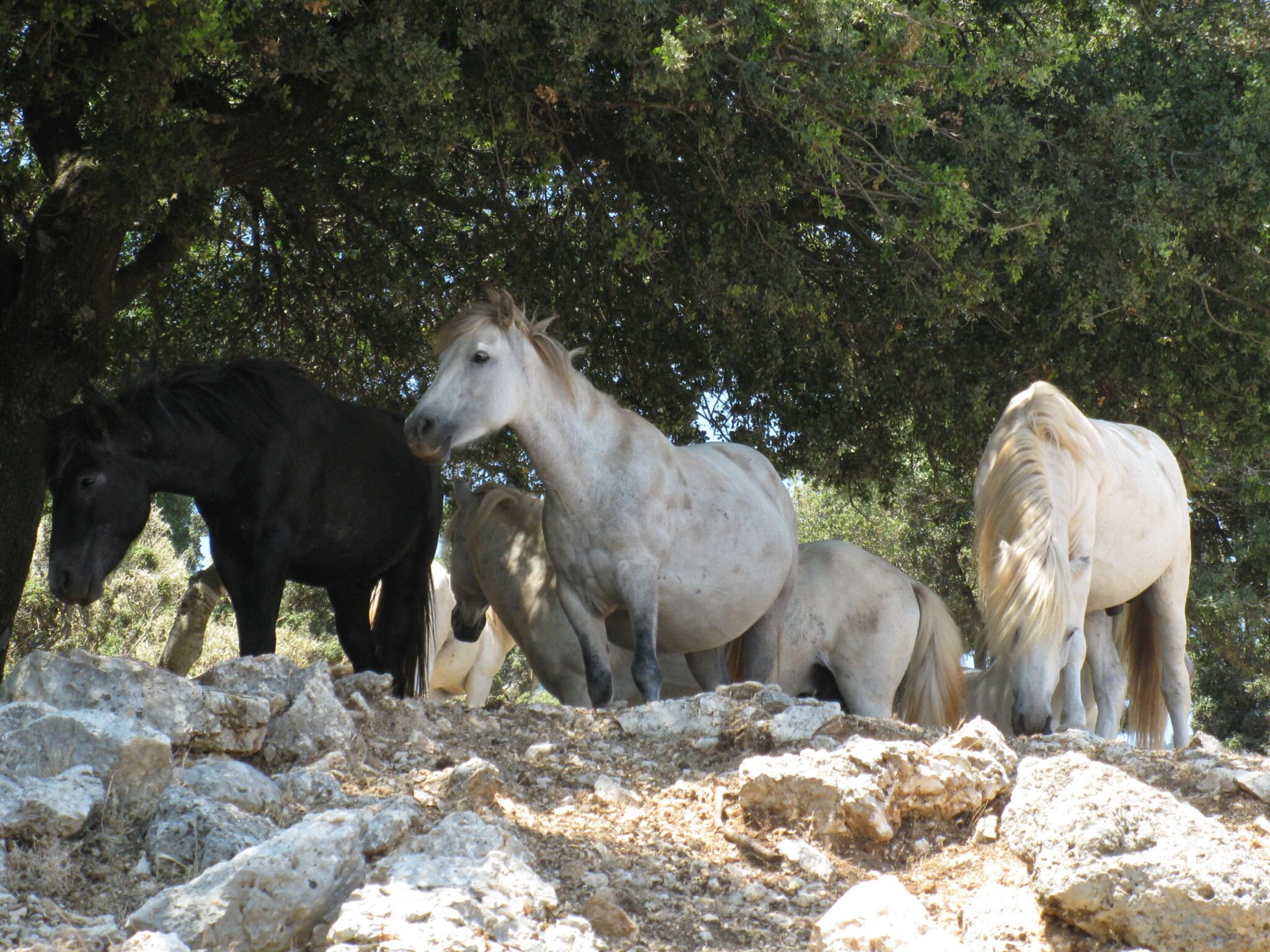
The presence of free-ranging horses from Ainos in inhabited areas of Kefalonia has become a long-standing unresolved problem, significantly hindering the daily lives of residents. In recent years, local communities have faced serious challenges in various sectors, which we will examine later in this report, and which worsen during the summer months when the island's population multiplies. According to thekefalonianglobe.gr, the failure to find a solution to this issue is due to a legislative gap that emerged approximately 12 months ago, essentially leaving the free-ranging horses "in limbo" in the sense that they do not fall under the responsibilities of any specific entity. In other words, there is no body responsible for deciding what will happen in this case.
It is recalled that thekefalonianglobe.gr had published a report on this particular issue, which mainly concerns the residents of Mavrata, Chionata, Valerianos, Markopoulo, and Thiramona in March 2024. Therefore, just a few months later, we return to record the current situation and what has happened in the interim, presenting, among other things, the findings and proposals of the scientific study conducted by the Department of Forestry and Natural Environment of AUTH on behalf of OFYPEKA.
The origin and history of the Ainos horses
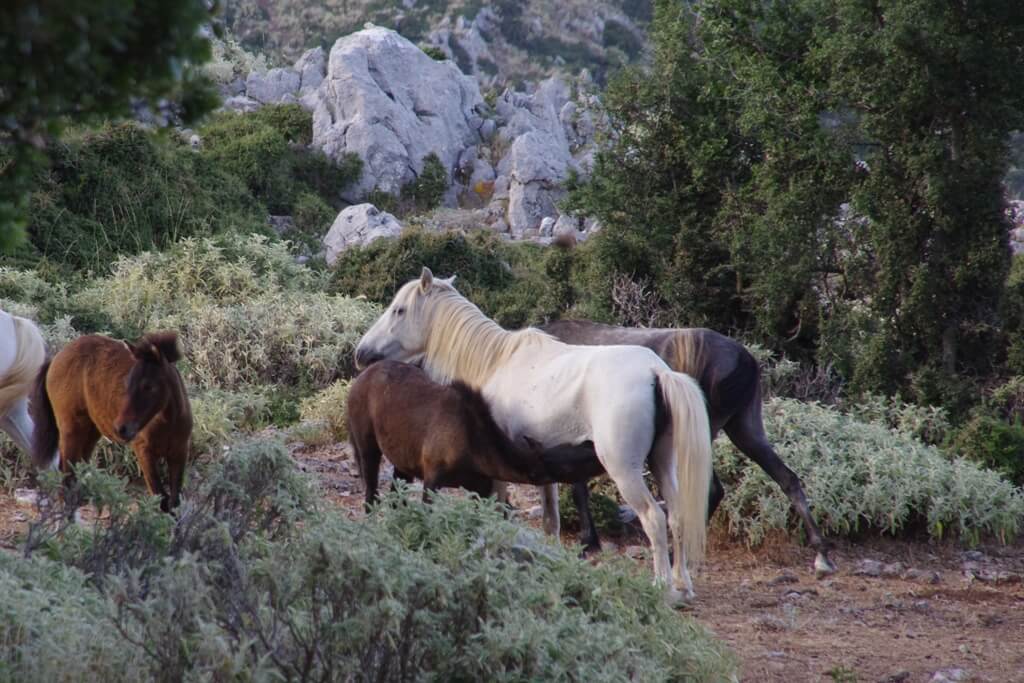
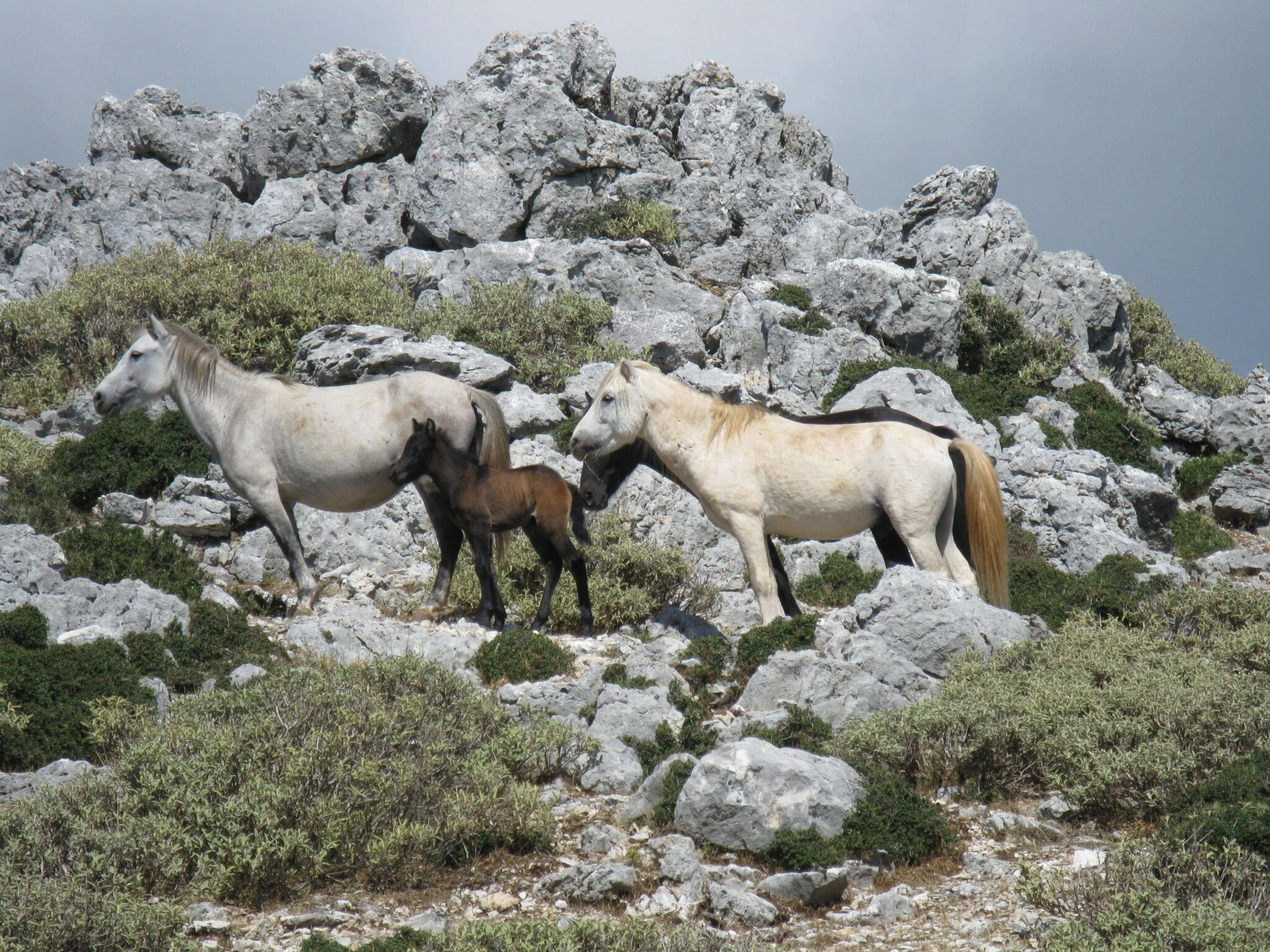
The Ainos horses (Equus caballus) belong to the mountain type of Greek horse and are descended from Pindos breed horses that residents of the area acquired from animal fairs in Aetolia-Acarnania (Kefalovryso) and Arta (Menegatos 1995). After World War II, villagers who had farms on the slopes of the mountain let their horses roam free to avoid the financial burden of their upkeep. These horses were eventually completely abandoned to their fate and have survived to this day in herds. Their survival in the harsh conditions of the area helped them develop distinct morphological characteristics: height 1.15 – 2.25 m, dense mane and tail, narrow and deep chest. The common colors of the horses are dark brown, black, light brown, and white. The Management Body of Ainos National Park shows keen interest in the protection and preservation of this unique horse population of Kefalonia.
At the same time, according to Mr. Michalis Xanthakos, Forester and Deputy Head of the Protected Areas Management Unit of Zakynthos and the Ionian Islands of OFYPEKA, the Organization has undertaken many initiatives to address the horse issue. These include actions for feeding the animals, efforts to remove them from inhabited areas, and the submission of proposals for funding through NSRF programs. The need for action is urgent, and as Mr. Xanthakos emphasizes, a coordinated effort to resolve the issue has already begun.
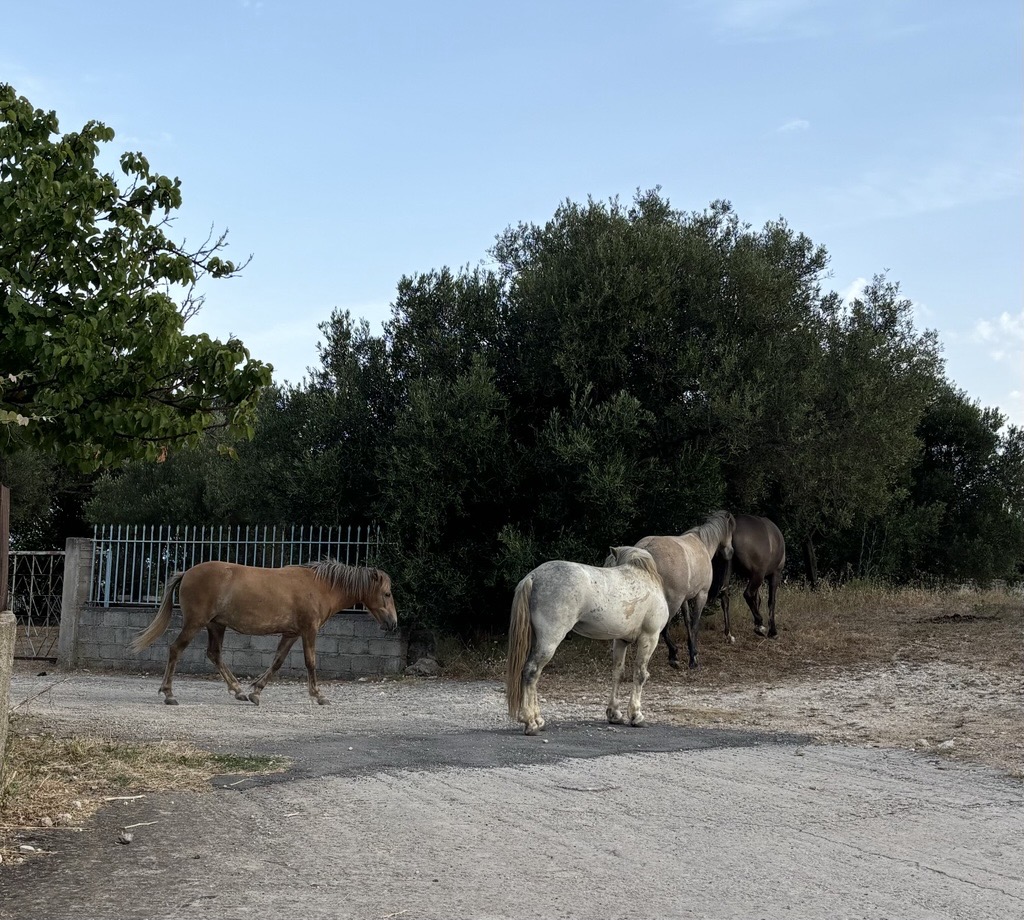
Speaking about the chronology of the case, all the horses were on Mount Ainos, but in recent years, some of these horses moved to lower altitudes in an attempt to find water and food. This resulted in them remaining in inhabited areas even today. “Let me tell you two things about the history of the situation. These horses were always on the mountain, at the Holy Monastery of Zoodochos Pigi. At some point they moved lower, because they couldn't find food on the mountain, and they mixed with some local free-ranging horses and are constantly multiplying. This situation in our area has been going on for about 4 years,” says Ioannis Chounos, president of the Mavrata community.
Their presence there and coexistence with humans opens multiple fronts of discussion, ranging from property damage to safety and environmental pollution.
Daily problems from the presence of horses
In our communication with local authorities, it immediately became clear that the issue remains unresolved, and essentially no decision has been taken, nor is there a clear picture of when it will be resolved. However, residents of the areas, although most are friendly towards the horses, do not hide the fact that they are quite troubled on multiple levels by their presence.
“The horses cause serious damage to properties in our area, as they enter courtyards, churchyards, destroy flowers and crops, while the risk of accidents remains high, not only with cars, but generally,” describes Mr. Dimitris Kotrokóis, president of the Chionata Community. He adds that the horses, although very likeable, often behave uncontrollably and there have been incidents where they run towards people they meet on their way. Fortunately, no injuries have been reported so far, as he characteristically points out. Furthermore, Mr. Kotrokóis also raises the issue of pollution from horse droppings, noting that roads, courtyards, playgrounds, and churches in the villages are full of them, creating hygiene and cleanliness problems. A similar picture, on his part, is expressed by Mr. Chounos, pointing out that the situation is exacerbated by the pollution they cause with their excrement, as “they enter the courtyards, we wake up in the morning and find them under our windows eating the flowers.” Their aggressive behavior, especially when mating, adds even more challenges to the already strained situation, as residents report.
Moreover, Mr. Chounos, expressing his concern about the long-term problems arising from the increased population growth of wild horses in the area, emphasizes that “horses eat whatever they find: vineyards, gardens, crops,” noting that people working in agriculture cannot work. Mr. Kotrokóis records a similar problem, saying that “the farmers in the area face very serious problems.” At the same time, the President of the Markopoulo Local Community, Nikos Andreathos, co-signs the existence of blatant problems in the daily lives of citizens, saying that the animals “eat the vines, eat the grass and hay, while also causing various other damages and increasing the risk of accidents.” In this regard, Mr. Chounos told us that there is a risk of “a traffic accident and injury occuring,” as “4-5 cars have already crashed with horses,” fortunately without serious injuries.
However, it is worth mentioning that, according to Mr. Andreathos, there are not only negative but also positive aspects to the presence of horses. “Horses also have a positive footprint as there are many large and unpathed areas, the horses move there, opening up paths and thus preventing the area from becoming a jungle, but making the place somewhat milder, while also clearing the edges of the roads.”
The study
The study submitted under the guidance of the Department of Forestry and Natural Environment of AUTH is titled "Monitoring the population and management proposals for wild horses in Ainos National Park and in areas of Nafpaktia". However, this text will only refer to data, results, and proposals concerning exclusively the horses in Kefalonia. The project includes population monitoring and submission of management proposals.
Mr. Dimitrios Bakaloudis, Professor at the Department of Forestry and Natural Environment of AUTH, specializing in ecology and wild fauna management, speaking to The Kefalonian Globe regarding the study, states that "Our laboratory, as a research team, undertook the implementation of the project after a tender announced by OFYPEKA, which funded it."
Regarding the research, records of the horse population were carried out during three periods: spring, summer, and autumn of 2023. At that time, according to Mr. Bakaloudis, it was possible to study, among other things, reproduction and the physical condition of the animals.
“We recorded the number of horses and the population structure, in which, among other things, the sex ratio (female and male) plays a very important role – from a management perspective. The total number of horses was generally in very good physical condition, and also nutritionally, which positively affects their reproduction, as a healthy population shows higher reproductive success and lower mortality, thus maintaining a large percentage of young horses. These data suggest that the population has very good prospects for future growth,” the professor explains.
How many horses are there?
Although speaking with residents of the area, the number was not precise or verified, everyone spoke of many more horses than those recorded in the research. As the professor emphasizes, there was no chance that any horse had escaped the count, as several counting and classification methods had been used, both from the ground with vehicles and photography, and from the air with drones. Therefore, as the professor informs us, the research results show that “the maximum number of horses recorded in the study in 2023 was 31, of which nine were in the Ainos National Park, in the area of the Zoodochos Pigi monastery, meaning in their natural habitat, while 22 horses were down in Thiramona and move between Thiramona, Chionata, and Eleios. In fact, although the maximum number was 31 horses, there were at least 5-6 mares in the final stage of pregnancy, which means that a few months later the population would increase due to births.”
Proposals
The study proposed 10 management measures, five of which refer to the management of the horse population and habitat, and five are socio-economic measures. What needs to be stressed, according to Mr. Bakaloudis, is that for the desired outcome, all measures need to be implemented, and not some isolated or fragmented ones. “We cannot act piecemeal; the problem must be solved holistically,” he characteristically stated.
The measures are briefly as follows:
- Capture of the 22 horses located in the lowlands (the nine out of the total 31 are already in their habitat) and relocation to Ainos.
- Sterilization of captured males through castration.
- Immunocontraception of females with a single-dose vaccination. Immunocontraception lasts 2-3 years, and the vaccine suppresses ovulation, thus preventing female reproduction.
- Water management (troughs, springs, and shelters for rainwater collection). It is proposed that the springs on the Holy Monastery of Zoodochos Pigi be freely available to all animals. Among other things, measures also include the construction of new troughs and the maintenance of some existing but dried-up tanks. Additionally, it is proposed to build some shelters to collect rainwater, which will be stored and then supplied to a small tank with a special level regulator.
- Adoption of free-roaming horses, especially newborn foals, always with sterilization of males.
Regarding water management, Mr. Bakaloudis emphasizes that this is a very important measure, as the lack of water, he notes, was what drove the horses away from their habitat. It is a very water-demanding animal that was deprived of it, resulting in it descending to lower altitudes in search of it. In fact, the professor explains that the reason the horses could not find water on Mount Ainos was because some livestock breeders had fenced off the few springs to serve their own animals.
The remaining measures are socio-economic:
- Compensation for farmers whose crops are damaged by horses.
- Subsidizing the installation of fencing for farmers who have suffered damage from horses.
- Change in type of cultivation.
- Accident prevention measures. Interventions in the road network, such as:
- Warning signs.
- Rumble strips to reduce speed at specific points.
- Placement of reflectors for lights.
- Clearing bushes on both sides of the roads to improve visibility.
- Information campaign. Among other things, in the media, on social media, and through conventional means such as informational brochures and awareness events.
It is noted that for each measure, the study also states the responsible body for its implementation, either in cooperation with another or individually.
The legislative gap and difficulties in implementing the measures
Despite the positive approach of all local and regional authorities to finding a solution, the issue seems to have somewhat stalled. Mr. Kotrokóis points out that “the delay in resolving the problem with free-ranging horses is due to the state's inability to provide a solution. Despite the diligent efforts of the Deputy Regional Governor of P.E. Kefalonia, Mr. Efstathios - Sotirios Kouris, and all community presidents, the issue remains unresolved due to a legislative gap.”
Regarding the legislative impediment, Mr. Kotrokóis explains more thoroughly that “despite continuous efforts, the issue has 'stalled' due to a legislative regulation enacted last October.” According to this, non-domesticated horses do not belong to anyone, which means there is no responsible body for their management. Local authorities have requested an amendment to the legislation to designate a body responsible for the horses, in order to proceed with the necessary procedures and find a solution to the problem.”
“Currently, the Ministries of Environment and Rural Development are entangled regarding which is responsible for the situation. This gap is due to the fact that they have not concluded whether the horses are wild or domestic,” says Mr. Chounos.
“There is political initiative and continuous consultation”
“The fact that there is active political initiative, especially from the Region and Deputy Regional Governor Mr. Kouris, the municipality, and the Forest Directorate, is particularly positive. All involved parties participated in the consultations, and communication between them remains continuous, aiming for mutual assistance and gradual improvement of the situation. “I want to believe that the problem will be resolved by the summer of 2025,” states Mr. Xanthakos, expressing optimism about the progress of actions.
“I believe that a solution will soon be found, as the issue is long-standing and pressing. We must address it, as it constitutes one of the biggest ecological problems in the area. Our common goal is to ensure the survival and preservation of the horses indefinitely, but at the same time to prevent conflict between horses and humans,” emphasizes Mr. Xanthakos.
In summary, the situation of free-ranging horses in Kefalonia is a complex challenge that requires immediate and coordinated action from local authorities and the state. The proposals arising from the research indicate that the implementation of a comprehensive management strategy is necessary to balance ecological needs and residents' demands.
Image Sources:
https://kefaloniageopark.gr/node/264
https://aenosnationalpark.gr/fysiko-perivallon/ta-aloga-tou-ainou/https://aenosnationalpark.gr/fysiko-perivallon/ta-aloga-tou-ainou/
https://aenosnationalpark.gr/fysiko-perivallon/ta-aloga-tou-ainou/
Related Articles
Με θλίψη ανακοινώνεται ο θάνατος της εκπαιδευτικού Ράνιας Φραγκισκάτου
Ο Σύλλογος Εκπαιδευτικών Π.Ε. Κεφαλονιάς – Ιθάκης ανακοινώνει με βαθιά θλίψη τον θάνατο της Ράνιας Φραγκισκάτου, επί σειρά ετών διευθύντριας στο Ειδικό Σχολείο.
Συλλυπητήρια ανακοίνωση του Ιδρύματος Γεωργίου και Μάρης Βεργωτή για την απώλεια του Νικόλαου Σ. Βεργωτή
Το Διοικητικό Συμβούλιο του Ιδρύματος Γεωργίου και Μάρης Βεργωτή εκφράζει θερμά συλλυπητήρια στον Πρόεδρο, κ. Γεράσιμο Ν. Βεργωτή, και την οικογένειά του για την απώλεια του πατέρα του, Νικόλαου Σ. Βεργωτή.
Τα καλοκαιρινά πανηγύρια ως ζωντανό κομμάτι της τοπικής κοινωνίας
Η κοινωνική λειτουργία ενός θεσμού που επιβιώνει πέρα από τον τουρισμό και την εποχικότητα.