Kefalonia of the four cities
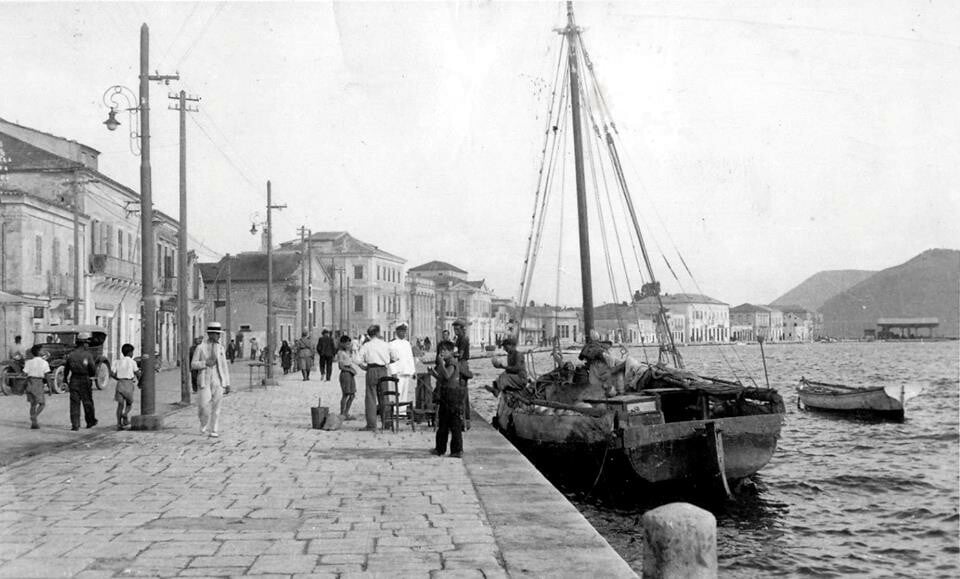
One island, four city-states, four different worlds
Before castles, occupations, and earthquakes, Kefalonia had already forged its own political and social identity. In antiquity, there wasn't a unified Kefalonia; there were four. Sami, Pali, Krani, and Pronnoi became autonomous city-states with their own currency, institutions, and army. This tetrapolis, as ancient writers called it, is a rare example of political organization for an island in the Greek world.
The geography of the place played a decisive role. The mountains of Ainos, deep bays, and inaccessible coasts naturally divided the regions, creating four almost independent communities. Despite their differences, these four cities coexisted, cooperated in times of need, and collectively shaped the island's historical and cultural identity.
Sami: The gateway of commerce
Sami was the most important commercial and strategic center of ancient Kefalonia. Built in its natural harbor, with easy access to Epirus and Corfu, it rapidly developed into a powerful city with commercial activity and naval strength. Its polygonal walls, still preserved on the slopes above the modern village, attest to a well-fortified and organized city. Archaeological research has revealed buildings, sanctuaries, and tombs that indicate a wealthy society, with class stratification and a significant urban population.
Sami's economy was based on the sea. Goods, oil, wine, and pottery passed through its port, bound for the Peloponnese and Southern Italy. Amphorae found in the area bear seals from Rhodes and Corinth - evidence of trade relations with other powerful centers of the ancient world. The city minted its own coins, usually with depictions of dolphins and a trident, symbols referring to Poseidon, patron god of the seas.
When the Romans attempted to conquer the island in 188 BC, Sami was the only one that resisted. It was besieged for four months and finally completely destroyed, but the fame of its resistance remained eternal. The Samians paid dearly for their freedom, but became a symbol of the indomitable spirit of the Kefalonians.
Today, the ruins of the ancient city spread across the slopes above the modern settlement. Visitors walking among the pine trees and dry stone walls can clearly discern parts of the ancient walls, traces of houses, and gates. The place has maintained a calm, authentic atmosphere - a reminder that once the heart of ancient Kefalonia beat here.
Pali: The naval power of the West
On the Paliki peninsula, opposite Ithaca, lay Pali - Kefalonia's most maritime and extroverted city. Its location, overlooking the Ionian Sea, was ideal for trade and navigation. Archaeological surveys locate its ruins near Lixouri, in an area that still retains its ancient name.
Pali was closely connected with Corinth and its Dorian colonies in the West. Ceramic finds show influences from Peloponnesian art, while the city's coins feature depictions of ships and the god Zeus, demonstrating its dual identity – commercial and religious. Its economy was based on shipbuilding and maritime trade, and its inhabitants were excellent sailors. Pali's ships traveled to Sicily and Apulia, transporting Kefalonian products and bringing back ideas and goods from the Mediterranean.
The city's society was active and open. Men traveled frequently, and women managed the homes and the small market. Pali was known for the dynamism and ingenuity of its inhabitants, who approached life with resourcefulness. When the Romans attacked Kefalonia, Pali resisted last; it preferred to fall fighting rather than surrender.
This spirit of independence seems to survive, even today, in Paliki. Lixouri, the heir of the ancient city, is still famous for its "right to an opinion" – its willingness to think and speak differently. Its people maintain an old habit: passionately defending their views, whether about politics or the weather. This independence is not accidental; it is the continuation of a history that began 2,000 years ago.
Krani: The administrative and cultural center
Krani, near modern Argostoli, was the island's internal power. Unlike Sami and Pali, which faced the sea, Krani was oriented towards the land. Its strong walls, approximately four kilometers long, still stand on the slopes of Riza hill and attest to a prosperous city with organization and institutions.
Krani had a reputation for its "eunomia" – fair administration and political stability. Many historians consider it a precursor to an early democracy. Citizens participated in decision-making, while education and religion held a central place. The city seems to have had a market, public buildings, and sanctuaries, probably dedicated to Zeus and Athena. Archaeologists have found inscriptions testifying to large-scale administrative organization and religious ceremonies.
Krani's economy was based on agriculture and the provision of services to the other cities. Goods destined from Sami to the West passed through it. It was the coordination point of island life, something like the "capital" of the tetrapolis. Its inhabitants stood out for their stability, methodicalness, and dedication to knowledge.
Walking today on the hills above Argostoli, the remnants of Krani seem to tell the story of a society built with logic, not just stone. Modern Argostolians, with their emphasis on organization and sobriety, seem to retain something of this spirit – the certainty and sense of responsibility that characterized ancient Krani.
Pronnoi: The agricultural power of the South
At the eastern edge of Kefalonia, near modern Poros and Skala, lay Pronnoi – the most earthy and self-sufficient of the four cities. The area was rich in land and water, and its inhabitants were primarily engaged in agriculture, livestock farming, and wine production. Excavations in Skala have uncovered tombs with pottery, jewelry, and tools, indicating a well-to-do and organized society.
Pronnoi combined strategic importance – controlling the passage to the Peloponnese – with agricultural stability. The gods they worshipped, Demeter and Dionysus, reveal their connection to the earth and the cycle of cultivation. Their festivals and celebrations were closely linked to the harvest and the grape harvest, while the community operated in a spirit of solidarity and cooperation.
Life in Pronnoi was simple but stable. Families owned small plots of land, and daily life followed the rhythm of the seasons. Self-sufficiency was considered a virtue, and the community was rarely affected by external changes. This mentality – of tranquility and continuity – remains characteristic today in the Poros area: a part of Kefalonia that seems to move at its own, calm pace.
The Kefalonia of the four cities was much more than a geographical division. It was a way of life, a philosophy of organization. Four communities, different but interconnected, coexisted on an island that learned early the value of autonomy and cooperation.
If one looks at the island today, they will see that this history was not lost: Sami maintains its extroversion, Paliki its freedom of opinion, Argostoli its logic and organization, Pronnoi its tranquility and self-sufficiency. Perhaps in the end, Kefalonia remains, in its own way, a tetrapolis – four voices that, even in their differences, compose a harmonious whole.
Related Articles
Άσσος: ο οικισμός, το φρούριο και η εικόνα που άντεξε στον χρόνο
Πώς η μικρή Άσσος της βόρειας Κεφαλονιάς συγκεντρώνει σε έναν τόπο γεωγραφία, ενετική στρατηγική, μετασεισμική ανασυγκρότηση και σημερινή τουριστική απήχηση.
Η ναυτική ιστορία του νησιού πέρα από τα λιμάνια
Από το παράκτιο εμπόριο του Ιονίου έως τη Μαύρη Θάλασσα, τον Δούναβη και το Λονδίνο: πλοιοκτήτες, καπετάνιοι, ναυτικοί και οικογένειες που έδωσαν στο νησί διεθνή ναυτική παρουσία.
Κεφαλονιά: Μικρές ιστορίες πίσω από γνωστά σημεία του νησιού
Από τη Γέφυρα Δεβοσέτου και τις Καταβόθρες μέχρι τη Μελισσάνη, την Άσσο και το Φισκάρδο: μικρές ιστορίες που εξηγούν την Κεφαλονιά πίσω από τις γνωστές της εικόνες.