International Women's Day: The history, the struggles and the women who shaped the world
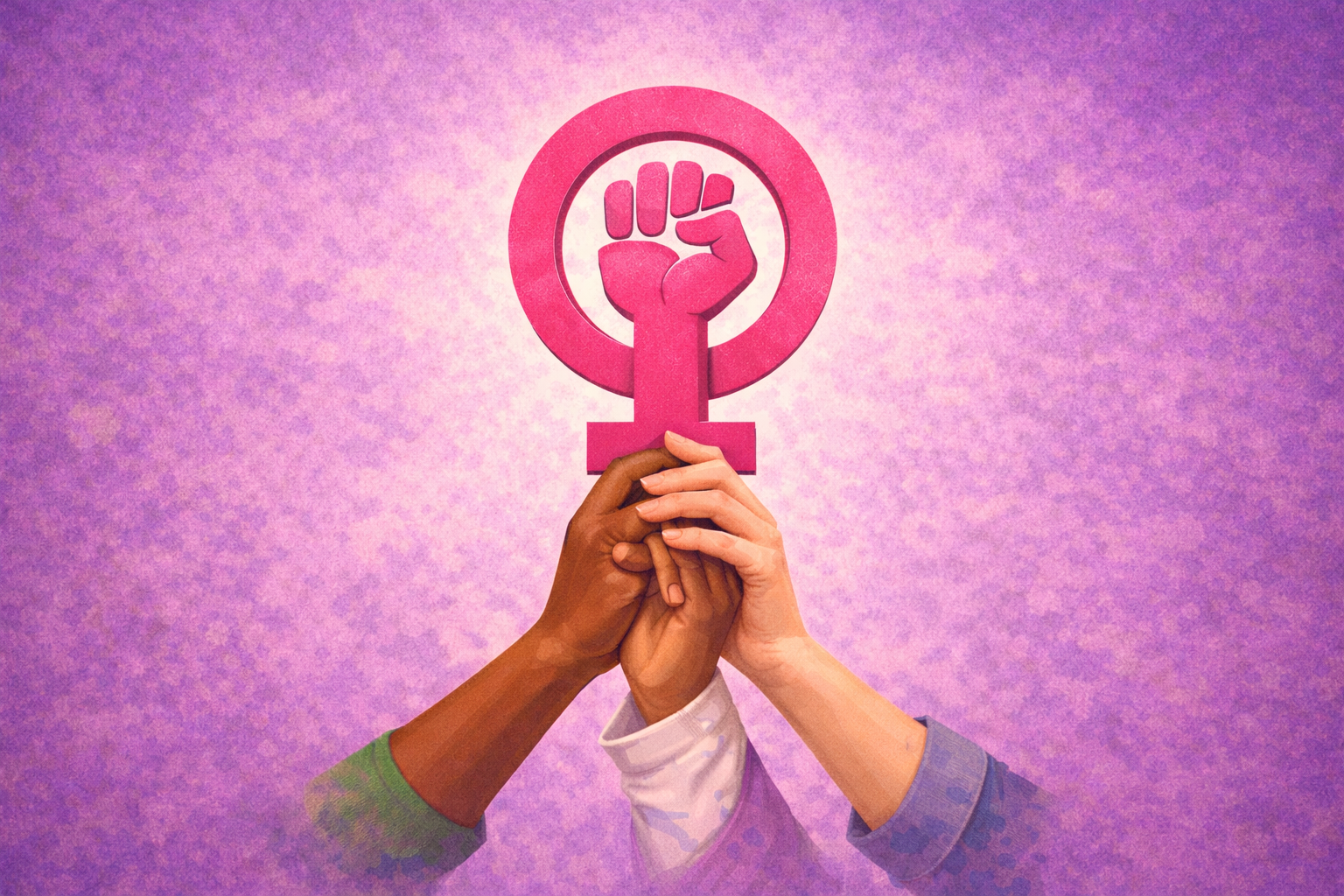
A woman is much more than just one role. She is a mother, she is a daughter, she is a worker, she is a creator, she is a scientist, she is a teacher, she is a friend, she is the voice that claims, the strength that perseveres, and the presence that often keeps entire societies standing. In a woman's daily life, many different worlds meet simultaneously: family, work, creation, care, responsibility, social participation. For centuries, however, many of these roles were taken for granted and often invisible, without the recognition they truly deserved. Nevertheless, women have always been driving forces in society, contributing decisively to the progress of science, culture, politics, and daily life.
International Women's Day, celebrated annually on March 8, serves as a reminder of this journey and the struggles that were necessary to recognize women's position as equal members of society. It is not merely a day of honor for women, but a day of remembrance and reflection on the path towards equality, the achievements that have been made, and the challenges that still exist. To understand the significance of this day, one needs to look more closely at the historical journey of women and how their contributions decisively influenced the development of societies.
The importance of the day acquires even greater depth when one considers that the history of humanity has largely been written through male names, male narratives, and male powers, while women participated decisively in the formation of societies, sciences, cultures, and movements, but often without being equally recognized. Woman has always been a force of creation, endurance, and social cohesion. She has been a mother, worker, scientist, teacher, writer, activist, artist, politician, thinker. She has been the one who often kept families, communities, and societies standing during times of crisis, war, and transformation. And yet, for a very long time, this contribution was presented either as a natural duty or as a peripheral presence behind the "great" historical developments. International Women's Day precisely comes to challenge this one-sided reading of history and to clearly state that the history of the world is unthinkable without the women who shaped it.
The roots of the day lie in the great social upheavals of the late 19th and early 20th centuries, when industrial development radically changed the structure of societies and led thousands of women into paid labor. Women worked in factories, workshops, and laboratories with exhausting hours, lower wages than men, and minimal to non-existent legal protection. They were not only demanding better working conditions, but also recognition as full citizens. The first mass mobilizations of women workers, particularly in the United States and Europe, were not just labor demands. They were the beginning of a much deeper social conflict about the place of women in society and whether they would remain subjects confined to the private sphere or would gain a voice, power, and rights in the public sphere. In 1910, at the International Conference of Socialist Women in Copenhagen, the establishment of an international day dedicated to women's struggles was proposed, and over time March 8 was established as the day of this remembrance and claim. Later, in 1975, the United Nations officially recognized International Women's Day, integrating it into the broader framework of the international effort for gender equality.
From then on, International Women's Day became inextricably linked to the history of the feminist movement, which is neither a one-dimensional ideology nor a narrow political identity, but a historical current of thought and action that sought to challenge deep inequalities between genders. The first wave of feminism focused primarily on political and legal rights, with the right to vote as the paramount demand. The women who fought for this were not asking for privileges, but for the obvious: to be recognized as citizens with a voice and political will. The second wave of feminism, mainly from the 1960s onwards, opened up broader issues, such as inequality in the workplace, economic dependence, the social construction of gender roles, the right to bodily self-determination, and the need to recognize women as autonomous individuals and not just as someone else's wife, mother, or daughter. Feminism, with all its individual manifestations and internal differences, contributed decisively to shifting the entire social discussion about what equality, freedom, and human dignity mean.
The contribution of the feminist movement is not limited to theoretical texts or political slogans. It is reflected in very specific changes that are often taken for granted today. The right of women to vote, access to universities, participation in professions once considered exclusively male, legislative protection against discrimination in the workplace, the possibility of presence in politics and administration, the broader public discussion around gender-based violence and harassment – all these did not arise naturally or automatically. They arose because there were women who spoke, wrote, clashed, paid a personal cost, and demanded change. That is why the reference to the feminist movement is not an ideological deviation from the theme of International Women's Day; it is one of the central threads that explain why March 8 exists and why it continues to have meaning.
Within this long historical journey, there are women whose presence and work truly changed the world. Marie Curie is perhaps one of the most emblematic examples. At a time when women rarely had a place in higher academic institutions and even more rarely were recognized as leading scientists, Curie managed not only to distinguish herself, but to change the course of science. Her research on radioactivity not only opened new scientific pathways; it laid the foundations for developments in physics, chemistry, and later in medicine.
Equally important was the contribution of Simone de Beauvoir to philosophy and feminist thought. With her work "The Second Sex," published in 1949, she opened a new era in the discussion about female identity and the way in which society historically constructed the role of woman as the "second sex." Her book deeply influenced the public discourse on equality and served as a foundation for many subsequent social claims.
In the struggle for human rights, Rosa Parks became a symbol of resistance against racial segregation in the United States, while in modern times Malala Yousafzai is an international symbol of the struggle for girls' right to education.
The history of women who blazed trails extends to the fields of science and art. Rosalind Franklin contributed decisively to understanding the structure of DNA, while Ada Lovelace is considered the first computer programmer in history. In the field of art, Frida Kahlo transformed personal experience into a global artistic language and became a symbol of creative independence.
And in Greece, many women contributed significantly to the social and intellectual development of the country. Kalliroi Parren was a pioneer of the Greek women's movement and founded the "Ladies' Newspaper," giving women a public platform at a time when their voice was rarely heard. Eleni Glykatzi-Ahrweiler distinguished herself internationally as a Byzantinist and became the first female rector of the Sorbonne, while Melina Mercouri left a strong imprint on the culture and political life of the country.
All this shows that the significance of women in society is deeper than a simple recognition of their achievements. A society that excludes its women is not only unjust, but also poorer in knowledge, creation, and democracy. Conversely, a society that allows women to be educated, to create, and to participate equally in public life is a more just and stronger society.
International Women's Day therefore remains relevant. It reminds us that gender equality is not just a slogan, but a continuous social effort. And perhaps this is the most essential message of March 8: that the world truly changes only when it recognizes all of humanity, and not half of it.
Related Articles
Η οικονομία των 100 ημερών: Πώς η εποχικότητα αλλάζει τα νησιά
Τι σημαίνει πραγματικά να ζει ένα νησί από λίγους μήνες τουρισμού — και γιατί η «οικονομία των 100 ημερών» καθορίζει την εργασία, την κατοικία και τις υποδομές όλο τον χρόνο.
Πόσο κοστίζει πλέον ένα καλοκαίρι
Η μετακίνηση, η διαμονή και η καθημερινή κατανάλωση ανεβάζουν τον λογαριασμό των διακοπών στην Κεφαλονιά, ενώ οι ίδιες αυξήσεις μεταφέρονται στη ζωή των μόνιμων κατοίκων.
Το Ίδρυμα Γεωργίου & Μάρης Βεργωτή τιμήθηκε με το Βραβείο Ευκράντη για την Κοινωνική Προσφορά
Το Ίδρυμα Γεωργίου & Μάρης Βεργωτή τιμήθηκε με το Βραβείο Ευκράντη για την Κοινωνική Προσφορά, σε μια χρονιά-ορόσημο κατά την οποία συμπληρώνει 50 χρόνια αδιάλειπτης παρουσίας και προσφοράς.