The 100-day economy: How seasonality shapes island life
What it really means for an island to live off a few months of tourism — and why the '100-day economy' shapes work, housing and infrastructure all year round.
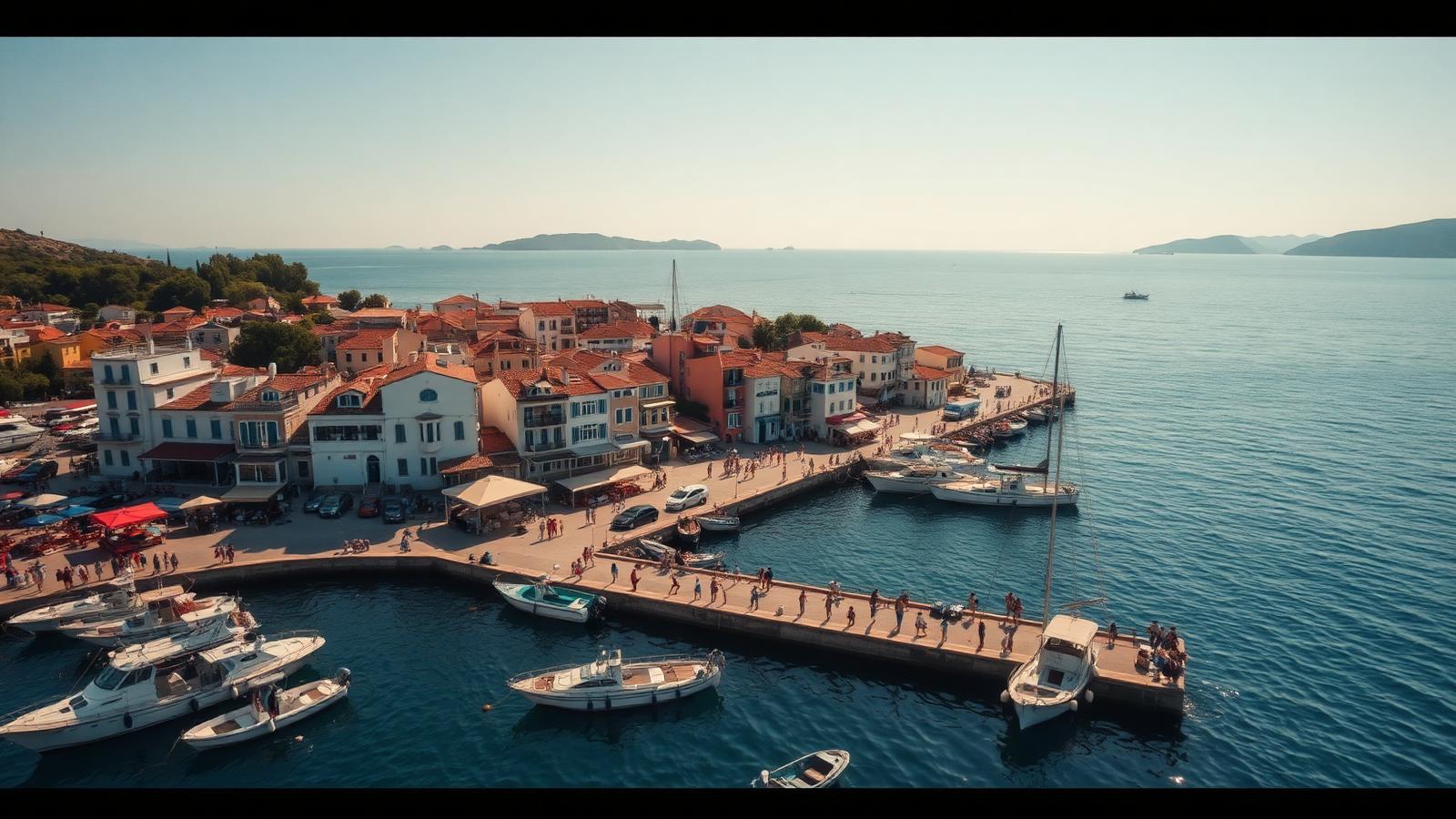
What it really means for an island to live off the season
Some economies grow at a relatively steady pace throughout the year; others are called upon to generate most of their income within just a few months. Many Greek islands belong to the second category, where the tourist season is the window in which a substantial share of the annual turnover of thousands of businesses is produced. According to the OECD, more than half of international tourist overnight stays in Greece take place within a single quarter, placing the country among the most seasonal tourism destinations in Europe.
This reality affects far more than the tourism sector alone. It shapes the labour market, determines the pace of investment, influences how public services function and puts pressure on housing and infrastructure. In other words, seasonality is not simply a feature of tourism; it is a feature of the entire island economy.
Kefalonia is a characteristic example of this evolution. Tourism development in recent decades has created new business opportunities, boosted employment and increased the island's income. At the same time, it has brought to the surface challenges that now concern most popular destinations: difficulty finding staff, growing pressure on housing, the need to modernise infrastructure and greater dependence on a limited tourist period.
The question, therefore, is not whether tourism is a driving force of the local economy. That is undeniable. The essential question is what happens when almost every economic decision in a place — from hiring to public investment — depends on the success of roughly one hundred days.
When the year is decided in a few months
For a manufacturing business or a retail store, a period of low demand can often be offset in the following months. In tourism, however, time works differently. When the greatest concentration of visitors is confined to a small part of the year, every week takes on disproportionate importance.
For a hotel, a restaurant or a car-rental business, the months from June to September are not simply the most profitable period of the year. They are the window on which the ability to cover winter expenses, to make new investments and, often, the very viability of the business will depend.
This also shapes how the whole of economic activity is planned. Businesses need staff, supplies and capital to respond to an extremely intense period of demand, knowing that a few months later those needs will fall sharply. Seasonality, therefore, is not only about the number of visitors but also about how investment, operating costs and business risk are distributed.
The concentration of economic activity in such a short time inevitably increases the vulnerability of an economy. The COVID-19 pandemic was the most striking example, as the loss of a single tourist season directly hit thousands of businesses and workers. Similarly, extreme weather, wildfires or disruptions to international travel can have disproportionately large effects when they coincide with the peak months.
For this reason, international organisations no longer look only at the level of tourism revenue but also at the resilience of local economies. A region may report successive record visitor numbers and yet remain particularly vulnerable, as long as a large share of its economic activity depends on a very narrow time window.
The labour market is changing
The impact of seasonality is especially visible in the labour market. Every spring, tourism businesses begin a race to find staff, and in many cases positions remain unfilled even after the season is already under way. The phenomenon is not confined to Greece. Spain, Italy, Croatia and Portugal face similar difficulties, which shows this is a broader European trend.
The explanation does not come down to wages alone, as it is often presented. Tourism is marked by intense seasonality, demanding hours and significant uncertainty about how long a job will last. Many employees are asked to move to a destination for four or five months and then either look for new work or wait for the next tourist period. For many, that arrangement does not offer the stability they seek to plan their lives.
At the same time, Greece faces a broader demographic challenge. An ageing population and a shrinking number of young workers are reducing the available pool of human resources. Tourism therefore competes not only with other tourism businesses but with nearly every sector of the economy looking for staff.
In this context, housing has become one of the most important factors in attracting workers. Difficulty in finding accommodation on several islands means many businesses can no longer simply offer a competitive wage; they also need to secure decent housing. Large hotels have already invested in staff accommodation, while smaller family businesses struggle to follow, widening inequalities within the sector itself.
Staff shortages do not affect businesses alone. They affect service quality, put pressure on those who remain in their posts and limit the scope for further growth. The harder it becomes to staff businesses, the harder it becomes to meet visitors' rising expectations.
Housing: when growth changes everyday life
Few developments illustrate the effects of a seasonal economy as clearly as the housing market. In recent years, rising tourism demand, the spread of short-term rentals and the increase in property prices have significantly changed how residential stock is used on many Greek islands.
This shift is not negative in itself. The renovation of older homes, the reuse of abandoned buildings and the rise in property values are real economic benefits. However, when demand for tourism use grows faster than the creation of new housing, the market begins to struggle to serve those who live and work in a place permanently.
The consequences are now visible on several island destinations. Teachers appointed shortly before the school year begins struggle to find a home. Doctors, nurses, police officers and other public servants spend weeks looking for available housing, often at very high cost. Seasonal workers face similar difficulties, moving for a few months without knowing whether they will manage to secure decent accommodation.
A matter that initially seems to concern only the property market thus turns into a factor shaping how the local economy itself functions. A business that cannot be staffed for lack of housing loses productive capacity. A school that struggles to fill teaching posts affects the quality of public services. Housing becomes, then, not only a social good but a development issue.
Several European regions have already begun trying different approaches: incentives for creating workers' housing, use of public buildings, restrictions on short-term rentals in certain areas and urban-planning measures that support permanent residence. None of these is a silver bullet. All of them, though, acknowledge that housing has now become a decisive factor for the viability of local economies.
Infrastructure designed for a different population
The effects of seasonality do not stop at the private economy. They extend equally to public infrastructure, which must serve a population that changes dramatically within a few months.
An island may have a defined number of permanent residents, but during the summer the actual population that uses the road network, consumes water, produces waste or needs health services can be several times larger. This creates a particular planning challenge. Infrastructure must have enough capacity for the peak period, yet cannot remain oversized and costly for the rest of the year.
Water management is a characteristic example. In the Eastern Mediterranean, where climate change is expected to intensify drought, peak water demand coincides with the period when available natural resources are under the greatest pressure. Similar challenges arise in waste management, sewerage, energy consumption and transport.
The same applies to emergency services. Hospitals, health centres, the fire service, the coast guard and the ambulance service must operate under conditions very different from those of winter. Increased travel, marine activity and traffic create additional needs that are not always reflected in a region's permanent population.
Recent years show that the quality of a tourist destination is not determined only by its natural environment or the hospitality on offer. It depends equally on the reliability of basic infrastructure and its capacity to respond effectively even under peak pressure.
Growth or resilience?
For many years the success of a tourist destination was measured almost exclusively in numbers: more arrivals, more overnight stays, higher revenue. These indicators remain important tools of assessment, but they are no longer enough to describe the full picture of a local economy.
In recent years, more and more international bodies, from the OECD to the European Commission, have placed emphasis on the concept of resilience. Resilience is not only the ability of an economy to bounce back after a crisis. It describes its ability to adapt to change, manage pressure and keep functioning effectively even as conditions shift.
The pandemic was perhaps the clearest example. Within a few weeks, destinations that had been posting successive record arrivals found themselves facing an almost complete halt to their economic activity. That experience revealed how vulnerable economies can be when they depend too heavily on a single sector or a very narrow time window.
Similar challenges can arise from other factors: extreme weather, wildfires, geopolitical tensions, changes in air connections or shifts in traveller preferences. The more economic activity is compressed into a few months, the greater the impact of any unforeseen event.
For this reason, the discussion is gradually shifting from continuous expansion to balanced development. The two are not opposites. On the contrary, one requires the other. Economic growth remains necessary, but it must be accompanied by adequate infrastructure, effective natural-resource management, access to housing, a stable labour market and diversification of productive activity.
Strengthening sectors that can operate beyond the summer months is also part of this discussion. Agri-food, local product processing, digital services, research, the creative industries and high-value-added services are not alternatives to tourism. They are complementary pillars that can strengthen the stability of the local economy and reduce dependence on a single source of income.
For Kefalonia, this conversation is particularly meaningful. The island has a strong tourism identity, international recognition, significant cultural heritage and products with a distinctive reputation. These elements are a powerful development asset. The task of the coming years is not to change that identity but to build on it in a way that strengthens the overall resilience of the local economy.
The challenge of the next decade
The biggest challenges facing island economies will not be defined by the number of visitors arriving each summer alone. They will be defined by whether local communities can maintain a high quality of life for their permanent residents, attract workers and professionals, protect their natural environment and plan public investment with a horizon of decades rather than a single tourist season.
That requires a different way of thinking. The debate cannot be reduced each year to whether arrivals are up or down compared with the previous one. In parallel, we must ask whether public infrastructure meets today's needs, whether the labour market works effectively, whether young people can stay in their communities and whether economic growth is spreading across more sectors of local production.
In many cases, the most successful destinations of the future will not necessarily be those setting the highest visitor records. They will be those that manage to balance economic growth with social cohesion and the protection of natural resources, while remaining attractive both to visitors and to those who live there.
The tourist season lasts a few months. The decisions taken because of it, however, shape the entire year.
The labour market, housing, public infrastructure, investment and natural-resource management are all organised around a period of intense activity that largely defines the economic trajectory of the islands. This is not a Greek peculiarity; it characterises many parts of the Mediterranean. In Greece, however, where tourism is one of the most important pillars of the economy, its consequences are especially keenly felt.
Kefalonia is a characteristic example of this balance. Tourism development has created new opportunities, boosted employment and contributed substantially to the island's economic progress. At the same time, it has brought new needs concerning housing, infrastructure, workforce availability and long-term planning.
The real challenge of the coming years will not be simply to lengthen the tourist season or to keep pushing arrivals higher. It will be to build an economy that remains strong during the rest of the year as well, drawing on the strengths of tourism without depending on them alone.
Perhaps, in the end, the "100-day economy" does not describe only the length of a tourist season. It describes an ongoing balancing act, where success is measured not just by how good a summer turned out to be, but by how sustainable a place remains all year round.
Related Articles
Η εποχικότητα της οικονομίας της Κεφαλονιάς: τι μένει όταν τελειώνει η σεζόν
Τον Αύγουστο του 2025 ταξίδεψαν 100.237 επιβάτες από και προς τη Βρετανία μέσω του αεροδρομίου της Κεφαλονιάς· τον Δεκέμβριο, δύο. Τι μένει στην οικονομία του νησιού όταν τελειώνει η σεζόν;
Η ακρίβεια στην Κεφαλονιά: γιατί τα νοικοκυριά των Ιονίων ξοδεύουν περισσότερο
Οι δαπάνες των νοικοκυριών στα Ιόνια αυξήθηκαν κατά 12% το 2025. Τι σημαίνουν η νησιωτικότητα, τα καύσιμα και ο τουρισμός για τους κατοίκους της Κεφαλονιάς;
Η δημογραφική συρρίκνωση της Κεφαλονιάς: πού χάνεται ο πληθυσμός και γιατί
Η απογραφή του 2021 δείχνει ότι η Κεφαλονιά δεν αδειάζει ομοιόμορφα. Το Αργοστόλι χάνει πληθυσμό, η Σάμη κερδίζει, και το ερώτημα είναι τι σημαίνει αυτό για το μέλλον του νησιού.