Panos Routsi: A father's struggle, a country's voice
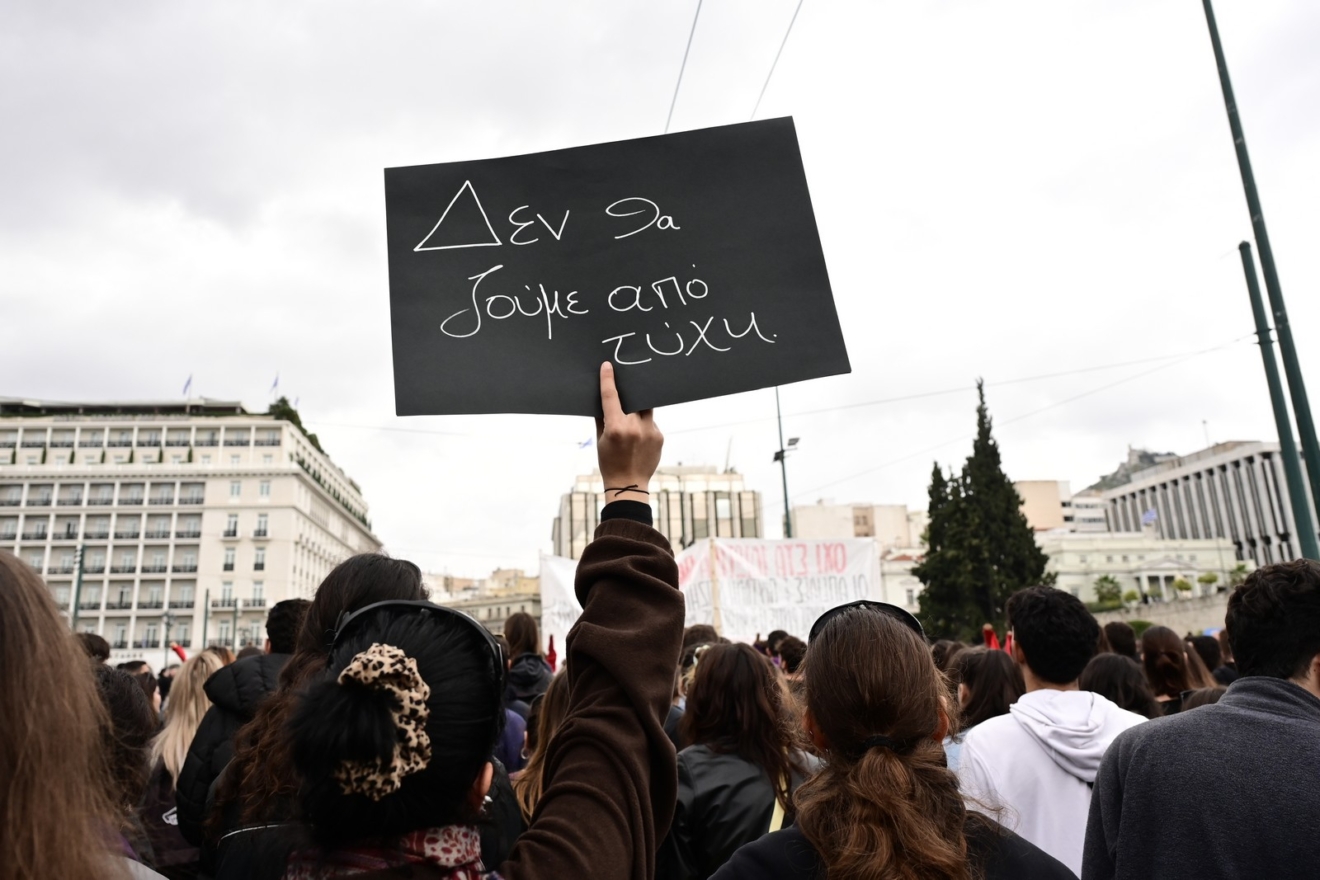
In front of the Parliament, where MPs, ministers, foreign officials, and thousands of citizens pass daily, a small tent has been set up that bears no resemblance to the usual image of a demonstration or protest. It is the refuge of a father who, for nineteen days now, has refused to eat, has already lost more than ten kilos, whom doctors warn is in danger, but who remains motionless and determined. Panos Routsi is no ordinary demonstrator; he is the father of one of the fifty-seven children, students, young people who were killed in the train collision at Tempi, in what was characterized from the outset as a "national crime." And today, almost two years later, he feels he has no other option but to risk his own life to be heard. All of Greece watches with emotion and anger as Panos Routsi fights this battle in front of Parliament.
Routsi's demand is not complicated. He is not asking for compensation or special treatment, he is not blackmailing, he is not threatening. He is asking for his child's body to be exhumed, so that toxicology tests can be performed. It is the self-evident right of a parent who cannot rest until they know exactly how their child died. This is not unreasonable insistence, but a fundamental need; because when the official investigation leaves gaps, when the necessary tests have not been done, when shadows remain, the family has the right to demand a full investigation. But what should be self-evident has turned into a battle with the country's institutional walls. The judiciary does not accept it, the competent authorities speak of an "unnecessary procedure," and so the father found himself with his back against the wall. And when the state closes all doors to you, your only option is to use your own body as a last resort weapon.
And as the days pass, the government's stance appears increasingly indifferent. Instead of standing by the parents, giving them answers and respecting their right to know the truth, it constantly creates obstacles, citing procedures, delays, and excuses. Panos Routsi is forced to exhaust his own body to be heard, while the State closes its ears. And as if that were not enough, the victims' families have long faced an even heavier insult: slander. From the very first days after the tragedy, certain journalists and politicians rushed to accuse them of doing all this for money, that financial motives were hidden behind their struggle, that they were seeking compensation and not justice. And as if that were not enough, even more outrageous statements were heard: that the children who were lost were "sacrificed" to make the railways safe. How can such a thing be said about fifty-seven young people who lost their lives in an instant, due to criminal omissions and the incompetence of those who had the responsibility to protect their lives? And worst of all: instead of taking responsibility, those in charge pass the buck from one to another, as if they are talking about numbers and not human lives. It is the most vulgar inversion of reality; people grieving for their children are presented as "opportunists," while the real culprits remain unharmed. And this suspicion returns every time the parents refuse to remain silent, like a mechanism of silencing and devaluation.
Toxicology tests and the devaluation of Justice
Toxicology tests are not a technical issue; they are a matter of dignity and trust. When you lose your child in such a tragedy, it is not enough to be told that "death was violent." You want to know what happened, if there were factors that have not been revealed, if there were substances or conditions that could illuminate the picture differently. It is not an obsession; it is a right. And it is no coincidence that parents insist on this, because there are already indications that raise legitimate questions. Analyses by the General Chemical State Laboratory showed traces of chemical substances, while it has been revealed that flammable liquids were being transported on the freight train. These alone do not mean that they explain the children's deaths; they clearly show, however, that the investigation cannot remain at half-truths.
The problem is that the State seemed unwilling to open this chapter. From the very beginning, toxicology tests were limited to the engine drivers, as if the rest of the tragedy did not matter. And when the families insisted, there were delays, postponements, technical excuses. A trial that is constantly postponed, an inquiry that closes hastily, an investigation that seems to stop where it should begin. All this fuels the feeling of injustice and strengthens distrust towards Justice. Parents do not see a mechanism trying to find the truth; they see a mechanism that wants to close the file as soon as possible.
And this distrust is not limited to families. It has spread throughout society. From one end of the country to the other, citizens speak of cover-ups, of delays that seem deliberate, of a State that protects itself more than its citizens. It is no coincidence that even the European Prosecutor, Laura Covéși, openly referred to the issue. She said what we all know: that there is a lack of trust, that Greece seems unable to prove that its justice operates transparently. When Europe starts talking about these gaps, it is no longer about "relatives