The wild horses of Kefalonia: the elusive solution
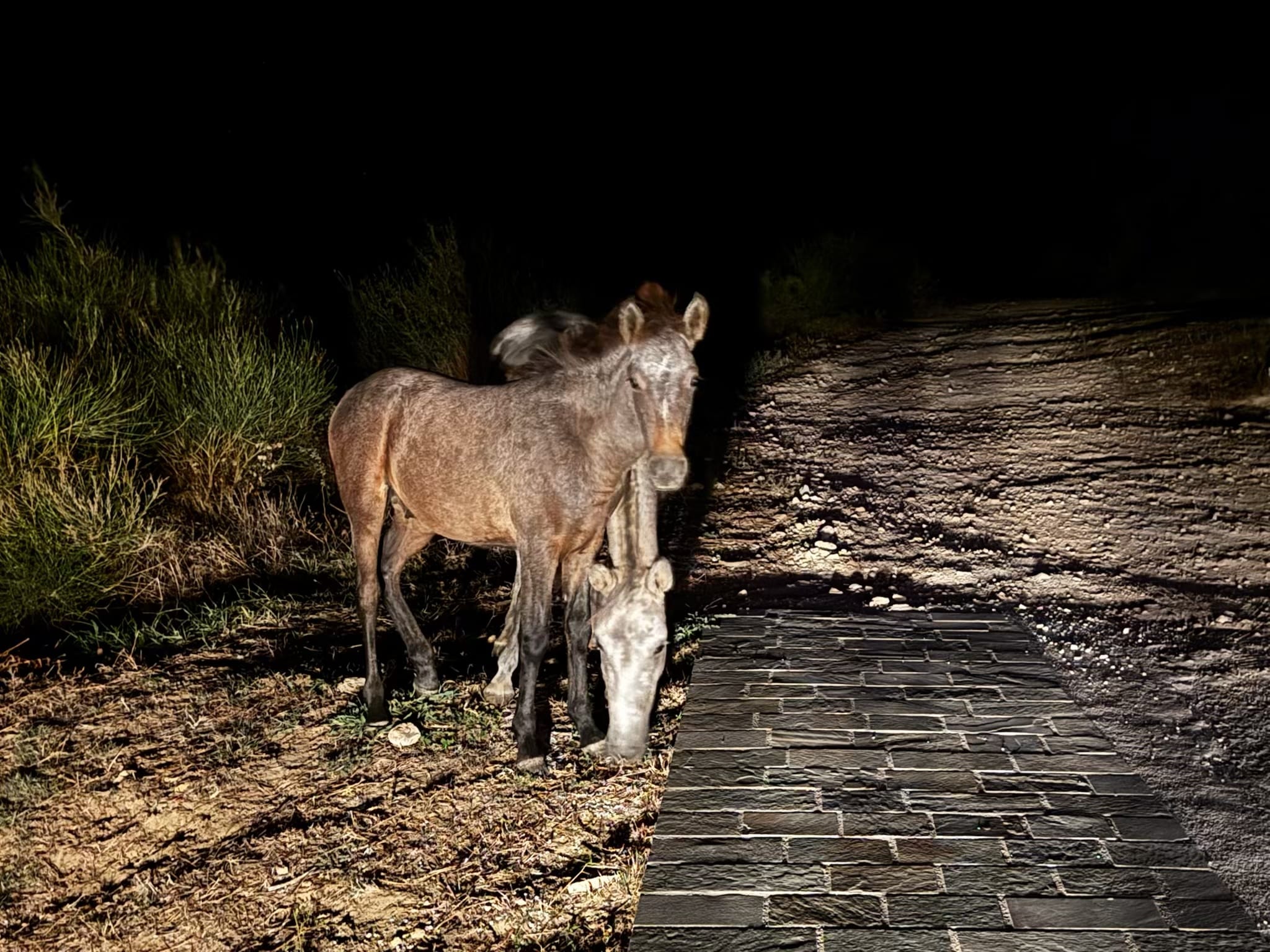
From its very first steps, the newspaper Kefalonian Globe has covered the presence of wild horses in the Elios-Pronnon area. These are, in fact, our most widely read articles. The Kefalonian Globe, after thorough research, was the first to reveal that the Greek State had spent €75,000 on a study carried out by the University of Thessaloniki. Despite the study's results being delivered, no substantial action followed in practice.
The recent, dramatic events are what compel us to return with a new article. The accident we all feared for years has happened: a young person from our area was seriously injured in a road accident involving one of these horses. First and foremost, through this text, we want to wish him, and his family, a speedy recovery and strength.
Let's recall some facts from the story now…
The horses appeared four years ago. They came down from the mountain for reasons that have not yet been clarified. Everyone has an opinion on what caused their relocation, however, to our knowledge, no scientific documentation has been provided to date.
It was said that these horses are a protected species. In fact, they are endangered. Consequently, we can neither contain nor kill them. Without natural predators and with inexhaustible access to food and water, they multiply rapidly. I haven't conducted a scientific census, but I constantly see foals being born since they arrived. This particular breed, the Ainos pony, also seems to be disease-resistant, thanks to its hardy nature.
Hunger, predators, and epidemics are the only three factors that can control a population. It is no coincidence, therefore, that the number of ponies is increasing and that this animal finds an ideal environment in our region.
We already encounter carcasses of the oldest or of animals that fell victim to accidents. They are born, live, and die next to us.
Initially, we only saw them in Thiramonas. Today, however, they have formed herds in other areas too: in Chionata, Mavrata, Valeriano, Katelios, and even to Ratzakli. A clear sign that the new herds are moving towards Skala.
Their presence has also changed our own habits. Many took care to protect gardens, crops, and vegetable gardens. We all remember the incident of the horse found in a swimming pool in Katelios a few years ago… Subsequently, we all became more careful on the roads, especially in areas known as horse gathering "hangouts."
Having worked for more than fifteen years in the equine field, I assure you: you cannot move a hundred wild horses against their will without a budget of hundreds of thousands of euros, if not more. And there is no guarantee that they will not return a few weeks later. Horses are deeply attached to their territory, especially when they are wild.
Some, forgetting that God created us within nature, in the Garden of Eden, and not above it, continued the ancestral sin and wanted to appeal to justice against the authorities, citing dangers to the horses or hygiene problems… But if the welfare of the horses was at risk, they would not reproduce at such rates. And if there were serious hygiene issues, we would all be constantly sick – which is clearly not the case.
We don't even have the funds to renovate our schools. Do you really believe we should spend the cost of a villa with a swimming pool for an operation that will most likely fail? Personally, I would prefer a brand new school in my village over the removal of the horses, especially if this decision is made by some Athenian bureaucrat.
The truth is that there is no solution, because in reality there is no problem. God, nature, call it what you will, brought these horses close to us. Who are we to question this higher will?
No one will come to "exile" them. And even if something like that happened, the horses would return.
So we must learn to live with them, as we have done until today. Accidents can be prevented through education, prevention, and proper road design.
That is why our proposals are clear. They represent a simple and economical alternative to pointless lawsuits:
- Information in schools: through local associations or state employees, so that children learn what these horses are, how they live, and how to coexist with them in the garden, in the village, on the road. Children are the best channel to convey the message to every family.
- Hotels and rental accommodation: to inform tourists about the dangers on the roads, but also to highlight the "Kefalonia experience," giving visitors the opportunity to seek out the horses in the villages and share photos – offering advertising for the island and an economic boost to local professionals.
- Luminous signs on the main road, reminding drivers to be constantly careful.
- A more expensive solution, which could, however, be funded by the state or private institutions: a mobile application with real-time updates on the horses' location.
- Academic opportunity: to allow researchers and experts from around the world to study these horses outside the tourist season, perhaps with a special visa.
- Other programs can be designed based on the "smurfs" model for caretta-caretta sea turtles.
- A local coordinator could be responsible for answering questions and complaints about coexistence, to prevent disappointment and feelings of abandonment.
Such policies were successfully implemented in countries where wolves and bears were reintroduced in the 1990s, with positive results for coexistence in the Alps and the Pyrenees.
It is therefore clear that we have many possibilities to organize our coexistence with the horses of Kefalonia. Instead of trying to change a reality that does not change, let's strive to manage it in the best possible way.
I am certain that the few necessary funds will be found. For the Greek taxpayer, the cost will certainly be less than the "solutions" that have already been tested or designed. We just have to consider that with the €75,000 from the study, thirty luminous signs could have been installed…
These are the truly realistic solutions, practical, implementable, on the ground solutions. Solutions that will prevent road accidents and save human energy from unnecessary waste.