School life in Kefalonia through the eyes of educators
Education in Kefalonia, one of the largest islands in Greece, mirrors the challenges facing the Greek educational system as a whole, yet with unique peculiarities. From the lack of building infrastructure and the administrative responsibilities of teachers, to the operation of special education and the social support of educational activities, the island emerges as a place with great potential, but one that battles the deeply rooted problems of the Greek educational reality.
Through the testimonies of teachers and substitute teachers, we outline the state of education on the island, highlighting the daily challenges and existing needs.
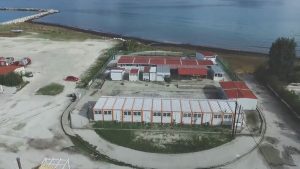
Kefalonia in search of… school buildingsOne of the biggest issues affecting education in Kefalonia is the lack of suitable buildings. The 2014 earthquakes caused extensive damage, leaving behind schools in containers and buildings that were repaired after many years, but still remain inadequate.
Ms. Foivi Rizou, a philologist with 20 years of educational experience in Kefalonia, describes the example of the Lixouri General Lyceum: “It was housed from the 1980s in a building that, while satisfactory in its basic points, always had problems. However, after the 2014 earthquake, the building was deemed earthquake-damaged but repairable, and so the students of Lixouri Lyceum were housed in containers until the original building was repaired. After 8.5 years of waiting, and despite the efforts of the local community and the teachers’ association to finally build a new Lyceum that could meet the needs of a modern Lyceum as it has evolved with the new curricula, all we managed was to return to the old repaired building which is inadequate with serious problems in terms of space and functionality. For example, we do not have covered areas for rainy days, the library is absent, the gymnasium was only recently repaired, and the amphitheater cannot accommodate all students. The problems are many, not just ours, and I attribute them to the general indifference towards education.”
The situation becomes even more difficult with the co-housing of school units, such as the Lixouri Lyceum and Gymnasium. Ms. Rizou comments that “two schools essentially operate in the same building, with classrooms that intrude into one another. This creates problems of sound and communication.”
Meanwhile, the Lixouri Music Gymnasium, although institutionalized since 2019, has never been practically established. “The lack of a suitable building is the biggest obstacle,” explains Ms. Rizou. “The building that had been proposed, the listed Valenti, is inadequate to house the structure. So this is now the fifth year that Kefalonia has a music gymnasium that does not exist. The need for a modern and new building complex in Lixouri that will relieve the situation and provide space for the music school structure to be created is now urgent,” comments Ms. Rizou. Of course, the problem is not limited to Lixouri. “In Agia Thekli, the Gymnasium stayed for 10.5 years in an old municipal building, until it returned to its renovated school,” she adds.
“Of course, I also hear from colleagues in the other schools. Let’s say even the “Pharaoh” complex, the two Lyceums (1st & 2nd) of Argostoli, which is the most modern and newest on the island, also presents some issues. For example, both buildings have problematic layouts, huge corridors with small classrooms. They are excellent buildings but again not as functional as they should be,” she adds, wanting to highlight the general problematic building situation.
At the same time, 30-year-old Christos, a substitute special education mathematician, was called to work in a container school in Kefalonia in the 2023-2024 academic year and conveys his optimistic perspective speaking to thekefalonianglobe.com. “I worked in the 2nd Argostoli Gymnasium, which was in containers, because the building had been demolished by the 2014 earthquake. However, the school was fully equipped with computers, projectors, interactive whiteboards and everything we needed. I was also in the 1st Argostoli Gymnasium, which was old and in moderate condition. The main problem there was the lack of air conditioning. You cannot teach without air conditioning. The bitter truth is that modern schools in Greece are few,” explains Christos, while also emphasizing that “the school with the containers did not look like a school due to its appearance. However, excellent work was done by the teachers, so the children did not perceive the building problem. I never received any complaint that ‘we don’t have this or that’ from the children.”
Self-sufficiency in terms of equipment is one of the unwavering positive aspects of the kindergarten in Mesovounia. However, the process of covering material needs may change somewhat from this year as school committees have been abolished. Specifically, 26-year-old Eleni Paximada, a substitute kindergarten teacher and head of the Mesovounia kindergarten, spoke to us about this, saying that “last year, through the school committees, we had significant funding sources and could cover needs. For example, last year we got an air conditioner. Now, kindergartens belong to municipalities, which do not have the same financial flexibility. The process is new, and this year the municipality must mediate for the arrangement of needs. In the long run, this is very destructive for schools. We are at the mercy of the municipality. For example, if there are needs, such as changing locks, we have to contact the municipality and wait.”
Teachers in Kefalonia – and beyond – are not limited to teaching. Very often they undertake administrative duties, which should usually be carried out by specialized staff.
“We teachers are forced to perform administrative tasks, and indeed administrative tasks are increasing excessively, i.e., they are really escalating year by year. We have no secretarial support, not even a guard. In other words, we are forced to also provide practical support for the premises. Unfortunately, it is a given that there is no school nurse, so some colleagues with more knowledge will also play the role of a fake doctor. Unfortunately, we are forced to play too many roles now, which seems honorable and commendable but is very tiring and exhausting and is not rewarded either morally or, of course, financially,” emphasizes Ms. Rizou.
Ms. Paximada’s experience is similar, stating that “I essentially have two professions: the educational and the administrative. Indeed, I work more hours than the hours I have been hired for. I am required to be at school from 08:00 to 13:00, but I work more due to my administrative responsibilities. My work in the administrative part includes, among other things, the building, the students, and the teaching staff.” “Many times I feel so tired from the administrative work that it also affects my educational work,” she further explains.
Christos, a substitute mathematics teacher, identifies a similar issue and characteristically states that “bureaucracy was a big problem. Teachers lose valuable time from activities with children. A school has the classic bureaucracy of the Public Sector. Because there are no secretaries, the teacher is called upon to do this job.”
Chapter special education - A system that is progressing but remains incomplete
Special education in Kefalonia has made significant progress, but there are gaps. “Because I worked for the first time in the integration class in Kefalonia, I can say that in the field of special education it is very advanced. Every school is staffed with 2 teachers, and there is an IDSC (Interdisciplinary Support Committee). Special education on the island is ‘running’ very well. All high schools in Kefalonia, except one, have a ZEP (educational priority zone) class, where foreign children who do not know the language attend. All other high schools have an integration class. And all the primary schools I knew had an integration class,” explains Christos, a substitute special education mathematician.
However, there are no such structures in Lyceums. Ms. Rizou points out that special education in Lyceums should be substantially present. “Students with learning difficulties are increasing, but the system leaves them out. In Lyceums, education is transformed into preparation for national exams, leaving all other aspects aside.”
The challenges of substitute teachersSubstitute teachers in Kefalonia strongly experience the difficulties of remote education. “The biggest problem is housing; it wasn’t easy to find a house, but I was lucky,” notes Christos. “There was a colleague who found a house after about 20 days due to high rents,” he further states.
“Most houses are utilized during the season, with the result that many colleagues are forced to move out of them in May, while their work ends at the end of June,” points out Ms. Rizou.
At the same time, another significant issue that substitute teachers on the island are called upon to manage is that of multiple and long journeys. Specifically, Ms. Zoi Moschopoulou, a substitute English teacher at the 1st and 2nd Lixouri Kindergartens, at the Agia Thekli Kindergarten, and at the Mesovounia Kindergarten, states that the distances between schools make her work difficult: “This year I work in four kindergartens. It's relatively good this year, because the distances are small, about 20 minutes from one kindergarten to another. Other years, it took up to 40 minutes to move from one kindergarten to another.”
The state provides an amount for travel expenses, but as Ms. Moschopoulou notes, this is not always enough and usually teachers receive it with a delay of even a year.
 The attitude of the local community
Despite the difficulties, the local community of Kefalonia actively supports education. “Parents are readily available to help whenever needed. Because the community is small, we have a good relationship with parents and immediate help from them. There is no anonymity that we encounter in a city,” notes Paximada.
Indeed, “in a primary school in Χionata, a parent bought a carpet for the classroom himself,” characteristicallly states Dimitra Kokkinopoulou, a kindergarten teacher in Erisos, thus sealing the excellent cooperation between teachers and parents. “Especially in the more remote areas, parents feel an obligation towards us who have come, and they try to help us and satisfy the existing needs,” she explains.
It should be emphasized that in the aforementioned area of Erisos in Kefalonia - and beyond - many Albanian families live. “One issue we face in the area is the language barrier, as most families are of Albanian origin. Therefore, these children, coming to school, do not know the Greek language,” says Ms. Paximada and continues by saying that “it is very important to consider that parents must accept that children will attend a Greek school and not expect us, as teachers, to teach them Greek. Thus, the Greek language must be worked on from the beginning at home, alongside Albanian.”
Our job is not to teach Greek. There is a special department, the ZEP, in primary schools, which should be more widespread. The ministry has not provided for this.” Regarding this, Ms. Kokkinopoulou states that “parents from Albania show particular respect for teachers and their children are calm and respect the teacher.”
Solutions to improve the educational landscapeImproving education in Kefalonia requires coordinated actions at multiple levels, as described by the teachers of the island through their testimonies.
The lack of psychologists, social workers, and special educators is a gap that needs to be filled immediately. “There is no support within the system for psychologists and social workers, neither for students nor for teachers. Primary schools and some secondary schools have a visiting psychologist whose role is very important and usually insufficient in terms of how the system frames the hours they have to work in relation to the needs of a school. That is, the visiting psychologist never manages to integrate into a school's social fabric, to understand this fabric, to get involved in the processes, to focus on children who would need their help, and is forced to be a visitor to whom children with already advanced problems are referred, children whom the context has identified as needing help. A psychologist in a school should be an essential part of a cohesive team that works together to be able to focus on smaller problems, to be able to offer assistance for a balanced functioning of a school,” emphasizes Ms. Rizou. At the same time, the imperative need for a modern, new building complex in Lixouri is stressed, as Ms. Rizou has highlighted to us, in order to relieve the situation.
Ms. Moschopoulou expresses a similar view, arguing that strengthening teachers is crucial, both economically and in terms of equipment and staff available in pre-school education structures. “Children are the foundation of society, and anything we can do for them is important,” notes Ms. Zoi Moschopoulou. In addition, she emphasizes the need for a change in attitude regarding the integration of new subjects, such as English, into the kindergarten curriculum: “The fear that English might disrupt the kindergarten curriculum must stop. The kindergarten teachers themselves should view it more positively.” Combined support, both at the level of infrastructure and in changing perceptions, can provide a significant boost to the functioning of kindergartens in Kefalonia.
Following the above points, there is a need for substantial support for substitute teachers who face serious housing and transportation problems. Issues that affect both their financial situation and their educational work.
In general, the educational system has to deal with many problematic - for today's era - interpretations of effective and beneficial education. “It is important to stop viewing Lyceums exclusively as places for preparing for national exams. Students need support not only to pass exams, but also to acquire skills that will help them in their lives,” comments Ms. Rizou. At the same time, Ms. Kokkinopoulou emphasizes that the substantive problems are those of the general educational system, stating characteristically that “it is not possible for one teacher to be with 25 children in a classroom. We identify the problems regarding learning difficulties, and the processes start the following year, as it takes time to identify them, gather all the documents, and get approval for parallel support. Understaffing is the most important problem.”
Despite the difficulties, Kefalonia’s educators continue to work with dedication, trying to fill the gaps left by the system. They take on multiple roles while the local community acts as their helper, with parents actively showing their support, which is particularly evident in the island’s small communities.
However, the need for change is imperative. From the construction of new school complexes and the improvement of existing ones to the reinforcement of staff, adequate support for substitute teachers, and the reduction of bureaucracy, Kefalonia needs a comprehensive plan for educational reform. The genuine interest of educators, combined with the support of the local community, however, gives hope for a better future.