Ainos: Geomorphology, forest and biodiversity
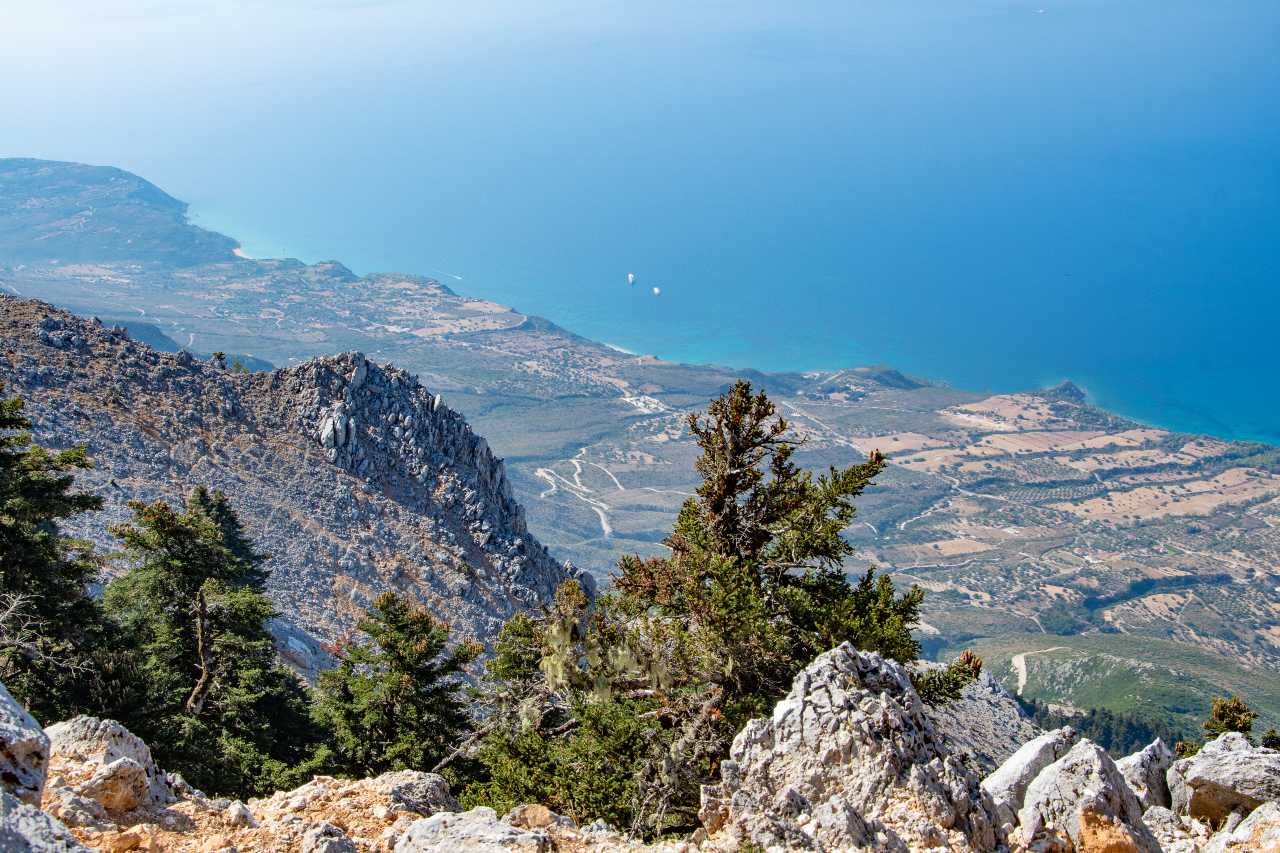
Ainos is the highest point of Kefalonia and the Ionian Islands, with an altitude of 1,628 meters, and constitutes the main mountain system of the island. Its importance is not limited to its geographical dimension, but extends to the formation of the overall natural function of Kefalonia. The relief of the hinterland, the intense altitudinal changes, the steep slopes and the diversification of ecological zones are directly connected with its presence. The transition from coastal areas to higher altitudes is short and intense, an element that creates different conditions of temperature, humidity and vegetation within a limited geographical area. In an island environment, where natural resources are finite and climatic pressures are increasing, the role of the mountain zone acquires strategic importance, as it acts as a natural regulator of water, soil and biodiversity.
The geomorphology of Kefalonia cannot be interpreted without reference to the geological background of the area. The Ionian geotectonic zone, in which the island is located, is characterized by limestone formations that arose in marine environments and were uplifted through large-scale tectonic processes. The area remains seismogenic due to the convergence of the African and Eurasian lithospheric plates, a fact that explains the intense relief and continuous geodynamic evolution. The steep slopes, ravines and morphological discontinuities are not merely landscape features, but the result of long-term tectonic activity. The limestone composition of the soil favors the development of karst phenomena, with the result that water penetrates the subsoil and follows underground routes, an element that differentiates the functioning of the hydrological system in relation to areas of surface runoff. Understanding this structure is crucial for water management, erosion prevention and project planning in mountainous areas.
Hydrological function and microclimatic differentiation
The mountain zone of Ainos acts as a main collector of rainfall and snowfall, retaining significant amounts of moisture that feed the soil and subsoil. At higher altitudes, temperatures are lower, rainfall is increased and snowfall is frequent during the winter, conditions that differ substantially from the coastal zones of the island. This differentiation creates a mountain microclimate, which allows the development of forest ecosystems and contributes to maintaining soil moisture for a longer period.
The movement of water in limestone environments is not linear, as storage and transport take place both superficially and underground. The mountain zone, through its forest cover and morphology, reduces surface runoff and limits erosion, contributing to slope stability and infrastructure protection. During periods of extreme weather events, the condition of the forest system directly affects soil behavior and the intensity of transported materials. At the same time, in conditions of prolonged drought, the health of the forest determines the possibility of natural regeneration and the maintenance of ecological balance.
The Kefalonian fir forest and its ecological importance
A central element of the mountain zone is the Kefalonian fir forest, Abies cephalonica, an endemic species of Greece which forms extensive clusters in Ainos and in several areas almost pure forests. The presence of such a forest system in an island environment is a rare phenomenon and gives the area special ecological value. The fir plays a decisive role in soil retention, in reducing surface runoff and in regulating humidity, creating a micro-environment that favors the development of understory vegetation and the maintenance of rich fauna.
The ecological function of the forest extends beyond its landscape morphology. Its presence affects the thermal balance of the soil, the storage of organic matter and the stability of ecosystems. The natural regeneration of the fir requires specific humidity and temperature conditions, which makes the forest sensitive to extreme thermal events and fires. The destruction of extensive areas of fir entails long-term environmental burden, as full restoration requires decades. For this reason, fire prevention and systematic monitoring of forest health are key management priorities.
The recognition of Ainos' ecological importance led to its declaration as a National Park in 1962, with a core of approximately 28,000 acres, while its inclusion in the Natura 2000 network confirms its international value. This institutional framework defines restrictions on land use and provides protection measures, aiming at maintaining the natural balance.
Fauna and management of the wild horses of Ainos
The fauna of Ainos is directly connected with the structure of the forest and the vegetation zones created by the altitude and the microclimate. In the mountainous area, bird species are found that utilize the wooded areas and openings for feeding and nesting, as well as inland mammals that find cover and food in the mosaic of fir, shrub vegetation and meadows. At the same time, the area supports reptiles and amphibians in microhabitats where humidity remains higher, while the presence of insects and other invertebrates is crucial for the functioning of the ecosystem, from the recycling of organic matter to pollination. The importance of this fauna is not theoretical, as changes in water availability, drought intensity or human disturbance are reflected over time in the behavior and stability of populations, and act as a practical indicator of the condition of the forest.
A special place in public discussion is held by the wild horses of Ainos, which are a recognizable element of the area and have repeatedly occupied local news. The wild horses of Ainos are connected with the mountain zone, but in recent years more frequent movements to lower points and near settlements have been reported, a fact that enhances interest around their management. The increased mobility, combined with reports of population increase, turns the issue from solely a mountain issue into an issue that also affects local communities, due to their presence on roads or agricultural areas. The need for recording, stable monitoring and institutional coordination remains central, in order to ensure the welfare of the animals and at the same time protect the balance of the Ainos ecosystem.
Institutional protection and modern challenges
The protection of Ainos is based on an institutional framework that defines clear rules for land use, access and activities. Fire prevention is a key policy axis, as the sensitivity of the fir forest to extensive destruction makes continuous surveillance and the planning of risk prevention measures necessary. At the same time, the regulation of visits and environmental awareness contribute to maintaining the natural balance.
Modern environmental pressures, such as increased temperatures and extreme weather events, reinforce the need for systematic monitoring and long-term planning. Maintaining the ecological stability of Ainos is not an isolated goal, but is directly linked to the overall resilience of Kefalonia against natural hazards and environmental changes.
Historical presence and human activities in the mountain zone
The relationship of the local community with Ainos is not recent, nor is it limited to the modern concept of environmental protection. In the past, the mountain zone was used for logging, grazing and limited agricultural and livestock activities, at a time when the island's economy was based on primary productive practices. Fir wood was used in construction and other needs, while the presence of animals on the outskirts of the mountain was part of daily local life. These activities, although intense at certain periods, did not lead to complete deforestation, mainly due to the morphology of the terrain and limited accessibility. The gradual change in the island's productive model, especially after the mid-20th century, led to a reduction in the direct exploitation of the mountain zone and created the conditions for institutional protection.
The declaration of the National Park in 1962 marked a change in priorities, as the protection of the forest was placed above its economic exploitation. This decision was part of a broader national policy of preserving natural ecosystems, aiming at protecting the Kefalonian fir and the biodiversity of the area. Since then, human presence is limited to activities compatible with the protected nature of the area, such as hiking, environmental education and scientific research. This historical transition from exploitation to protection is an important element for understanding current management.
Infrastructure, access and visitor numbers
The existence of a road network leading to parts of the mountain zone allows access to visitors, without however undermining the protected nature of the area. Access facilitates environmental awareness and mild recreation, but at the same time creates a need for increased supervision and management. Vehicle traffic, uncontrolled parking, waste disposal and non-compliance with rules of conduct are issues that recur over time and require systematic treatment.
Visitor numbers to Ainos show seasonal fluctuations, with increased traffic during the summer months, when pressure on the island's natural areas is generally more intense. During periods of high temperatures, the risk of fire increases, making strict enforcement of prevention measures crucial. The balance between access and protection is a constant challenge, as the promotion of the mountain zone as a natural resource must go hand in hand with the preservation of its ecological integrity.
Climate change and future pressures
Modern climate trends are already affecting Mediterranean ecosystems, with an increase in average temperature, longer periods of drought and more frequent extreme weather events. In this context, the mountain zone of Ainos acts as a critical indicator of environmental change. The health of the Kefalonian fir, the ability of natural regeneration and the resilience of the forest to prolonged thermal stress are key factors that will determine the future evolution of the ecosystem.
The increased probability of extensive fires in conditions of prolonged drought is one of the most serious threats. Fuel management, surveillance and the planning of immediate intervention in case of fire become central issues of civil protection. At the same time, monitoring of possible diseases or drying phenomena of the fir requires scientific cooperation and stable data recording. The preservation of the forest ecosystem cannot be based on fragmented actions, but on long-term planning based on scientific assessments.
Environmental education and local responsibility
The protection of Ainos depends not only on institutional decisions, but also on the attitude of the local community and visitors. Environmental education, especially in schools and local structures, enhances the awareness that the mountain zone is a key natural capital of the island. Understanding the functioning of the forest ecosystem, the importance of the fir and the peculiarities of the karst environment contributes to the formation of responsible behavior.
The promotion of Ainos as an element of identity cannot be limited to symbolic references. It requires practical choices, respect for rules and active participation in prevention and protection actions. The preservation of the ecological balance of the mountain zone is directly linked to the overall quality of life on the island, as it affects the natural environment, safety and the long-term sustainability of natural resources.
Related Articles
Προβολή της πολυβραβευμένης ταινίας «Ocean with David Attenborough» στην Κεφαλονιά
Η πολυβραβευμένη ταινία «Ocean with David Attenborough» προβάλλεται στον Θαλασσόμυλο Αργοστολίου στις 25 Σεπτεμβρίου, με ελεύθερη είσοδο.
Άλλη μια δημόσια δομή κλείνει στο Ληξούρι και η Δημοτική Αρχή Κατσιβέλη απλά παρακολουθεί!
Η Λαϊκή Συσπείρωση στον Δήμο Ληξουρίου καταγγέλλει το οριστικό κλείσιμο του Γραφείου Εξυπηρέτησης Φορολογουμένων και ζητά να αποτραπεί η απομάκρυνση ακόμη μιας κρίσιμης δημόσιας δομής από την Παλική.
Η δημογραφική συρρίκνωση της Κεφαλονιάς: πού χάνεται ο πληθυσμός και γιατί
Η απογραφή του 2021 δείχνει ότι η Κεφαλονιά δεν αδειάζει ομοιόμορφα. Το Αργοστόλι χάνει πληθυσμό, η Σάμη κερδίζει, και το ερώτημα είναι τι σημαίνει αυτό για το μέλλον του νησιού.