When the Earth shakes | From Kamchatka to the Greek nightmare of Richter
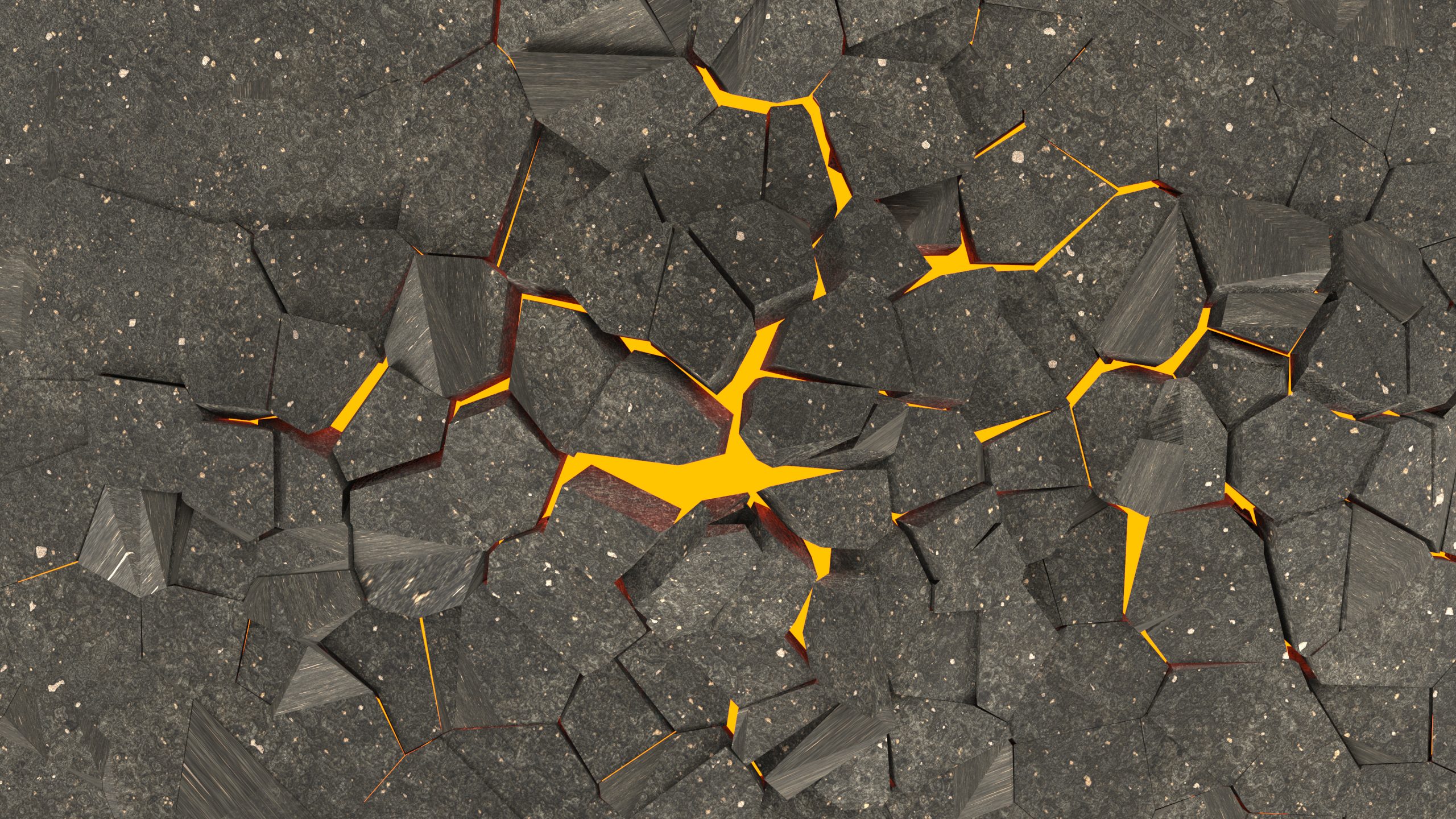
The calendar read Wednesday, July 30, 2025, when Russia's Far East "bent." An 8.8 magnitude earthquake on the Richter scale occurred on the Kamchatka Peninsula, one of the strongest ever recorded in the history of seismology. The images that circulated around the world sent shivers down spines: turbulent seas, mass evacuations, global mobilization to prevent a new tragedy like Japan 2011 or Indonesia 2004.
More than two million people were ordered to evacuate, with early warning systems playing a crucial role in limiting the consequences. The memory of the past was there: more than 230,000 people were killed in 14 countries by the tsunami that followed the December 26, 2004 earthquake.
Despite the giant earthquake, the tsunami that followed this time proved milder than predicted. Yet, the event once again brought a timeless question into global dialogue: What happens when nature decides to remind us of its power?
The earth beneath our feet: How a mega-earthquake is bornKamchatka is not a random point on the map. It is located in the so-called "Ring of Fire," a geologically active zone that surrounds the Pacific Ocean. There, tectonic plates constantly collide, submerge, compress, and eventually release their energy. Specifically, the Pacific plate moves northwest at a speed of 8 centimeters per year and collides with the Okhotsk microplate.
When one plate wedges beneath another – a process called subduction – the result is the accumulation of enormous energy. When this energy is abruptly released, we are talking about a megathrust earthquake. Earthquakes of this kind, such as in Chile in 1960 or Japan in 2011, are the strongest that nature has produced.
The deadliest and strongest earthquakes on the planetThe strongest earthquake ever recorded was in Chile in 1960: 9.5 Richter. It struck southern Chile and caused a tsunami that reached Japan and the Philippines. More than 1,600 people were killed, while thousands were injured and displaced.
Alaska in 1964 experienced a 9.2 Richter earthquake, with similarly deadly consequences. This was followed by the 9.1 Richter earthquake in Indonesia in 2004, with over 230,000 victims – one of the greatest humanitarian tragedies. In 2011, Japan was hit by a 9.0 Richter earthquake and tsunami.
Other strong earthquakes with serious consequences include the 8.8 Richter earthquake in Chile in 2010, and the 8.5 Richter earthquake in Kuril in 1963.
Greece: We live in a turbulent corner of the MediterraneanGreece is among the most earthquake-prone countries in Europe – and not by chance. Its location at the collision of the African and Eurasian plates keeps it permanently on alert. Although earthquakes above 8 Richter are rare, the country has experienced such exceptional cases.
The strongest earthquake in Greek history occurred in 365 AD off the coast of Crete. It is estimated to have reached 8.5 Richter and caused a tsunami that even affected Alexandria, Egypt. In modern times, the strongest earthquake was 8.2 Richter and struck Rhodes in 1856, leaving behind 618 dead.
A indicative list of some of the strongest earthquakes in Greece follows:
- October 12, 1856 Crete 8.2 Richter - 618 dead
- February 16, 1810 Crete 7.8 Richter 2,500 dead
- June 26, 1926 Rhodes 7.7 or 8.0 Richter 12 dead
- June 27, 1886 Filiatra 7.5 Richter - 326 dead
- July 9, 1956 Amorgos 7.5 Richter - 53 dead
- February 4, 1867 Kefalonia 7.2 Richter - 224 dead
- April 25, 1957 Rhodes, 7.2 Richter - 18 dead
- August 11, 1903 Kythira 7.2 to 8 Richter - 14 dead
- August 12, 1953 Argostoli 7.2 Richter - 476 dead
- April 25, 1957 Rhodes 7.2 Richter - 18 dead
- February 19, 1968 Agios Efstratios 7.1 Richter - 20 dead
- April 27, 1894 Atalanti 7.0 Richter - 225 dead
- September 26, 1932 Ierissos 7.0 Richter - 161 dead
- February 25, 1935 Crete 7.0 Richter - 8 dead
- October 6, 1947 Messinia 7.0 Richter - 3 dead
Regarding the deadliest:
- 3/4/1881 – Chios – 6.4 Richter – over 4,000 dead
- 16/2/1810 – Crete – 7.8 Richter – 2,500 dead
- 12/10/1856 – Crete– 8.2 Richter – 618 dead
- 30/10/1840 - Chalki - 6.5 Richter - 600 dead
- 7/3/1867 - Lesvos - 6.8 Richter - 550 dead
- 12/8/1953 – Kefalonia – 7.2 Richter – 476 dead
- 27/6/1886 – Filiatra – 7.5 Richter – 326 dead
- 27/4/1894 - Atalanti - 7.0 Richter - 225 dead
- 4/2/1867 - Kefalonia - 7.2 Richter - 224 dead
- 23/4/1933 - Kos - 6.6 Richter - 178 dead
- 26/9/1932 - Ierissos - 7.0 Richter - 161 dead
- 7/9/1999 - Parnitha - 6.0 Richter - 143 dead
- 1/8/1870 - Arachova - 6.8 Richter - 117 dead
- 30/10/2020 - Samos - 6.7 Richter - 116 dead
- 14/5/1895 - Paramythia Thesprotias - 6.3 Richter - 75 dead
Kefalonia has its own distinct – and by no means quiet – place on the seismic map of Greece. The Ionian Sea is one of the most earthquake-prone areas in the country and Kefalonia has experienced disasters that have marked its history.
The most characteristic earthquake occurred on August 12, 1953. It was 7.2 Richter and literally flattened the Ionian islands: Kefalonia, Zakynthos, and Ithaca. 476 people were killed, over 2,000 people were injured and more than 27,000 homes collapsed. Argostoli and Lixouri were turned into ruins.
It is worth noting that the first major foreshock occurred two days earlier, on August 9. Then came the main earthquake and another strong aftershock on August 13. This three-day period remained in local memory as "the disaster."
Even more recently, Kefalonia was tested: in 2014, two earthquakes over 5.8 Richter occurred within two weeks, causing damage but no casualties – proof that buildings now withstand more.
Living with the moving earthKefalonia, like the rest of the planet, cannot "schedule" earthquakes. But it can prepare. Warning systems, earthquake-resistant construction, accurate information, and calmness are our main weapons.
The role of early warning systems proved crucial in the case of Kamchatka as well. Many Pacific countries now have specialized tsunami monitoring centers, which immediately send warnings to the population and call for the evacuation of coastal areas. Such a system did not exist in 2004, when the deadly Indian Ocean tsunami left behind over 230,000 victims. Today, such technological infrastructures save lives — especially in highly seismic areas like Kamchatka or Japan.
Although scientists cannot yet predict exactly when an earthquake will occur, early warning for a tsunami or other consequences of an earthquake can prove life-saving. Knowledge, therefore, is not just power; it is also defense.
The earth may shake, but readiness and information must not recede. Earthquakes are not just natural phenomena. They are also social – because how they find us largely depends on how we lived before them.
Related Articles
Η οικονομία των 100 ημερών: Πώς η εποχικότητα αλλάζει τα νησιά
Τι σημαίνει πραγματικά να ζει ένα νησί από λίγους μήνες τουρισμού — και γιατί η «οικονομία των 100 ημερών» καθορίζει την εργασία, την κατοικία και τις υποδομές όλο τον χρόνο.
Πόσο κοστίζει πλέον ένα καλοκαίρι
Η μετακίνηση, η διαμονή και η καθημερινή κατανάλωση ανεβάζουν τον λογαριασμό των διακοπών στην Κεφαλονιά, ενώ οι ίδιες αυξήσεις μεταφέρονται στη ζωή των μόνιμων κατοίκων.
Το Ίδρυμα Γεωργίου & Μάρης Βεργωτή τιμήθηκε με το Βραβείο Ευκράντη για την Κοινωνική Προσφορά
Το Ίδρυμα Γεωργίου & Μάρης Βεργωτή τιμήθηκε με το Βραβείο Ευκράντη για την Κοινωνική Προσφορά, σε μια χρονιά-ορόσημο κατά την οποία συμπληρώνει 50 χρόνια αδιάλειπτης παρουσίας και προσφοράς.