The Wild Horses of Ainos: The Political Discussion Around Them, Promises, and the Final Management Plan
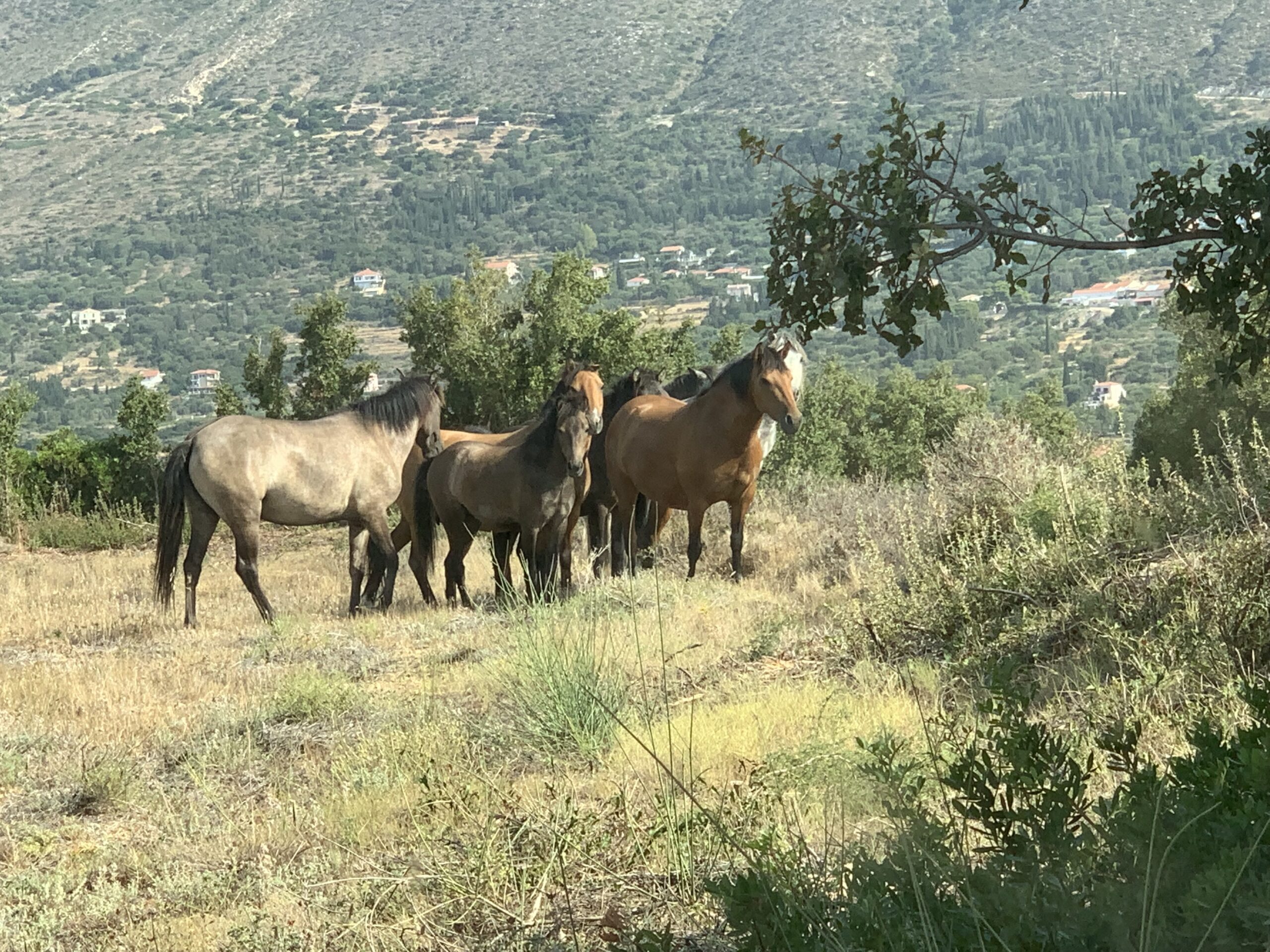
The wild horses of Ainos constitute a particularly rare species of horse, found in only a few places in Greece. Their charm captivates locals and visitors alike, and they are a characteristic example of the natural wonders on the island of Kefalonia. Their history dates back years, and they are now an undoubtedly integral cultural and ecological part of Kefalonia. These large animals live freely on Mount Ainos, and often wander into surrounding villages, a fact that has been a key factor in the controversial political discussion that has begun around the issue.
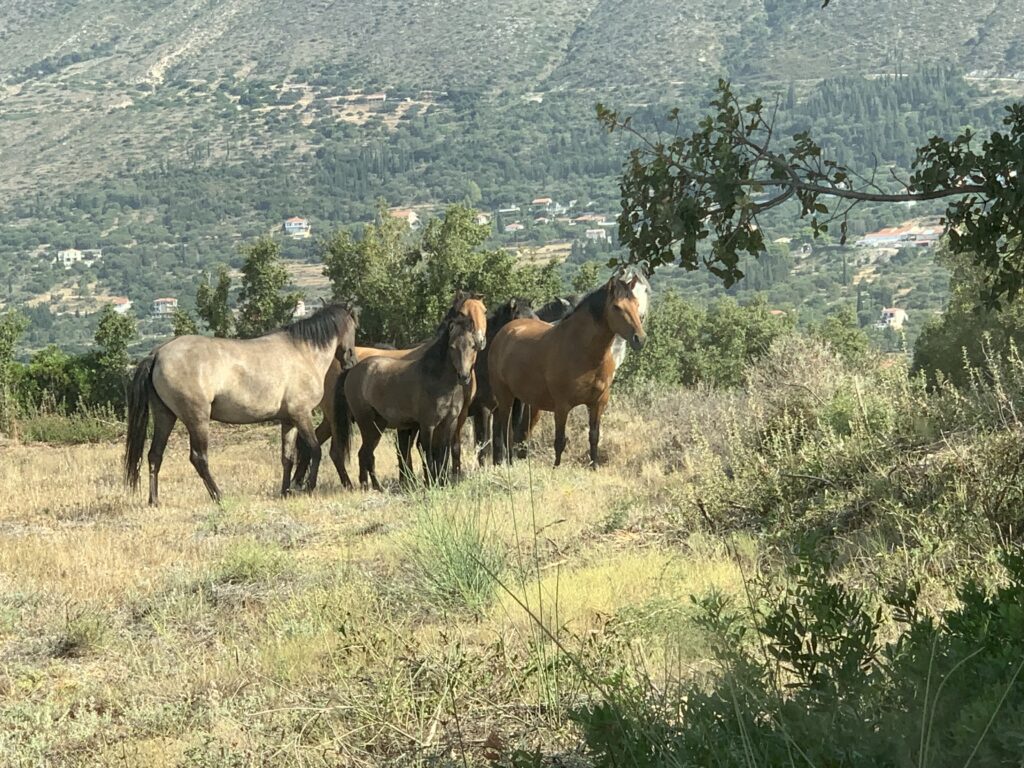
A few words about the horses and the problems:
The wild horses of Ainos belong to the species Equus Caballus, which resembles domestic horses and whose main colors are brown, black, white, and gray. They have been tamed by humans and primarily live at relatively high altitudes with gentle slopes, near water. Their lifespan is 25-30 years. Besides Kefalonia, this species is also found in some different areas such as Pindos, from which they originate, Thessaly, and Nafpaktia. In Kefalonia, these horses were abandoned after World War II on Mount Ainos, where they live to this day. In recent years, it has been observed that many groups of horses have moved and now live in villages below the mountain, mainly in Mavrata, Thiramonas, Valerianos, and Ano Kateleio. The safety of the horses in these areas is questionable, and there are many problems created for the villagers due to the free grazing of the horses in these specific areas.
For this reason, there is an intense political discussion around the issue of wild horses, as despite their dazzling beauty, their free grazing in the surrounding villages of Ainos causes problems for the residents. Before the local elections, there had been promises for solutions to these problems, but nothing has materialized to date. The animals, unintentionally, sometimes cause damage to house yards or residents' fields. Moreover, the safety of the animals themselves is at risk, as they wander on roads with traffic, and during the winter months, finding food is a difficult process. Thus, multiple requests have been made for answers and actions from those responsible. The Management Body of Ainos National Park is responsible for the management of the wild horses of Ainos, which has now been integrated with the Natural Environment and Climate Change Agency (NECCA), just as the Region has taken responsibility for the issue, and will undertake the implementation of the plan for horse management.
We conducted in-depth research on the subject and interviewed all sides to provide a comprehensive picture of the situation. We contacted officials, politicians, village residents, and horse experts. Some did not respond to our attempts at communication, but there were also those who agreed to share a few words from their own perspective.
The data we refer to is based on research carried out in collaboration with OPEKA and the Aristotle University of Thessaloniki concerning the “Monitoring of the population and management proposals for wild horses (Equus caballus) in Ainos National Park and in areas of Nafpaktia,” where OPEKA forwarded us the results of the first phase of the research for the specific purpose of use in our article. This study is being implemented following a question submitted to Parliament by MP Mr. Vasilis Grammenos in 2023, with the aim of resolving the problems observed in areas where horses move, in Kefalonia and Nafpaktia. The results of the second phase will be available by the end of April, when we will be able to have more official information about the process that will be implemented in practice, as confirmed by Professor Mr. Balakoudis, who is participating in the Aristotle University of Thessaloniki's research, in our communication. Finally, this study is being conducted with a budget of 74,400 euros, which is an expense of OPEKA.
The results of the first phase of the study and the anticipation for the final plan:
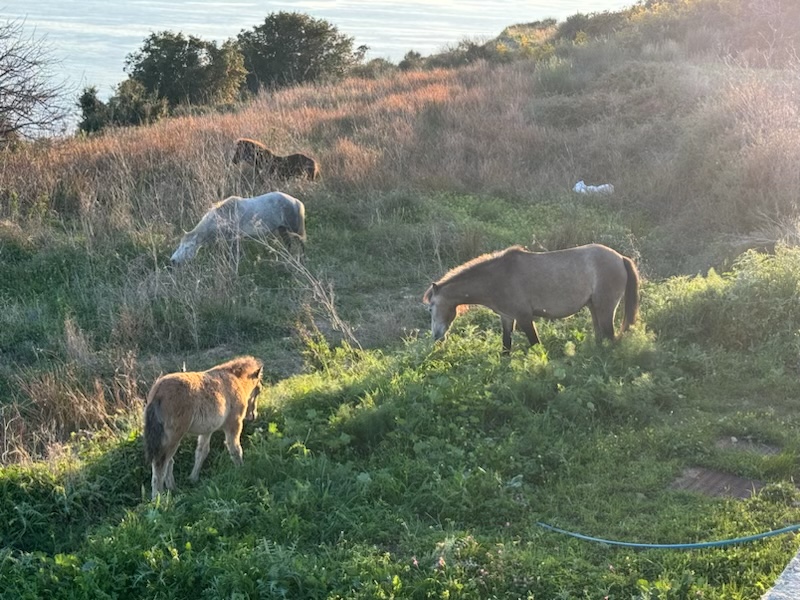
The first phase of the study on “Monitoring of the population and management proposals for wild horses (Equus caballus) in Ainos National Park and in areas of Nafpaktia” reports that a total of 31 horses were identified, divided into five harems, two in the Ainos area and three in the Thiramonas-Valerianos area, with an average of six horses per harem. Also, the average fertility rate was estimated at 0.429 newborn females/reproductive females, and the average number of adult females per harem was calculated at 2.8, ranging from 1-4 horses per harem. The largest percentage (90.3%) of horses in Kefalonia were rated in moderate to good physical condition according to the collected data. The density of horses was similar across all seasons (0.03 horses/ha in Ainos and 0.05 horses/ha in Thiramonas).
The study mentions the extent of horse activity by area, and it is interesting to note that there was a decrease in the area where horses are active during the summer period. Furthermore, the findings showed that the area where the animals move is often shared by harems, and they often intermingle in areas where they are led for food and water in Ainos National Park and the Eleios-Pronnoi area. The second phase of the study analyzes data on the horses' feeding habits, as well as questionnaires completed by residents regarding their management. We await the final results for a comprehensive picture of the findings.
In our communication with the president of the Mavrata community, Ioannis Chounos, we were informed that there is a process underway regarding the management of horses in villages where horses roam freely, but nothing is official yet. The president stated that last year the Aristotle University of Thessaloniki approached residents with questionnaires to offer their own perspective on the issue and solutions to the problems they have to propose, thus establishing a basis for solving the problems. The village presidents, as well as the residents, are awaiting the presentation of the results of this research and official information regarding the practical process for managing the animals. Mr. Chounos also highlighted the daily problems faced by residents due to the free grazing of horses in their yards and on village roads.
Therefore, the results of the study conducted by the Aristotle University will form the basis for solving the problems and protecting the horses. Thus, we will be able to have a clearer picture of the solutions that will be given in practice and the final plan that will be formulated, as the Geopark also pointed out in our conversation. The political officials seem reassuring about the issue, giving hope that a satisfactory solution for the residents and, of course, for the horses that need protection will soon be found. It is, therefore, important to be able to protect this beautiful rare species that inhabits our island and to be able to coexist harmoniously.
Links:
O.ΦΥ.ΠΕ.Κ.Α.: https://necca.gov.gr/
Γεωπάρκο: https://kefaloniageopark.gr/
Απάντηση στην ερώτηση του βουλευτή κ. Βασίλειου Γραμμένου από το Υπουργείο: https://www.hellenicparliament.gr/UserFiles/67715b2c-ec81-4f0c-ad6a-476a34d732bd/12439103.pdf
Related Articles
Η οικονομία των 100 ημερών: Πώς η εποχικότητα αλλάζει τα νησιά
Τι σημαίνει πραγματικά να ζει ένα νησί από λίγους μήνες τουρισμού — και γιατί η «οικονομία των 100 ημερών» καθορίζει την εργασία, την κατοικία και τις υποδομές όλο τον χρόνο.
Πόσο κοστίζει πλέον ένα καλοκαίρι
Η μετακίνηση, η διαμονή και η καθημερινή κατανάλωση ανεβάζουν τον λογαριασμό των διακοπών στην Κεφαλονιά, ενώ οι ίδιες αυξήσεις μεταφέρονται στη ζωή των μόνιμων κατοίκων.
Το Ίδρυμα Γεωργίου & Μάρης Βεργωτή τιμήθηκε με το Βραβείο Ευκράντη για την Κοινωνική Προσφορά
Το Ίδρυμα Γεωργίου & Μάρης Βεργωτή τιμήθηκε με το Βραβείο Ευκράντη για την Κοινωνική Προσφορά, σε μια χρονιά-ορόσημο κατά την οποία συμπληρώνει 50 χρόνια αδιάλειπτης παρουσίας και προσφοράς.