What image comes to mind when you hear "Kefalonia"?
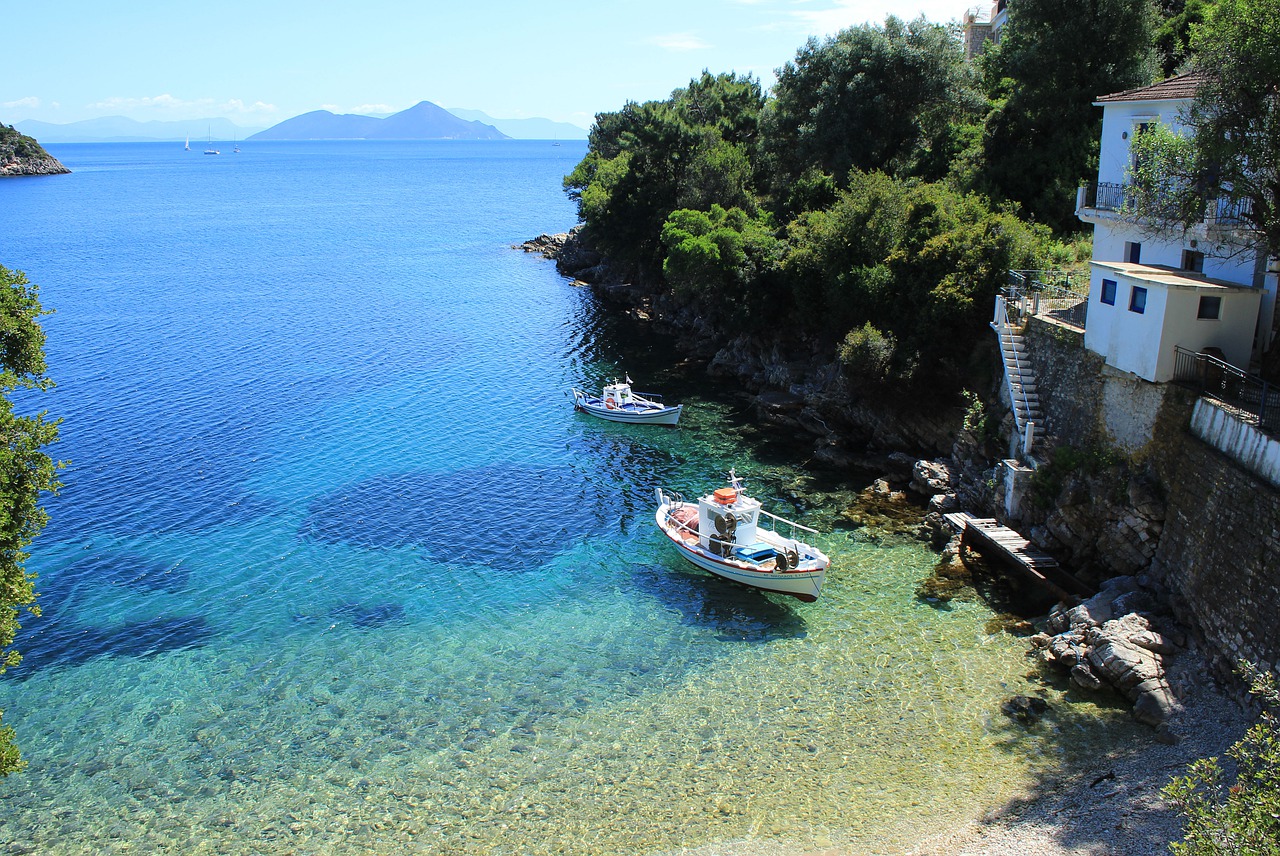
Perhaps a pebble beach, a serenade with a mandolin, or the proud horses on Ainos. Yet, the truth of the island is not found in postcards but in those places that breathe silently, at paces not recorded in travel guides. In its villages.
The villages of Kefalonia are not just geographical dots – they are cradles of collective memory, fragments of a way of life that insists on resisting the passage of time and the noise of tourist seasonality. Here, silence has a sound, hospitality a meaning, and simplicity a value.
From the bustling Fiskardo to the quiet Assos, and from the mountainous Omala to the lowland Valsamata, the villages of Kefalonia still keep alive the thread of a life that persists – sometimes stately, sometimes simple, but always with dignity.
Sami: Between history, nature and everyday life
Sami, on the northeastern side of Kefalonia, is a place of rich historical, archaeological and natural interest. An ancient city-state of Kefalonia, it still preserves the ruins of its walls and Acropolis, which attest to its past glory.
The modern village spreads around the port and is an important hub connecting with Patras and Ithaca. Despite its tourist importance, Sami remains authentic: with residents who work all year round, schools, services and genuine daily life. Its proximity to the caves of Melissani and Drogarati make it a center for exploration for nature lovers.
In summer, the beaches of the area and especially Antisamos attract visitors, without however losing the charm of a place that looks at the sea and the past with the same seriousness.
Agia Efimia: The quiet power of eastern Kefalonia
Agia Efimia is a seaside village that has evolved into one of the most hospitable destinations for sailors and nature lovers. Its port fills in the summer with boats from all over the world, but the village retains its characteristic tranquility and humility.
Built amphitheatrically, with beautiful traditional houses and blooming courtyards, it is an ideal base for exploration. Its proximity to the Pyla gorge and the beaches of Agia Sofia and Paradise Beach offers opportunities for adventure and relaxation.
In its cafes and tavernas, conversations with the locals reveal their belief in sustainable, quality tourism. Here you don't come for a lot – you come for what truly matters.
Lixouri: The cultural counterbalance to Argostoli
Lixouri is the second largest town in Kefalonia, but the feeling it gives you is that of a large village. It is located on the Paliki peninsula and has a strong cultural identity, with a tradition in music, literature and satire.
Although it was severely affected by the 1953 earthquake, it was rebuilt with passion and respect for local architecture. Lixouri's squares are bustling with life, its philharmonic orchestras are a source of pride, and the village's summer theater hosts events that attract visitors from all over the island.
Lixouri is also a gateway to the villages of Paliki, which maintain their agricultural identity. At the same time, it is a place with a distinctive humorous culture, which is not afraid to self-deprecate – and to satirize others.
Fiskardo: The village-living postcard
Fiskardo, on the northern tip of Kefalonia, seems to have been protected by the hand of History. Perhaps because it is the only large village that escaped the devastating earthquake of 1953, preserving its Venetian architecture intact. Pastel walls, red tiles, narrow stone alleys, a harbor with wooden boats next to luxury yachts – a world where the traditional meets the cosmopolitan.
But Fiskardo is not just tourism. It's also the morning coffee with a view of the "kantouni", the whispers of the fishermen, the elders who remember stories from the war and the earthquake. It is a village that knows how to live with beauty without clumsily exploiting it.
Assos: The village in nature's embrace
Assos is one of those places that cannot be described; they are experienced. Built amphitheatrically on a narrow strip of land, it looks as if the village nestles in the embrace of its bay. The houses have been lovingly restored, maintaining their authentic colors and materials.
Above the village stands the Venetian Castle, a silent witness of centuries. The walk there offers panoramic views – and a sense of humility before the grandeur of the place. Assos is a village that teaches you the power of silence.
Poros: In the embrace of the gorge and the Ionian Sea
Poros is one of the most impressive villages in southeastern Kefalonia. It is accessible from nearby Skala via the coastal road, a route that offers fantastic views of the village and the turquoise sea that surrounds it. It is 42 km from Argostoli and the approach is through the impressive Poros gorge, a geological phenomenon of unique beauty where the Vochinas river flows during the winter months.
The village is built amphitheatrically along the beach. It uniquely combines mountains and sea and is a favorite destination for those seeking tranquility and genuine contact with the place. The village square, by the sea, is the center of social life, where residents and visitors meet for walks and conversations that last until late.
Nearby are important attractions: the vaulted Mycenaean tomb (1200 BC), unique in the Ionian islands, as well as the Atros Monastery, built at an altitude of 500 meters with panoramic views of the Ionian Sea.
The beaches of the area such as Aragia and Limenia are sandy with pebbles, while nearby are Makria Petra – accessible only by boat – and the popular beaches of Skala and Mounda.
Kefalonia has multiple facets, but none is as authentic as that reflected in its villages. It is there that the gaze is not in a hurry to leave, where life is measured not in snapshots for social media but in coffees that last, conversations that deepen, gazes that recognize.
Related Articles
Η οικονομία των 100 ημερών: Πώς η εποχικότητα αλλάζει τα νησιά
Τι σημαίνει πραγματικά να ζει ένα νησί από λίγους μήνες τουρισμού — και γιατί η «οικονομία των 100 ημερών» καθορίζει την εργασία, την κατοικία και τις υποδομές όλο τον χρόνο.
Πόσο κοστίζει πλέον ένα καλοκαίρι
Η μετακίνηση, η διαμονή και η καθημερινή κατανάλωση ανεβάζουν τον λογαριασμό των διακοπών στην Κεφαλονιά, ενώ οι ίδιες αυξήσεις μεταφέρονται στη ζωή των μόνιμων κατοίκων.
Το Ίδρυμα Γεωργίου & Μάρης Βεργωτή τιμήθηκε με το Βραβείο Ευκράντη για την Κοινωνική Προσφορά
Το Ίδρυμα Γεωργίου & Μάρης Βεργωτή τιμήθηκε με το Βραβείο Ευκράντη για την Κοινωνική Προσφορά, σε μια χρονιά-ορόσημο κατά την οποία συμπληρώνει 50 χρόνια αδιάλειπτης παρουσίας και προσφοράς.